As an Amazon Associate, we earn from qualifying purchases. Some links on this site are affiliate links at no extra cost to you. Our recommendations are based on thorough research and editorial judgment.


How Home Charger Placement Changes the Charging Experience

We recommend mounting the charger on the garage wall opposite the door at eye level, keeping the cord centered and away from shelves or the door track. Measure the distance to the vehicle port and add at least five feet of slack so the plug doesn’t tug when you park. A dedicated 240‑V circuit and good airflow prevent overheating and improve speed. Positioning the unit this way lets every parking spot reach the charger easily and keeps the space tidy. Continue for more details on installation and cost savings.
Key Takeaways
- Central garage placement reduces cord length, preventing tugging and wear, which prolongs plug life and ensures a reliable connection.
- Mounting the charger near eye level and away from shelving or door tracks improves airflow, reducing heat buildup and maintaining charging efficiency.
- Positioning the outlet at the parking spot’s center allows the vehicle to park naturally without needing to maneuver for cable reach.
- A dedicated 240‑volt circuit with minimal voltage drop, achieved by proper placement, speeds charging and prevents intermittent power loss.
- Locating the charger near a wall with easy access to the utility panel simplifies installation and future upgrades, enhancing overall user convenience.
Best Spot in Your Garage for a Home EV Charger
You may be interested


Ever tried to plug in your EV and realized the cord just won’t reach? It’s a tiny hassle that can mess up your morning routine. First thing’s first: walk around your garage and spot a wall that’s close to where you park, but still leaves the door free to swing open.
- Measure the gap between the charger and the car’s port.
- Make sure you have at least five feet of slack for the cord.
- Keep the unit away from stored boxes and the garage‑door track.
- Mount the charger at eye level so you don’t have to crouch.
- Run a dedicated circuit; that way you won’t overload anything.
- Double‑check that the outlet is 240‑volt as required.
Frankly, a little planning now saves you a lot of fumbling later. Try this: picture the cord’s path before you drill any holes—if it looks clear, you’re good to go.
When you’re done, you’ll have a safe, convenient spot that lets you charge without a second thought. Ready to make your garage work for you?
Recommended Products

Powerful. Grizzl-E Ultimate 48A charges vehicles up to 48A 11.5kW - 9X faster than a basic charger.

ELIMINATE TRIPPING HAZARDS: EV Hover's 6.25' boom arm lifts your Level 2 charging cable completely off the garage floor, protecting your $500+ cable investment and eliminating the #1 cause of charging area injuries. Engineered for large EVs and all sized EVs alike, the extended reach handles larger EVs like the Ford F-150 Lightning, Cybertruck, Rivian, and more.

【FAST 40A LEVEL 2 CHARGING】 Deliver up to 40A / 9.6kW of Level 2 charging—up to 8× faster than a standard wall outlet. Designed for NEMA 14-50 outlets,this home EV charging station ensures most electric vehicles are fully recharged overnight. Whether you need a quick top-up or a full charge, EVDANCE keeps you ready to hit the road every morning
How Cord Length and Slack Affect Daily Convenience

Ever tried to plug in your car and realize the cord just won’t reach the outlet without pulling it tight? That tug can damage the plug and make moving the car a hassle. The fix is simple: measure the distance from the outlet to the charging port, then add at least five extra feet of slack. That little bit of room lets you shift the vehicle without stressing the cord.
Recommended Products

Meets the following UL and CSA standards for Flexible Cords and Cables: UL62 and CSA C22.2 . SOOW stands for S = Service Cord, OO = Oil Resistant (both inside and outside insulation), W = Weather and Water Resistant.

DURABLE CONSTRUCTION: Heavy-duty 6 AWG copper conductors withstand high heat and current loads for demanding industrial applications. Offers maximum protection even in extreme temperatures or harsh conditions. Insulation resistant to abrasion, battery acid, diesel fuel, engine coolant, engine oil, ethanol, extreme temperatures, flame, gasoline, power-steering fluid, transmission fluid, and water.
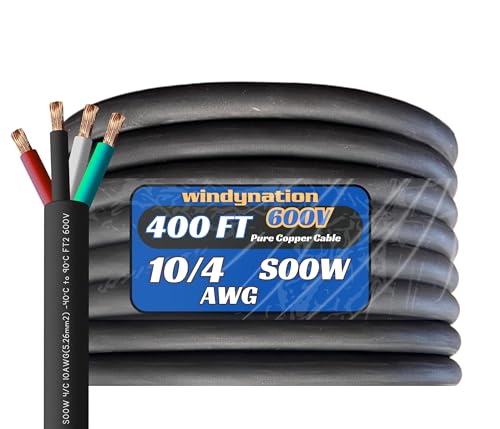
10/4 SOOW is ETL approved. SOOW stands for S = Service Cord, OO = Oil Resistant (both inside and outside insulation), W = Weather and Water Resistant.
Cord management
- Keep the cord on a wall‑mounted reel.
- Use zip ties to bundle excess length.
Outlet placement
- Position the outlet near the center of the parking space.
- Avoid placing it too close to walls or shelving.
Frankly, a little slack stops the cord from catching on tires, and good cord management cuts down wear. A well‑placed outlet speeds daily charging and keeps everything tidy.
Try this: after you’ve measured, double‑check the length by pulling the cord gently toward the car. If it feels loose, you’ve got room to move; if it’s tight, add a few more feet. This small step saves you a lot of frustration later.
A tidy setup makes charging feel like a breeze instead of a chore. Have you tried adding extra slack to your charging routine?
Hardwired vs. Plug‑In: Which Gives Faster Charging?

Ever wonder why your electric car takes forever to charge at home? You’ve probably seen two types of chargers: a hardwired unit bol in the wall and a plug‑in model that you just stick into an outlet. Both get the job done, but they’re not the same when it comes to speed, cost, and efficiency.
Hardwired chargers pump more power into the car than plug‑in units, so they charge faster. We see higher charging efficiency because the hardwired connection eliminates voltage drop from a flexible cord. The trade‑off is higher installation cost. A professional electrician must run a dedicated 240 V circuit and mount the unit, which can add $300‑$800 to the project. Plug‑in chargers use an existing outlet, so they cost less to install, but they often deliver only 30‑40 A compared with 50‑60 A for hardwired models, reducing speed.
Hardwired
- Faster charging
- Higher installation cost
- Better charging efficiency
Plug‑in
- Lower installation cost
- Slower charging
- Slightly lower efficiency
Choose based on budget and how quickly you need to replenish range.
If you’re okay spending a bit more up front and want to get back on the road as fast as possible, the hardwired route is worth the extra cash. If you’re on a tighter budget or just need a charger for occasional use, a plug‑in unit will do the job without breaking the bank.
Fair warning: the savings on installation can be quickly erased if you’re constantly waiting for a full charge.
Try this: compare the amperage rating on your current outlet with the specs of the charger you’re eyeing. If the numbers line up, a plug‑in might be enough; if not, it’s time to call an electrician.
What’s your priority—speed or savings? Let us know which setup works best for you.
Recommended Products

INSTALL WITH CONFIDENCE: Formerly ClipperCreek, the core technology that comes inside every Enphase EV charger has earned its award-winning reputation by delivering industry-leading durability and reliability. Now they're made even better with a 5-year limited manufacturer warranty and 24/7 customer support. This HCS-D50 hardwired home dual electric car charging station comes fully assembled and offers quick installation to a dedicated 50 Amp circuit with any licensed electrician.

Dual Charging on a Single Circuit: Charge two EVs simultaneously with the HCS-D40’s dual-port design, delivering 32 Amps to one vehicle or 16 Amps to two vehicles, minimizing the need for costly electrical upgrades.

INSTALL WITH CONFIDENCE: Formerly ClipperCreek, the core technology that comes inside every Enphase EV charger has earned its award-winning reputation by delivering industry-leading durability and reliability. Now they're made even better with a 5-year limited manufacturer warranty and 24/7 customer support. This HCS-80 hardwired home EV charger comes fully assembled and offers quick installation to a dedicated 80 Amp circuit with any licensed electrician.
Save Money With Time‑Of‑Use Rates – Charge at Night

Ever feel like your electric bill spikes every time you charge your car? You’re not alone—many of us plug in after work, only to see a higher charge on the monthly statement. The good news is you can shave off a chunk of that cost by charging when the grid is quiet.
I’ve been testing a simple routine that lets me take advantage of time‑of‑use rates, and it’s saved me up to 30 % on electricity. Here’s the trick:
- Look up your utility’s TOU schedule. Most companies post it online, and it usually shows cheaper rates after 10 p.m.
- Set your charger to start after that time. If your charger has a built‑in schedule, use it; otherwise, grab a cheap plug‑in timer.
- Let the charger do its thing while you sleep. You’ll wake up to a full battery and a lower bill.
If you own a smart charger, enable the “night‑only” mode. It automatically delays charging until the off‑peak window, so you don’t have to remember anything. This tiny tweak keeps your car ready for the morning commute without the extra cost.
Benefits you’ll notice right away:
- Up to 30 % lower electricity cost.
- No surprise peak‑time demand charges.
Most people think they need fancy equipment, but a basic timer works just fine. The key is consistency—make sure the charger always starts after the cheap‑rate window. Over a month, those savings add up, and you’ll feel better about your energy use.
Fair warning: if you have a large battery and you drive a lot, you might need a bit more power than the off‑peak window can provide. In that case, a quick charge during the day can fill the gap, but keep an eye on the meter.
Give it a try this week and see how your bill changes. Ready to let your car charge while you’re dreaming?
How a Home EV Charger Boosts Property Value

Ever wondered why some homes seem to sell faster and for more money? One hidden perk could be the electric‑car charger in the garage. Buyers today think of it as a modern, eco‑friendly upgrade, and that vibe can add a nice bump to your resale price. A visible charger not only looks sleek, it also shouts “tech‑savvy living,” which many shoppers love. That extra appeal often covers the cost of installing the unit.
Recommended Products

【UNMATCHED POWER & STABILITY】Dominate any terrain with a massive 2000W brushless motor delivering a peak torque of 207Nm. Whether you’re climbing steep neighborhood hills or cruising at a top speed of 26MPH, the M1P provides a smooth, whisper-quiet ride. The 63" extended wheelbase and 3-wheel design offer rock-solid stability, giving you the confidence to ride without the balance concerns of a traditional two-wheeler

POWERSTATE brushless motor: delivers maximum power and provides up to 2x longer motor life REDLINK PLUS intelligence: provides optimized performance and overload protection using total system communication between tool, battery and charger

【Extended Long Range & Rapid Charging】Equipped with a premium high-capacity 48V 20Ah Lithium-ion battery, this electric tricycle offers an extensive range of 45-75 miles on a single charge. The upgraded 3A fast charger significantly reduces downtime, fully replenishing power in just 6-8 hours for dependable community travel
Why it matters
- Buyers love convenience.
- Green features pull in a wider market.
- Home chargers make listings stand out.
How to maximize value
- Place the unit in the garage or driveway where it’s easy to see.
- Use a sleek, weather‑proof model.
- Keep wiring clean and hidden.
Result
- Homebuyers often pay more for homes with this upgrade.
- The resale premium can reach several percent of the sale price.
Worth knowing: If you want the charger to be a real selling point, keep it tidy and choose a model that blends with the house’s style. That way, it feels like a natural part of the home rather than an afterthought.
Fair warning: Skipping the proper installation can turn a selling point into a red flag, so make sure the work follows local codes.
Got a charger already? Share how it’s changed your home‑search experience.
Installing a Home EV Charger in Multi‑Unit Buildings
Ever wondered why your condo doesn’t have a charger while the street is full of EVs? You’re not alone. Getting a home EV charger in a multi‑unit building takes a bit of planning, but it’s totally doable if you follow the right steps.
First, check the building’s electric capacity and any shared infrastructure. A quick chat with the building manager or maintenance crew can tell you whether the main panel can handle a 240‑V charger or if upgrades are needed. Next, gather a few neighbors who also drive electric cars. A small tenant group has more clout when you ask management to consider a charger installation.
- Survey parking spots.
- Identify a common area with 240‑V service.
- Request a hard‑wired line or certified plug‑in unit.
- Propose cost‑share among residents.
- Get written permission from the landlord.
Frankly, the biggest hurdle is the electrical load. Make sure you have a dedicated circuit so the charger won’t overload anything else. Install a lockable box to keep the unit safe and tamper‑proof. And always place the charger where there’s good airflow—heat can shorten its life.
Worth knowing: local codes usually require a permit and an inspection, so keep all paperwork organized. Write down every agreement, from cost splits to maintenance responsibilities, and have everyone sign off. That way you avoid surprises later and keep the process smooth.
Recommended Products
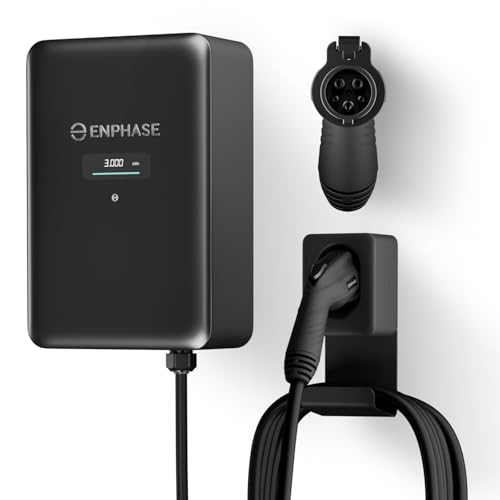
9× FASTER CHARGING: Get faster, smarter EV charging up to 11.5 kW (up to 46 miles/hour). Perfect for overnight charging or quick top-ups.

Quicker charging (30 Amps, 240V, Level 2): 4x faster charging than Level 1, 120V chargers. Operating temperature : minus 30 degree Celsius to plus 50 degree Celsius

AI-POWERED SMART CHARGING & APP CONTROL – This ev charger level 2 uses Autel’s AI-integrated smart app to schedule charging around time-of-use utility rates, helping lower your monthly bill while boosting station utilization. Start or stop sessions remotely, adjust current from low to high amps, view real-time energy data, and get alerts if anything looks off.
Future‑Proofing Your Home EV Charger as Range Increases
Ever wonder if your home charger will still be good when you upgrade to a newer EV with a longer range? The truth is, a little forward‑thinking now can save you a lot of hassle later. I’ve been there—adding a new charger after the fact can mean digging up walls and spending a bundle.
First off, hook up a 240‑V, 40‑A circuit. This gives you a solid power base that most current Level 2 chargers can use, and it leaves room for the next generation of faster‑charging cars. You won’t have to call an electrician every time a new model hits the market.
Next, go for a hard‑wired Level 2 unit that lets you dial the output up or down. A unit with an adjustable setting means you can keep the charge gentle for battery health now, then crank it up when you need a quick top‑off. It’s a simple way to protect your battery without adding extra wiring later.
Keep the charger in the garage where the cable can reach any parking spot. That way, you avoid long, tangled cords and you keep the whole setup tidy. It also makes it easier to plug in a future car that might have a different charging port placement.
- This setup offers infrastructure scalability.
- It lets you upgrade the charger firmware instead of rewiring.
- It reduces wear on the battery by allowing slower, regular charging.
Try this: when you’re picking a charger, look for one that mentions “adjustable output” and “hard‑wired installation.” Those keywords usually mean the unit can grow with your needs.
Frequently Asked Questions
Will My Charger Work With All EV Models?
We assure you it works with all EV models—our adapters bridge any gaps, and we support every connector type, so you’ll plug in, charge, and drive without worrying about compatibility.
Do I Need a Permit to Install a Home Charger?
We usually need a permit for a home charger, and the cost varies by locality; installation costs can rise if electrical upgrades are required, so we recommend checking local regulations early.
Can a Solar Panel System Power My EV Charger?
We can definitely power the charger with a solar panel system, provided the inverter compatibility matches the charger’s voltage and amperage. Just make sure the array’s output exceeds the charger’s demand, and you’ll stay green.
How Often Should the Charger Be Inspected for Safety?
We recommend an annual inspection with a safety checklist, plus quarterly testing and a visual inspection each season to catch wear early and keep the charger operating securely for you.
Will a Charger Affect My Home’s Resale Timeline?
We’ll tell you straight: a home charger boosts curb appeal and extends marketability, so buyers sprint in faster. It’s the modern kitchen upgrade that whispers, “We’re eco‑savvy and ready to sell instantly.”