As an Amazon Associate, we earn from qualifying purchases. Some links on this site are affiliate links at no extra cost to you. Our recommendations are based on thorough research and editorial judgment.

How Smart Home EV Chargers Are Changing Daily Charging Habits

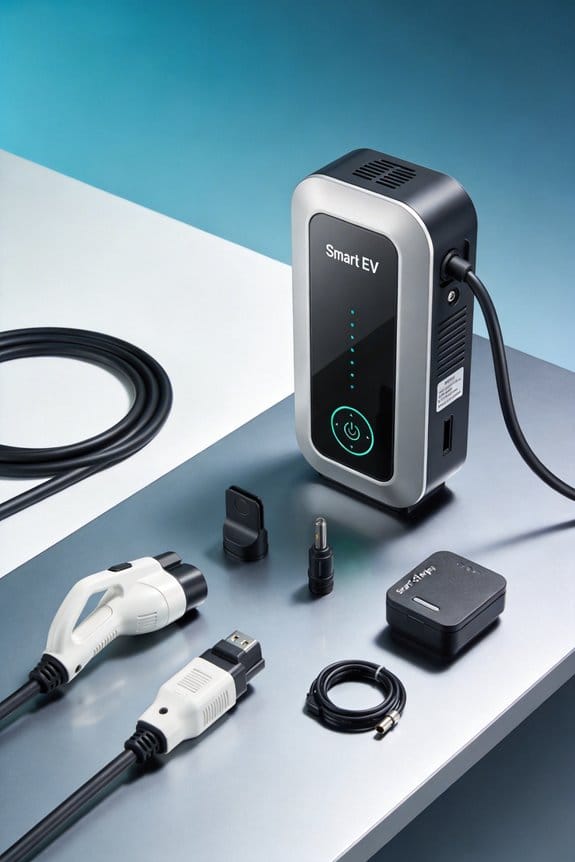
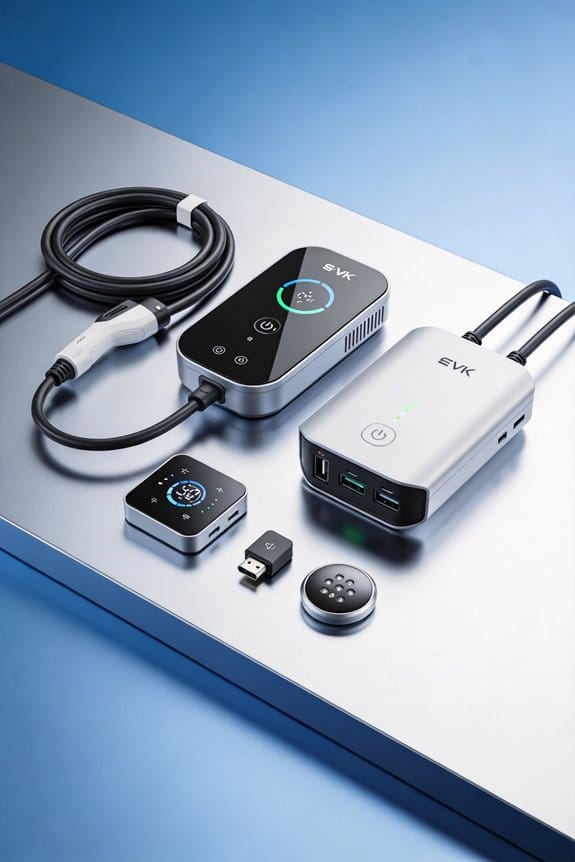
We’re seeing smart EV chargers shift charging to off‑peak or solar‑rich windows, which cuts peak‑demand bills and uses cheaper, cleaner power. They let you set a two‑hour night slot, automatically pause when the grid flags high load, and move the start time by fifteen‑minute increments to stay out of pricey periods. Bidirectional models can discharge during price spikes or supply up to 3 kW of backup power for your home. If you keep going, you’ll discover more details.
Key Takeaways
- Smart chargers schedule charging during off‑peak or solar‑peak windows, reducing electricity costs and avoiding peak‑demand periods.
- Real‑time generation and price alerts let drivers automatically shift charging to the cheapest or cleanest times.
- V2G/V2H capabilities enable bidirectional flow, allowing EVs to discharge during price spikes or power homes during outages.
- Integrated home energy managers automate charging/discharging without manual spreadsheets, simplifying daily routine.
- Mobile apps provide simple, set‑and‑forget scheduling, giving users control while minimizing active management.
How Smart Chargers Cut Your Daily Peak‑Demand Bill
You may be interested


Ever notice how your electricity bill spikes the minute you plug in your car after work? That extra cost comes from the grid’s peak‑demand period, and it’s something you can dodge with a few simple tweaks to your smart charger.
Schedule charging
Pick a start time that falls in the night or early‑morning window. A two‑hour slot usually does the trick, keeping you out of the pricey peak rates.
Use app controls****
Turn on automatic demand response so the charger can pause when the grid flags high load. This helps you stay under the peak‑demand ceiling without lifting a finger.
Monitor usage
Open the app each day and glance at the usage report. If the numbers still look high, shift the window a bit earlier or later until you see a drop.
Frankly, the biggest win is just setting it and forgetting it. The charger does the heavy lifting while you sleep, and you keep more cash in your pocket.
Worth knowing: a quick glance at the daily report can reveal patterns you didn’t expect, like a neighbor’s charging schedule that pushes the peak higher. Adjusting your own timing by even fifteen minutes can make a noticeable difference.
Give it a try and see how much you can lower that bill without any extra effort. Ready to let your charger work for you?
Recommended Products
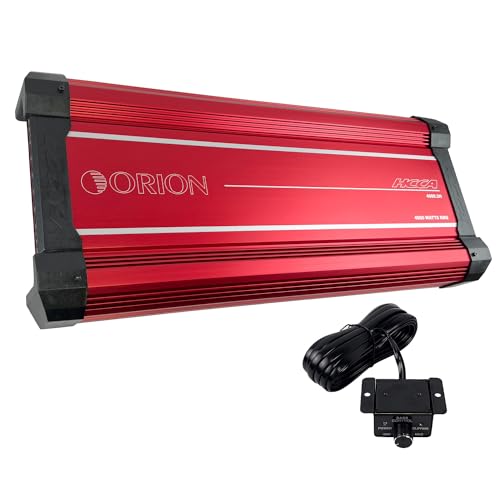
ORION HIGH PERFORMANCE AMPLIFIER: Serious amounts of power driving ridiculously low impedances at completely sick output levels is what the HCCA Series is all about. Whether you're looking for an SPL world record or you just want to do some serious damage on the streets, these amplifiers will ensure they hear you before they see you. Hellacious power intersects with extreme efficiency under rugged die-cast aluminum covers with illuminated ORION badges that tell the world that HCCA is back!
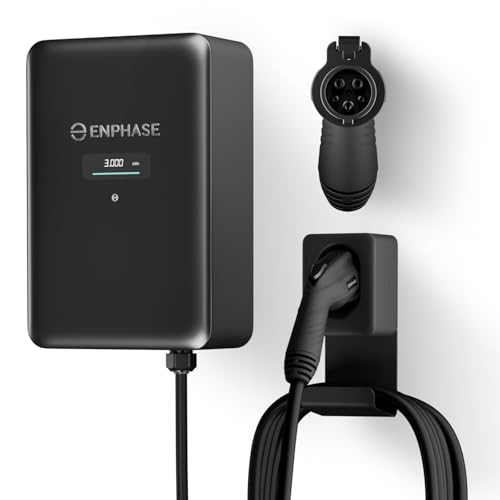
9× FASTER CHARGING: Get faster, smarter EV charging up to 11.5 kW (up to 46 miles/hour). Perfect for overnight charging or quick top-ups.

INSTALL WITH CONFIDENCE: The Enphase HCS-50 EV Charger, formerly known as ClipperCreek, delivers award-winning durability and reliability. Installation is quick and straightforward—connect it to a dedicated 50 Amp circuit by any licensed electrician.
How Smart Chargers Sync With Solar & Off‑Peak Rates
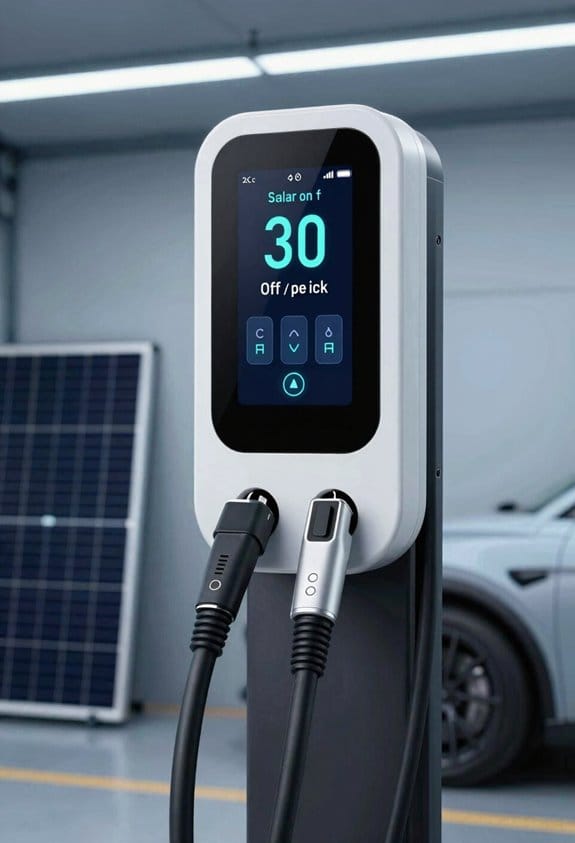
Ever wonder why your electric car still seems to charge when the sun’s down? You can actually line up your charger with your rooftop panels and the cheap night‑time rates, and watch the bill drop while you run on clean power.
Set a schedule – Pick the hours when your panels are humming, usually sunrise to early afternoon.
Enable off‑peak mode – Switch the charger to night‑time rates so it pulls power when the grid is cheapest.
Use the app – Keep an eye on real‑time generation and get price alerts right on your phone.
Adjust as needed – If a cloudy day rolls in or the utility changes its rates, just tweak the times.
Frankly, the biggest win is that you’re not just saving money; you’re easing the load on the grid and cutting emissions. Worth knowing: the software can automatically shift the charge to the cheapest period, so you don’t have to juggle numbers yourself.
Try this: set your charger to start when your panels hit peak output, then let it finish during the off‑peak window. You’ll see the savings add up without any extra effort.
If you keep an eye on the dashboard and make small tweaks when the weather changes, you’ll stay in the sweet spot of low cost and clean energy. Ready to give it a go?
Recommended Products

Limited-Time Perks: E10 Metal Pad, Up to 12-Month 0% APR
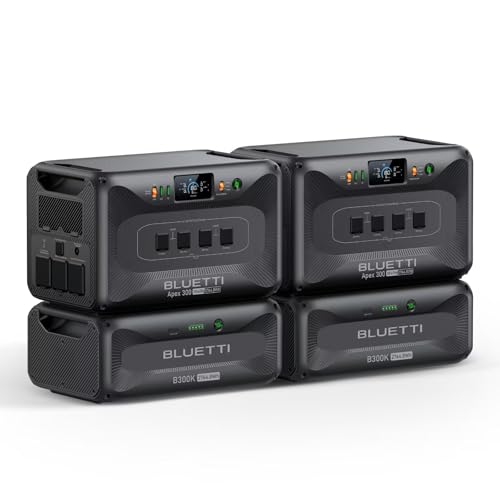
[All-Scenario Power] - Apex 300 (2764.8Wh, 3840W) keeps homes lit, RVs rolling & off-grid sites running. Parallel 2-3 units (5.5-8.3kWh), expand to 58kWh with B300K. Never powerless.

[All-Scenario Power] - Apex 300 (2764.8Wh, 3840W) keeps homes lit, RVs rolling & off-grid sites running. Parallel 2-3 units (5.5-8.3kWh), expand to 58kWh with B300K. Never powerless.
Smart Charger CO₂ & Energy‑Star Savings Calculator
Ever wonder how much CO₂ you could save by plugging in smarter? I tried the Smart Charger calculator and it gave me a quick look at real‑world numbers—no heavy math required.
Smart chargers let us calculate CO₂ cuts and Energy‑Star savings in a few clicks, so we can see real‑world benefits without complex math.
We open the calculator, enter our car’s range, and select our local electricity rate. The tool instantly shows carbon savings and the impact of energy certification.
- Enter vehicle model – the app pulls average mileage.
- Choose charging schedule – off‑peak or solar‑linked.
- Review results – CO₂ reduction in pounds and Energy‑Star cost savings.
- Carbon savings appear as a yearly total.
- Energy certification highlights efficiency gains.
I compare the numbers with my utility bill, then tweak the schedule to get the best savings. The process stays simple, fast, and reliable.Frankly, you don’t need a PhD in energy to see the benefit. Try this: plug in your car’s range, pick the off‑peak option, and watch the savings pop up.
If you’re curious about how much you could cut, just give it a spin. What will your next charging plan look like?
Recommended Products

Universal Compatibility: The IQ 60 EV Charger features a ruggedized NACS connector and is ideal for Tesla electric vehicles and other NACS-compatible electric vehicles with acceptance rates up to 11.5kW. Plus, you may qualify for federal and local tax credits and rebates for home electric car charging.

Lightning-Fast Charging Power – Deliver up to 48 Amps and 11.5kW of power for rapid Level 2 charging—get EVs back on the road faster than ever.

AI-POWERED SMART CHARGING & APP CONTROL – This ev charger level 2 uses Autel’s AI-integrated smart app to schedule charging around time-of-use utility rates, helping lower your monthly bill while boosting station utilization. Start or stop sessions remotely, adjust current from low to high amps, view real-time energy data, and get alerts if anything looks off.
Smart Charger Installation Tips for Urban Homes
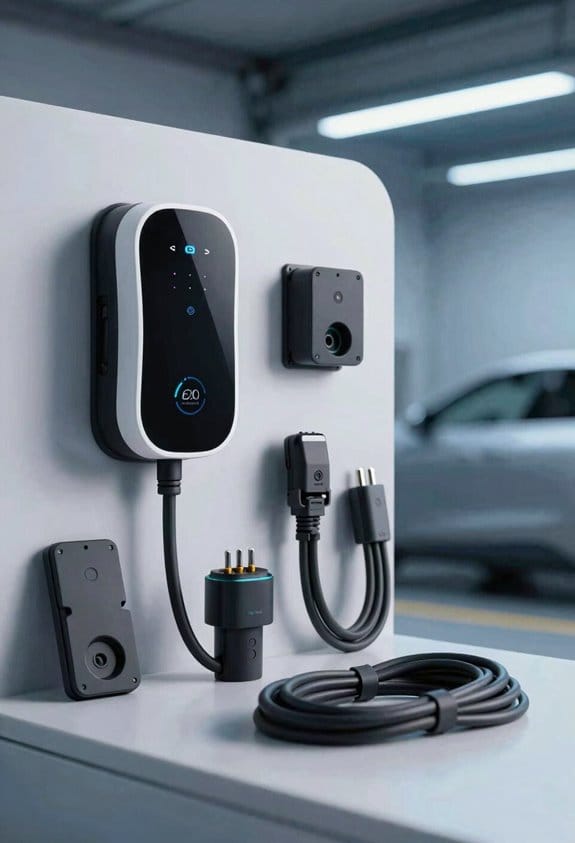
Ever tried to set up an EV charger in a city apartment and hit a wall of rules and tight spaces? You’re not alone—urban living throws a lot of curveballs, but a few practical steps can smooth the way.
Recommended Products
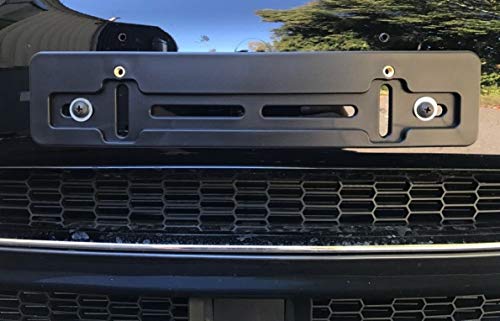
Compatibility: It's a design made to fit all Makes and Models ( Auto Car Sedan Truck Van SUV Hatchback Crossover Pickup Coupe Convertible Wagon Golf Cart Vehicle ) with the Flat Shape of the Bumpers. It won't work on Curved Spots of the Bumper or V-shaped Bumpers! You can mount it on the left or right side of the bumper too. This is not an OEM bracket.

【Trusted Brand】Autel has been making automotive intelligent diagnostic, inspection, and analysis products since 2004. The MaxiCharger AC Home was developed over 2 years from a full team of designers and engineers to bring you the safest, smartest, and one of the best looking chargers on the market.
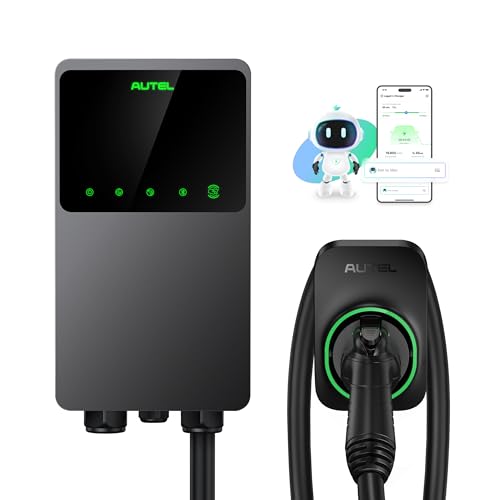
【Trusted Brand】Autel has been making automotive intelligent diagnostic, inspection, and analysis products since 2004. The MaxiCharger AC Home was developed over 2 years from a full team of designers and engineers to bring you the safest, smartest, and one of the best looking chargers on the market.
Check building rules
First, find out if your building even allows a charger on the balcony or wall. Look through the lease or ask the landlord for written permission before you start any work.
Assess power supply
Next, see if the existing electrical panel can handle the extra load. If you share a meter with neighbors, make sure the added draw won’t trip the whole circuit.
Choose a location
Pick a spot right next to your parking space. A short cable run saves money and hassle, and it keeps the charger easy to reach from the breaker panel.
Hire a licensed electrician
A pro will pull a dedicated circuit, mount the unit safely, and run all the necessary tests. This step saves you headaches later and keeps everything up to code.
Follow safety code
Use weather‑proof outlets, protect any exposed cables, and label the charger clearly so anyone else knows what’s there.
Frankly, the biggest mistake people make is skipping the paperwork and assuming the wiring can handle it. Worth knowing: a quick chat with your building manager can clear up a lot of uncertainty before you call an electrician.
Try this: write down the exact distance from your parking spot to the nearest breaker panel, then measure the cable you’ll need. Having those numbers on hand makes the electrician’s job easier and can shave off extra labor costs.
These steps should help you get a charger installed without a lot of drama, even in a packed city building.
Got any tips from your own install? Share them in the comments!
Pick the Best Smart Charger for Your Lifestyle
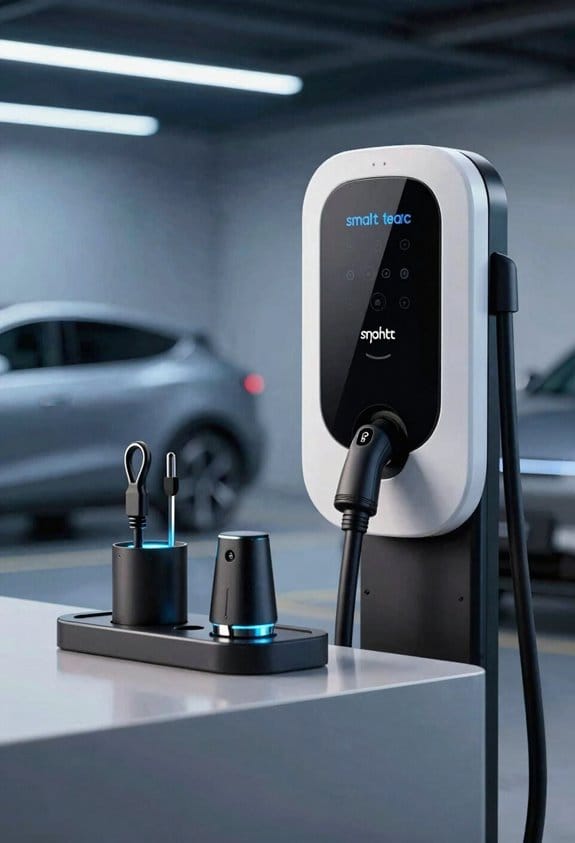
Ever feel like your EV charger is a puzzle you can’t quite solve? After you’ve dealt with the paperwork and got the wiring sorted for an urban install, the next step is picking a charger that fits your daily routine. You’ll want something that matches your habits and the space you have.
Recommended Products

5 amp per channel maximum with a 230 volt AC input.

Compatibility: Generac Level 2 48 Amp EV Charger, compatible with all major electric vehicle brands including Ford, Nissan, BMW, Rivian, Hyundai, Volkswagen, Kia, Chevrolet, Audi, Mercedes-Benz, Porsche, and Tesla (Tesla charger adapter sold separately)

Economical EV Charging: The Wi-Fi-enabled IQ 40 smart EV charger lets you charge your electric car economically at home. Use the Enphase App to easily set up charging schedules and off-peak rate reminders. Pair with an Enphase Energy System for solar charging.
Wall‑mounted Level 2
Best for fixed parking spots. It’s fast—think 10‑60 mi per hour—and it comes with a simple schedule feature. If you park in the same place every night, this is a solid choice.
Portable chargers
Ideal for renters or folks who move around a lot. They’re light, plug‑in, and lower in power, so you can carry them to different locations without a hassle.
Smart‑only models
These give you app control, load‑balancing, and Energy Star standby savings. They’re perfect if you like tweaking settings from your phone.
- Check Wi‑Fi compatibility.
- Verify the power rating matches your home panel.
- Look for a clear display and an easy‑set‑up app.
Frankly, the key is to line up the charger with how much you drive each day and how much effort you want to put into setup. Try this: rank the three options by your daily travel distance, then pick the one that meets your routine without extra complexity.
We compare these options, rank them by daily travel, and pick the model that meets our routine without extra complexity. Ready to make your charging life easier?
Smart Charger V2H Backup Power Explained
Ever had a blackout hit right when you’re trying to cook dinner? I’ve been there, and it’s a nightmare. The good news is that a V2H‑enabled charger can turn your electric car into a backup power source for your home. You can keep the lights on, the fridge running, or a few outlets alive while the grid is down. It adds a layer of safety without a huge remodel.
How it works
- The charger senses that the grid voltage has dropped.
- It flips into bidirectional mode.
- Power then moves from the EV battery into your home circuit.
Key points for you
- Most V2H units can give you up to 3 kW of continuous power.
- A fully charged EV can keep a typical house running for 24‑48 hours.
- You’ll need a compatible inverter and a dedicated circuit for the install.
Frankly, you should check the charger’s V2H rating and make sure your home wiring can handle the extra load. Worth knowing: a proper setup gives you reliable emergency power without a lot of hassle.
If you’re thinking about adding this, start by looking at the specs of your current charger. Then talk to an electrician about the inverter and wiring requirements. It’s a small investment that can make a big difference when the lights go out.
Smart Charger Future‑Proofing With V2G & Batteries
Ever feel like your electric car is just a big battery you never get to use? You’re not alone—many homeowners are discovering that a smart charger can do more than just fill up a tank. By picking a unit that talks both ways, you can let your vehicle feed power back to the house when electricity rates jump, and you can stash extra solar juice for later.
Steps to future‑proof:
- Choose a charger that supports V2G and battery leasing.
- Verify the device meets regulatory interoperability standards.
- Connect the charger to a home energy manager.
- Set schedules for charging and discharging.
- Monitor utility incentives for V2G participation.
Frankly, the biggest win is the flexibility. With a bidirectional charger, you’re not stuck waiting for the grid to power you; you can actually push power out when it’s pricey. That means lower bills and a smoother ride for your solar panels, too.
Try this: start by checking if your utility offers any rebates for V2G‑ready hardware. Those incentives can cut the upfront cost in half, making the whole setup feel a lot more affordable.
Worth knowing: a good home energy manager will let you set simple rules—like “charge when the sun’s out, discharge when the price spikes.” You won’t need to juggle spreadsheets; the system handles it for you.
Frequently Asked Questions
Will Smart Chargers Work With All EV Models?
We’ve found 40% of UK residential chargers already smart, and yes, they work with most EVs. Just follow the compatibility checklist, keep firmware updates current, and you’ll be charging seamlessly.
Do Smart Chargers Affect My Home’s Insurance Premiums?
We’ll tell you that smart chargers can help lower premiums because they provide liability reduction through built‑in safety features, real‑time monitoring, and automatic shut‑offs that protect your home and vehicle.
Can I Remotely Control Charging via Voice Assistants?
We can absolutely control charging with voice command, thanks to voice control and assistant integration, so you’ll start or stop sessions just by asking your smart speaker, making daily charging effortless and hands‑free.
What Data Privacy Protections Exist for Smart Charger Usage?
We’re reassured that 40 % of smart chargers already use anonymized telemetry, and we always require user consent before any data leaves the device, ensuring your charging habits stay private and secure.
How Do Smart Chargers Handle Power Outages During Charging?
We keep charging safe with battery backups and outage protocols; if the grid drops, the charger pauses, stores energy locally, then resumes once power returns, ensuring your vehicle never over‑charges or loses progress.