As an Amazon Associate, we earn from qualifying purchases. Some links on this site are affiliate links at no extra cost to you. Our recommendations are based on thorough research and editorial judgment.


Why Standardization Is One of the Biggest EV Accessory Trends

We see standardization cutting costs, speeding development, and ensuring reliable performance with fast‑charging and V2G systems. 1) Regulators require exact standards and offer rebates, so we check approved lists early. 2) OCPP 1.6/2.0.1 and ISO 15118‑20 make chargers interoperable, preventing connection errors. 3) Universal protocols let a single firmware update keep many accessories compatible. 4) Ultra‑fast (350 kW+) chargers demand stronger wiring, cooling, and durable connectors. 5) Solid‑state battery standards enable lighter, faster accessories. Follow these steps and you’ll see how deeper insights can help.
Key Takeaways
- Uniform standards ensure accessories meet safety and rebate eligibility, reducing redesign costs and simplifying consumer verification.
- Compatibility with protocols like OCPP 2.0.1 and ISO 15118‑20 enables seamless integration across charging networks and brands.
- Standardized connectors and wiring handle ultra‑fast charging currents, improving thermal management and durability.
- Early alignment with emerging standards accelerates design timelines and prevents costly retrofits later in the project.
- Broad adoption of common standards drives economies of scale, lowering component prices and fostering faster market uptake.
How Regulators and Incentives Shape Future EV Accessories
You may be interested



Ever tried to upgrade your EV with a new charger or tire pressure sensor, only to find out it doesn’t meet the latest state rules? It’s frustrating, especially when you’ve already spent the cash. The good news? Most manufacturers are now tagging their gear with the exact standards they meet, and a lot of utilities and local governments are throwing rebates at early adopters.
Frankly, the trick is to keep an eye on three things:
- Look for accessories that list approved standards.
- Check if the product qualifies for a rebate.
- Verify that the accessory meets local safety codes.
Worth knowing: Incentives often come from government grants, and utilities love to reward you for going green. When a product checks those boxes, you’ll usually see a lower total cost of ownership—plus you won’t have to worry about a forced upgrade down the line.
You’ll also want to track official announcements and compare rebate amounts. Some programs pay a flat $100, while others cover a percentage of the purchase price. The higher the rebate, the quicker you’ll recoup your investment. And when a brand clearly states compliance and incentive eligibility, you can skip the guesswork and just enjoy the upgrade.
Try this: Before you click “buy,” pop the product’s spec sheet into a quick search for your state’s EV accessory regulations. If the list matches, you’re good to go. If not, keep looking—there’s usually a compliant alternative out there.
Fair warning: Not every “eco‑friendly” label means you’ll get a rebate. Some manufacturers market green features without checking the local codes, which can bite you later. Double‑check the fine print, and you’ll avoid surprise fees.
Why V2G and OCPP Standards Matter for EV‑Accessory Compatibility

Ever tried buying a charger and then realized it won’t work with your car’s grid‑feed feature? That’s a hassle you can avoid by checking two things first: V2G and OCPP compliance.
Recommended Products
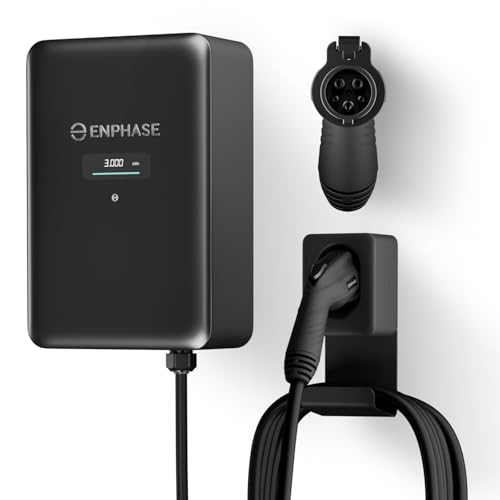
9× FASTER CHARGING: Get faster, smarter EV charging up to 11.5 kW (up to 46 miles/hour). Perfect for overnight charging or quick top-ups.

INSTALL WITH CONFIDENCE: The Enphase HCS-50 EV Charger, formerly known as ClipperCreek, delivers award-winning durability and reliability. Installation is quick and straightforward—connect it to a dedicated 50 Amp circuit by any licensed electrician.

AI-POWERED SMART CHARGING & APP CONTROL – This ev charger level 2 uses Autel’s AI-integrated smart app to schedule charging around time-of-use utility rates, helping lower your monthly bill while boosting station utilization. Start or stop sessions remotely, adjust current from low to high amps, view real-time energy data, and get alerts if anything looks off.
Why V2G matters
- It lets your car push power back into the grid.
- In the UK, any charger over 22 kW must support it.
- You can earn cash through demand‑response programs.
Why OCPP compliance matters
- OCPP 1.6 is the baseline for any serious setup.
- OCPP 2.0.1 brings extra security and smart‑charging tools.
- If a charger isn’t OCPP‑ready, many networks will reject it.
Worth knowing: Look for labels that say “Vehicle to grid” and “OCPP compliance.” That way you’ll be able to charge anywhere and even make a little extra on the side.
Choose accessories that cover both standards, and you’ll skip the headaches later.
Fair warning: Skipping this check can leave you stuck with a charger that won’t talk to your car or the network.
Do you want a charger that works everywhere and pays you back? Give it a quick glance for those two stickers before you buy.
How Universal Interoperability Boosts EV‑Accessory Performance

Ever tried plugging an EV accessory into a charger and watched the screen flash red? You’ve probably felt that frustration of hunting for a compatible plug or fiddling with settings while the car sits idle. The good news is that universal interoperability can wipe out that hassle, letting you snap in any accessory and keep moving.
What you’ll notice right away is a steadier charge speed, no matter the brand of the charger you pull up. The same communication protocol runs through all the devices, so you don’t have to guess which cable works where. It also means the firmware on your accessory only needs one update to stay good with every charger you encounter.
Frankly, the whole setup is pretty simple. Just pick accessories that say they follow the standard protocol, double‑check that the firmware version lines up with the charger’s OCPP level, and keep the device’s software fresh through the maker’s app. That’s the trick: one update, many devices, zero headaches.
- Consistent charging speed across brands.
- Fewer connection errors during trips.
- Simpler maintenance because one update fixes all devices.
When you’re out on a road trip, you’ll appreciate the fewer “no‑go” moments. No more pulling out a spare cable or waiting for a firmware patch to download on the road. The system works the same whether you’re at a fast‑charging hub or a home garage, letting you focus on the journey instead of the tech.
Worth knowing: if you ever see a warning about OCPP levels, just compare it to the version listed on your accessory’s app. If they match, you’re good to go. If they don’t, a quick update will get everything back in sync.
Recommended Products

【Upgrade Your 48V Golf Cart】Enjoybot 48V 150Ah LiFePO4 Lithium Golf Cart Battery Conversion Kit – your ultimate power upgrade for 48V golf carts, street-legal golf carts, UTVs, and LSVs. This kit includes four Enjoybot 12V 150Ah Group 31 deep cycle LiFePO4 batteries, offering 50% capacity increase in the same compact size. Designed as a "drop-in replacement" for 6V, 8V, or 12V SLA/AGM batteries, it provides a seamless installation experience with a high energy density that enhances both performance and efficiency. Service life over 6000 cycles(80% DOD)

The Power T2500-1bdCP mono amplifier featuring Constant Power, is truly the best of the best and delivers 2500 Watts of massive POWER
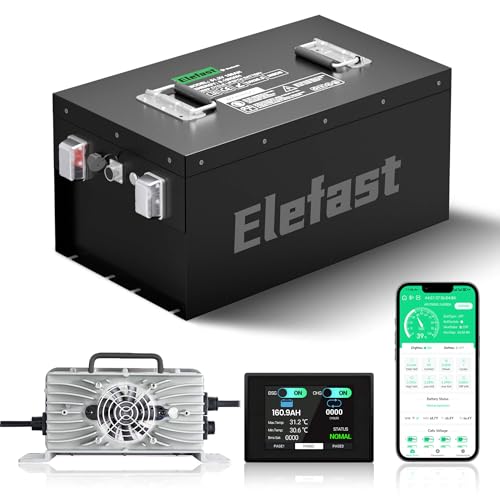
【Extra-long Range Mileage】160AH 48V lithium battery golf cart is specially designed for ultra-long range, maximum 8192wh of energy to provide strong power, 48v golf cart batteries can enjoy up to 75 miles of continuous golfing on a single charge, eliminating the worry of range mileage
Impact of 350 kW+ Ultra‑Fast Chargers on EV‑Accessory Design

Ever wonder why your EV accessories seem to struggle when you plug into a 350 kW ultra‑fast charger? The heat and wear can get out of hand fast, but a few simple tweaks can keep everything running smooth.
Thermal management upgrades
- Add active cooling fans or a liquid loop to pull heat away quickly.
- Use heat‑resistant plastics or metals for the housing so it won’t melt under load.
- Slip a basic temperature sensor in so you can watch the numbers and act before things get too hot.
Connector durability improvements
- Reinforce the pins with a tougher alloy plating; it handles the high current better.
- Boost the contact pressure a bit so the connection stays tight and wears less over time.
- Go for a modular plug design so you can swap out a worn piece without tearing the whole system apart.
General design tips
- Keep your wiring gauge up to the task – think thicker cables for that 350 kW surge.
- Follow ISO 15118‑20 so the communication stays safe and reliable.
- Run a bunch of repeat fast‑charge tests; you’ll spot weak spots before they become a problem.
Try this: When you’re picking a new charger housing, look for one that already includes a built‑in vent or a small fan. It saves you a retrofit later and keeps the whole setup cooler.
Worth knowing: If you notice the connector getting hot after just a few minutes, that’s a sign the contact pressure might be low. Tightening it a little can make a big difference in longevity.
Solid‑State Battery Standards Unlock New EV‑Accessory Opportunities

Ever wonder why your EV accessories feel a bit clunky lately? The shift to solid‑state batteries is changing the game for everything that plugs into your car. I’ve been testing a few kits, and the difference is clear: tighter module standards mean you can’t just slap any connector on a pack and hope for the best.
First off, you’ll want to follow the emerging battery module стандартизация checklist. It’s not just paperwork; it’s the roadmap that keeps your gear safe and compatible. Use connectors that respect the solid‑state integration limits—no more guessing about voltage spikes or heat buildup. And when you’re putting together a thermal‑management kit, match it to the higher density of solid‑state cells; otherwise you’ll end up with overheating issues that could damage both the pack and your vehicle.
Try this:
- Pick a connector rated for the specific solid‑state voltage range.
- Check the thermal‑management specs against the cell density.
Benefits are pretty sweet: faster charging, longer range, and a lighter overall setup. Portable chargers, infotainment upgrades, and after‑market battery packs can now meet stricter safety standards without the bulk you used to see. I’ve already seen a few products that hit those marks, and they feel more reliable on the road.
Worth knowing:
- Keep an eye on compliance lists early in your design process.
- Updating your design after the fact can cost time and money.
Honestly, the biggest hurdle is staying ahead of the standards curve. If you wait until the last minute, you’ll find yourself scrambling to redesign parts that could have been nailed down months ago. It’s a lot like building a house—getting the foundation right saves you from costly fixes later.
Recommended Products

This is Raion Power 96V 5.5Ah battery is guaranteed to be a compatible replacement to your existing APC RBC152

【WIFI 4G and GPS】:4G module and Wi-Fi module providing data transmission solutions. Built-in GPS module precisely positioning the vehicle via the satellite and recording the location information in the video stream. Support remtoe live view on PC, webpage and IOS/Andriod smartphone.【HD MI Output】Connects to TV or monitor for easy playback via HD MI.

【Easy Wiring】: Plug-and-play with secure 4-pin connector. Specialized aviation connectors ensuring signal stability.【USB】Backup videos or connect a mouse via USB.【G-sensor】Detects sudden movements such as hard acceleration, abrupt braking, speeding, and impacts. saves key events. 【Extended Remote Receiver】allowing you to operate the remote without having to reach the DVR
Frequently Asked Questions
How Will V2G Certification Affect Aftermarket Charger Installations?
We’ll see V2G certification tightening installation standards, so our retrofits must meet OCPP and ISO 15118‑20. That raises warranty impacts, but guarantees compliance and protects both installers and users from future liability.
What Security Protocols Are Required for Ocpp 2.0.1 Compliance?
We need OCPP 2.0.1, we’ll enforce mutual authentication, encrypt all traffic, and require secure firmware updates with signed packages, ensuring each charger and vehicle validates the other before any communication.
Can Non‑Uk EVS Access UK V2g‑Enabled Networks?
We can access UK V2G‑enabled networks using international adapters and roaming agreements, so your vehicle will communicate with the chargers and participate in demand‑response programs without needing a UK‑specific model.
How Do Ultra‑Fast Chargers Influence EV Accessory Cooling Designs?
We see 20% of EU ultra‑fast stations already delivering 350 kW, so we design thermal management systems that handle rapid heat spikes while reinforcing connector durability, ensuring reliable, safe charging under extreme power loads.
What Testing Procedures Verify Solid‑State Battery Compatibility With Accessories?
We verify solid‑state battery compatibility with accessories by running material compatibility tests, thermal management cycling, and electro‑chemical stress checks, ensuring connectors, cooling plates, and BMS modules all meet the required safety and performance standards.