As an Amazon Associate, we earn from qualifying purchases. Some links on this site are affiliate links at no extra cost to you. Our recommendations are based on thorough research and editorial judgment.


What EV Owners Should Know About Charging Cable Length and Storage

We should measure the exact run from outlet to the car’s charge port and add about one foot of slack. Use a 5‑meter (16‑ft) cable for most home setups; choose 7–10 m if the distance is longer or you need to navigate corners. Pick a cable with an amperage rating that matches your charger (32 A, 40 A, or 48 A) and the correct connector type. Coil the cable loosely on a wall mount, avoid tight bends, and keep it away from heat and sharp edges. Inspect it for wear before each use, and you’ll find more details if you keep going.
Key Takeaways
- Measure the exact run from outlet to vehicle, then add about one foot (≈0.3 m) of slack for flexibility.
- Choose a 5‑m (16‑ft) cable for typical home setups; use 7–10 m cords only when distance or obstacles require extra length.
- Shorter, properly rated cables reduce voltage drop, stay cooler, and can slightly improve charging speed; avoid overly long, thin extensions.
- Never use non‑EV or undersized extension cords—only cords rated for the charger’s amperage to prevent overheating and fire risk.
- Coil cables loosely, store them on a wall‑mount or sturdy bracket, and keep them away from heat, sharp edges, and direct sunlight.
Choose the Right EV Charging Cable Length for Daily Use
You may be interested



Ever tried to plug your EV in the garage and realized the cord just doesn’t reach? That’s the annoying moment most of us have faced. The fix is simple: pick a cable length that matches the exact distance from your outlet to the car’s charge port.
- Measure the exact run from outlet to port.
- Add a foot for slack, but avoid excess length.
- Check that the cable fits comfortably in your garage without tripping hazards.
- Shorter cables reduce voltage drop.
- They keep the cord tidy and simple to coil.
- They fit standard garage setups without extensions.
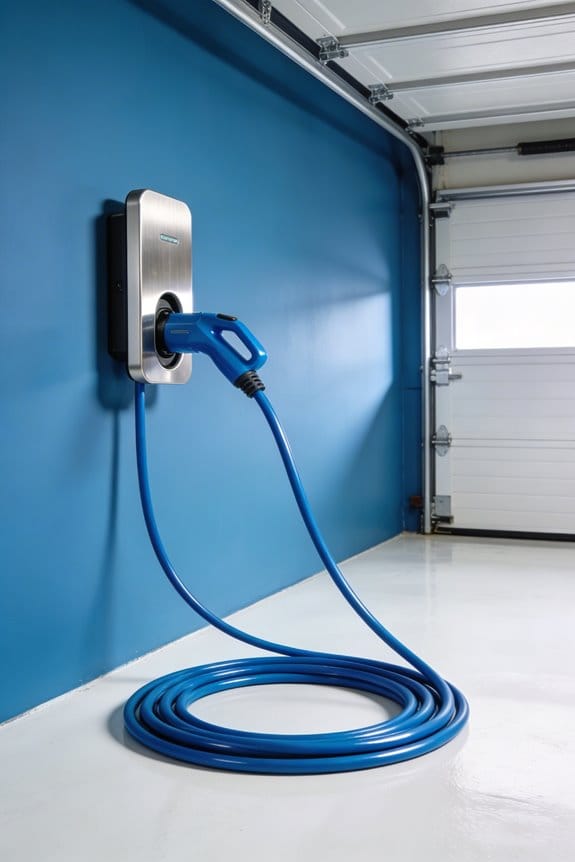
Frankly, a 5‑meter (16‑foot) cable works great when your charger is mounted on a wall and the car sits close by. It gives you enough reach without the bulk of a longer cord, so you can coil it neatly and store it safely.
Here’s the trick: if your garage layout forces you to go around a corner or a workbench, add a little extra length—just enough to keep the cord from pulling tight. Too much slack, though, can create a tripping hazard, so aim for a snug but flexible fit.
Worth knowing: the right length also helps keep the resistance low, which means your car charges a bit faster and the cable stays cooler. That’s a win for both your schedule and the equipment.
Give it a try and see how much smoother your daily charging routine feels. Ready to make your garage a hassle‑free charging zone?
Recommended Products

【Upgrade Your 48V Golf Cart】Enjoybot 48V 150Ah LiFePO4 Lithium Golf Cart Battery Conversion Kit – your ultimate power upgrade for 48V golf carts, street-legal golf carts, UTVs, and LSVs. This kit includes four Enjoybot 12V 150Ah Group 31 deep cycle LiFePO4 batteries, offering 50% capacity increase in the same compact size. Designed as a "drop-in replacement" for 6V, 8V, or 12V SLA/AGM batteries, it provides a seamless installation experience with a high energy density that enhances both performance and efficiency. Service life over 6000 cycles(80% DOD)
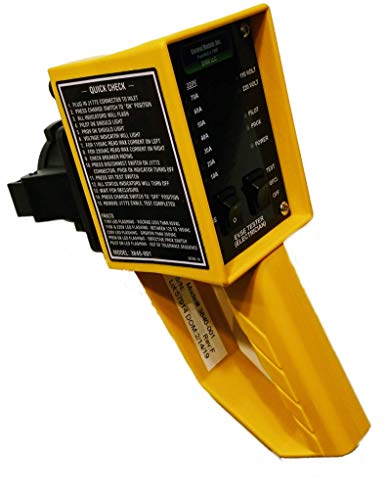
COMMERCIAL grade weatherproof hand-held Tester allows J1772 Level 2 and Level 1 chargers to be checked after installation, verifying a number of vital power and safety requirements.

INSTALL WITH CONFIDENCE: The Enphase HCS-50 EV Charger, formerly known as ClipperCreek, delivers award-winning durability and reliability. Installation is quick and straightforward—connect it to a dedicated 50 Amp circuit by any licensed electrician.
When a Longer EV Charging Cable Is Worth It?

Ever tried to plug your EV into a wall outlet that’s just a few feet away, only to realize the cord can’t quite reach? That’s when a longer charging cable becomes a real lifesaver.
We’ll see a longer EV charging cable pays off when the distance between the outlet and the car exceeds the reach of a standard 5‑meter cord. In those cases we gain parking flexibility and charging redundancy without extra hassle.
- Measure the gap. If it’s over 5 m, a 7‑ to 10‑meter cord saves time.
- Check garage layout. Multi‑car spaces or angled parking need extra length.
- Consider public stations. Some have outlets farther from the vehicle.
- Keep storage simple. Longer cords can coil neatly in a box.
- Verify rating. Use a cable rated for your charger’s amperage.
When these points match, the longer cable is worth it. It lets us park farther, use backup outlets, and avoid moving the car for each charge.
Recommended Products
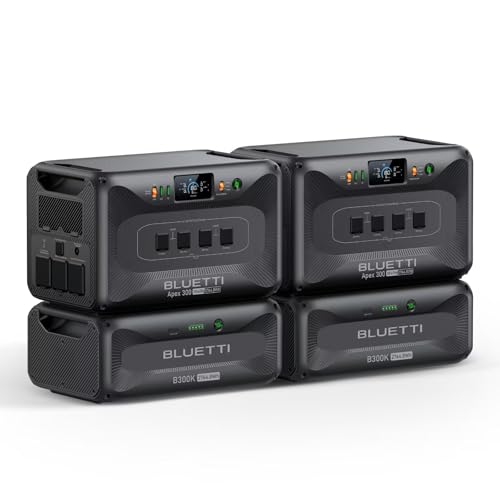
[All-Scenario Power] - Apex 300 (2764.8Wh, 3840W) keeps homes lit, RVs rolling & off-grid sites running. Parallel 2-3 units (5.5-8.3kWh), expand to 58kWh with B300K. Never powerless.

[All-Scenario Power] - Apex 300 (2764.8Wh, 3840W) keeps homes lit, RVs rolling & off-grid sites running. Parallel 2-3 units (5.5-8.3kWh), expand to 58kWh with B300K. Never powerless.

[Storm-Ready Power] - Apex 300 & 2 B300K (8.3kWh, 3840W, 7680W surge) runs homes, RVs for 2-4 days during outages. Powers fridges, medical gear, and essentials through any storm.
Identify Safety Risks of Improper EV Cable Extensions?

Ever tried to plug your EV into a regular extension cord and wondered why it feels off? You’re not alone—many of us have been there, and the risks are real.
If you add an extension that isn’t made for EV charging, you risk several safety problems. We see three main risks:
- Overheating risks – Non‑EV extensions can’t handle the high current. Heat builds up, especially when the cable is coiled or hidden. This can trigger a fire.
- Insulation degradation – Cheap or undersized cords lose their protective coating faster. Cracks expose conductors and increase shock danger.
- Voltage drop and power loss – Long, thin wires reduce voltage at the car. The charger may work harder, adding more heat.
What we recommend
- Use only extensions rated for the vehicle’s amperage.
- Choose copper conductors with proper gauge (e.g., #6 NM for up to 48 A).
- Keep the extension straight, not bent or stacked.
- Inspect the cord regularly for cracks, discoloration, or melting.
Following these steps limits hazards and keeps your charging routine safe.
Fair warning: skipping these steps can turn a simple charge into a costly disaster.
Worth knowing: always match the cord’s rating to your car’s needs, and you’ll avoid the common pitfalls most drivers overlook.
Got a favorite safe extension brand? Share it below and help others stay powered up safely.
Recommended Products

This selection includes 750 Feet of 12/3 SJOOW cable.

Meets the following UL and CSA standards for Flexible Cords and Cables: UL62 and CSA C22.2 . SOOW stands for S = Service Cord, OO = Oil Resistant (both inside and outside insulation), W = Weather and Water Resistant.

This selection is for 1,000 Feet of 16/3 SJOOW cable.
Store Your EV Charging Cable Without Tangling?

Ever find yourself wrestling with a tangled EV charging cable just before you need to plug in? It’s a hassle that can turn a quick charge into a mini‑frustration. The good news is that a few simple steps can keep your cable neat, safe, and ready to go every time.
First, give the cable a loose coil—no tight bends that could nick the jacket. Then pick a spot where the coil can sit securely.
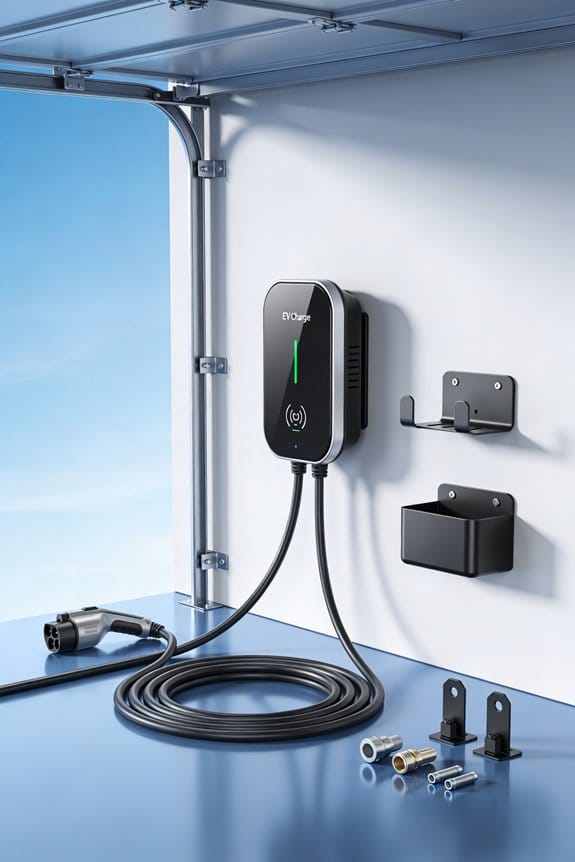
Coiled wall mounts – attach a sturdy bracket to the garage wall.
- Slide the coil onto the mount.
- Align the plug with the mount’s groove.
Magnetic holders – stick a magnetic strip near the outlet.
- Place the metal connector on the strip.
- The magnet holds the coil in place, stopping it from moving.
Keep the coil away from heat sources, check the mount or holder now wear, and store the cable out of direct sunlight.
Frankly, a little extra care now saves you a lot of time later. Try this: make a habit of coiling the cable the same way after each use. Your future self will thank you.
Do you want a hassle‑free charging routine? Give one of these ideas a shot and see how much smoother your mornings become.
Recommended Products
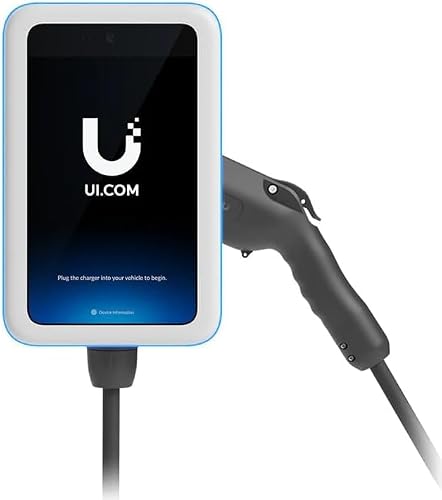
Weatherproof, 11 kW Level 2 electric vehicle charging station with an ultra-bright 10.1" touch display, flexible access control, and payment terminal accessory support.

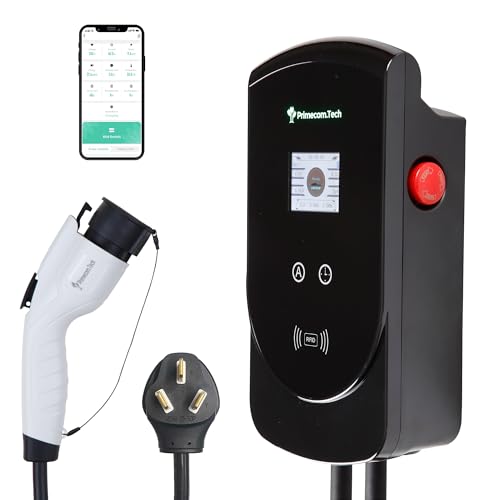
🔋 This charger is manually amperage adjustable from 50-Amps, 48, 40, 32, 30, 28, 25, 12 Amps Modes with front button selection provides upto 12KWh power up to 10X Faster charging (compare the the Factory provided 110V Charger). 📱 LONGER CORD OPTIONS & INTELLIGENT CHIP — Intelligent chip automatically provides the requested amperage from your EV. ☔️ Primecom Smart chargers are waterproof and are safe to use outdoors. Fully Outdoor Usable with IP56 rating waterproof status.

FAST CHARGING: Pulsar Plus EV Charger is 9x faster than portable basic chargers, providing up to 45 miles of range per hour, depending on the electric vehicle. It provides up to 11.5 kWh and adjustable current intensity.
Quick Checklist: Match EV Cable Specs to Your Setup

Ever tried plugging in your EV and realized the cable just doesn’t fit your setup? It’s a common snag that can turn a quick charge into a hassle. Below is a simple checklist that keeps things smooth and safe.
Recommended Products

Dual Charging on a Single Circuit: Charge two EVs simultaneously with the HCS-D40’s dual-port design, delivering 32 Amps to one vehicle or 16 Amps to two vehicles, minimizing the need for costly electrical upgrades.

🔋 This charger is manually amperage adjustable from 50-Amps, 48, 40, 32, 30, 28, 25, 12 Amps Modes with front button selection provides upto 12KWh power up to 10X Faster charging (compare the the Factory provided 110V Charger). 📱 LONGER CORD OPTIONS & INTELLIGENT CHIP — Intelligent chip automatically provides the requested amperage from your EV.
Before you start charging, check three things: cable length, amperage rating, and connector type.
- Measure distance – From outlet to vehicle port. Use a 5‑meter cable for most homes; choose 7‑10 m if you have a long driveway or multiple cars.
- Verify amperage – Match the cable’s rating (32 A, 40 A, 48 A) to your charger’s output. Underrated cables cause heat and voltage drop.
- Confirm connector compatibility – Make sure the plug fits your EV’s inlet (Type 1, Type 2, CCS).
- Storage solutions: Coil the cable neatly on a wall rack or a dedicated hook. Keep it out of sunlight and away from sharp edges.
- Safety tip: Inspect for frays before each use.
Frankly, the biggest mistake people make is ignoring the amp rating. A cable that’s too thin can overheat, and that’s a risk you don’t want. If you’re unsure, just look at the label on the charger and compare it to the cable’s specs. It only takes a minute, but it saves you a lot of trouble later.
Worth knowing: a tidy storage spot not only protects the cord but also makes it easier to grab when you need it. A wall‑mounted rack keeps the cable out of the way and prevents it from getting tangled with garden tools or pets.
Frequently Asked Questions
Can I Use a Standard Household Extension Cord for EV Charging?
We don’t recommend using a standard household extension cord for EV charging because safety risks rise, and voltage drop can reduce efficiency and damage the vehicle, so stick to a rated EV‑specific cable.
Do Weather‑Proof Cables Affect Charging Speed?
We assure you that weather‑proof cables don’t slow charging, as long as their insulation thickness stays robust and connector corrosion is prevented; otherwise resistance rises and speed fades, especially in rain‑soaked journeys.
How Often Should I Inspect My Cable for Wear?
We recommend checking your cable at least every three months, doing visual inspections for cracks or exposed conductors, and following manufacturer recommendations for more frequent checks if you notice wear or damage.
Will a Longer Cable Void My Vehicle’s Warranty?
We’re saying no, a longer cable doesn’t automatically void your warranty; warranty myths fade when dealer practices require certified, compliant extensions, and we’ll make certain you follow those guidelines for safe, covered charging.
Can I Coil the Cable While It’s Charging?
We say you shouldn’t coil the cable while it’s charging; coil safety matters because heat buildup can increase resistance, cause overheating, and potentially damage the connector or vehicle.