As an Amazon Associate, we earn from qualifying purchases. Some links on this site are affiliate links at no extra cost to you. Our recommendations are based on thorough research and editorial judgment.


What Causes Everyday Wear on EV Charging Gear

We see everyday wear on EV charging gear from loose wiring, overheating, pin fatigue, and power surges. 1) Loose wiring or outdated panels cause electrical faults and short circuits. 2) Poor ventilation or sunlight raises temperature, stressing components. 3) Repeated plug‑ins wear metal pins, creating cracks and corrosion. 4) Voltage spikes overload circuitry, especially during high‑current draw. 5) Cold makes cables brittle, leading to cracks and poor contacts. Regular visual checks and simple tests can catch these issues early, and the next sections show how to address them.
Key Takeaways
- Repeated plugging and unplugging cause metal fatigue and micro‑cracks in connector pins.
- Exposure to dust, moisture, and corrosion degrades contacts and leads to pitting.
- Poor ventilation or direct sunlight overheats the charger, stressing internal components and cables.
- Power surges and voltage spikes overload circuitry, especially during high‑current charging.
- Mechanical strain from sharp edges, loose routing, or frayed wiring creates wear and potential short circuits.
What Causes EV Charger Failure? An Overview
Ever had your electric car charger quit on you right when you needed it most? It’s frustrating, but the reasons are usually pretty simple.
What Causes EV Charger Failure? An Overview
When we look at why EV chargers fail, we see a handful of common causes.
- Electrical faults – Loose wiring, outdated panels, and power surges can damage the charger’s circuitry.
- Overheating – Poor ventilation or direct sunlight raises temperature, stressing components and reducing efficiency.
- Battery chemistry – Certain chemistries demand higher voltage spikes; if the charger can’t match these needs, it may shut down or degrade.
- Software faults – Firmware bugs or corrupted updates can stop the charger from communicating with the vehicle.
You may be interested


Recommendations
- Inspect wiring and panels regularly.
- Keep the unit shaded and ventilated.
- Match charger specs to the vehicle’s battery chemistry.
- Update firmware only from trusted sources and verify successful installation.
Frankly, most of these issues are preventable with a little routine care. Worth knowing: a quick visual check each month can catch loose wires before they cause a fire hazard.
Try this: schedule a 15‑minute walk‑around of your charging spot after a heavy rainstorm—look for water pooling or rusted connections.
If you’ve already faced a dead charger, you’ll know how annoying it feels to be stuck at home. The good news is that a few simple habits can keep your charger humming along for years.
Have you tried any of these tips yet? Let’s hear what worked for you.
Why Do Connector Pins Wear After Repeated Plug‑ins?

Ever notice your charger’s pins getting fuzzy after a few months of plugging and unplugging? It’s not magic—each pull‑out puts a tiny bite of stress on the metal, and over time that stress adds up. The metal starts to fatigue, tiny cracks form, and a little dust or moisture can turn those cracks into rust, making the connection feel rough.
Frankly, the fix is pretty simple if you take a moment to treat the plug like a delicate piece of hardware instead of a disposable gadget.
Try this:
- Make sure the pins line up before you push the plug in.
- Use a smooth, steady motion—no jerky pushes.
- If the plug feels stuck, stop and double‑check the alignment instead of forcing it.
- Keep the connector dry and wipe away any dust with a soft cloth.
- Take a quick look at the pins once a week for any discoloration or pitting.
Doing these things cuts down on fatigue and corrosion, so your charging stays reliable longer. You’ll be surprised how much difference a little care can make.
What’s the most annoying thing you’ve run into with worn pins? Let’s swap tips.
Recommended Products
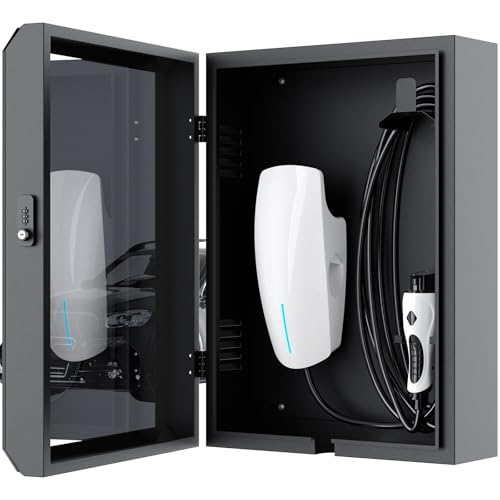
Universal Compatibility: This EV charger cover is not only compatible with Tesla, it is also compatible with most other electric vehicle chargers. Providing solutions for all electric vehicle owners
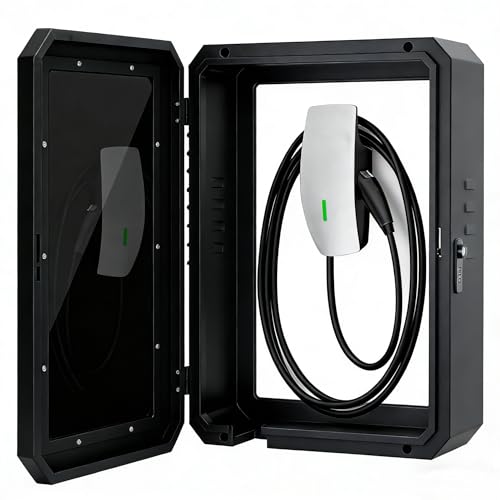
【Durable Construction】Made from 1.0 mm cold-rolled steel with precision cutting and welding, this EV charger enclosure is built to withstand the elements, ensuring your charging station stays protected all year round.

【Compatibility & Size】: This outdoor EV charger enclosure fits most EV chargers with overall dimensions ≤17”×10”×7”, including Tesla Wall Connector Gen 1-3, ChargePoint, Grizzl-E, and Autel. Overall exterior dimensions are 23"×19"×10" – please measure your available space and your charger before purchasing.
How Poor Wiring Leads to Charging Failures

Ever had your charger sputter and spark just because a wire was loose? It’s frustrating, especially when you’re trying to get back on the road. The good news is you can catch most of these problems before they become a safety hazard.
Inspect connections
Look for frayed ends or cracked sheaths, and tighten any loose terminations at the plug and panel. A quick visual check can save you a lot of headaches later.
Replace damaged sections
Swap out cables that show any breakdown, and choose certified, weather‑rated wiring for any outdoor stations. It’s worth spending a little extra on quality parts now to avoid bigger repairs down the line.
Test continuity
Grab a multimeter and run a simple check. Make sure the resistance stays low and stable; a sudden jump usually means a hidden break somewhere in the line.
Secure routing
Keep cables away from sharp edges and use clips to stop them from moving around. When wires stay put, the terminations stay tight, and you’ll see fewer sparks.
Fair warning: ignoring a single frayed strand can let live wires get exposed, and that’s a recipe for a nasty short.
Try this: after you’ve tightened everything, give the whole setup a quick wiggle test. If any part shifts, re‑secure it before you power up again.
Regular checks keep the charger reliable and safe. Have you noticed any other quirks with your charging gear? Let’s hear what’s worked for you.
Recommended Products

𝐂𝐚𝐥𝐢𝐟𝐨𝐫𝐧𝐢𝐚 𝐑𝐞𝐬𝐭𝐫𝐢𝐜𝐭𝐢𝐨𝐧: Smart Generator not available in CA. For CA customers, explore E10 battery & solar solutions.

INSTALL WITH CONFIDENCE: Formerly ClipperCreek, the core technology that comes inside every Enphase EV charger has earned its award-winning reputation by delivering industry-leading durability and reliability. Now they're made even better with a 5-year limited manufacturer warranty and 24/7 customer support. This HCS-D50 hardwired home dual electric car charging station comes fully assembled and offers quick installation to a dedicated 50 Amp circuit with any licensed electrician.

Dual Charging on a Single Circuit: Charge two EVs simultaneously with the HCS-D40’s dual-port design, delivering 32 Amps to one vehicle or 16 Amps to two vehicles, minimizing the need for costly electrical upgrades.
How Heat and Cold Affect EV Charger Performance

Ever notice how your EV charger seems to sluggish down on a scorching summer day or get stiff in a frosty basement? Those temperature swings can really mess with how fast your charger works and whether it stays safe.
What to watch for:
- Overheating – feel for a hot case, check ventilation.
- Cold snaps – test cable pliability, inspect for cracks.
Simple actions:
- Keep chargers in shaded, ventilated spots.
- Use insulated covers in winter.
- Schedule monthly visual checks.
- Avoid plugging the charger when the unit is hot.
- Replace any cable showing brittleness.
These steps help maintain performance and safety across temperature swings.
Frankly, heat raises internal resistance, slows charging speed, and can wear out solder joints over time. Cold makes plastics stiff and may cause cables to become brittle, cracking connectors and reducing flexibility.
Worth knowing: a a quick visual check each month can catch problems before they become hazards.
Try this: keep your charger out of direct sunlight and use a weather‑proof cover when it’s freezing outside.
Got any tricks that have worked for you?
Recommended Products

Limited-Time Perks: E10 Metal Pad, Up to 12-Month 0% APR

UNIVERSAL STRONG COMPATIBILITY: ev charge outdoor enclosure with post, The protection box measures 19.6x9.8x27.5 inches; The size of the pillar is:11.8x7.8x31.5 inch; which is suitable for different types of electric vehicle charging piles for Tesla Model Y S 3 X and can be easily installed in various occasions, such as residential areas, commercial centers, parking lots, etc.

4x Faster Charging with 25FT Full Reach — EVDANCE EV Charger LEVEL 2 charge at 15-20 mph via existing dryer outlet. Plug-and-play with included NEMA 10-30P (240V/24A) to recharge an 83.9kWh EV like BMWi4 from 20% to 80% in 9 hours, 75% faster than standard 120V/12A outlets (38 hrs). No garage rewiring needed. The EVDANCE 25FT LEVEL 2 EV Charger cable (21.9FT charger-to-car & 3.1FT control-to-outlet) , effortlessly stretching from laundry room dryer outlets to far parking spots.
When Do Power Surges Damage Your Charger?

Ever notice how a sudden power surge can ruin your charger just when you need it most? It’s frustrating, especially when you’re counting on your device to stay alive.
When a voltage spike hits the charger, it can overload the internal circuitry and cause permanent damage. We see damage when surge timing aligns with the charger’s active charging cycle. If the transient magnitude exceeds the design limit, components can fail instantly.
Key points to watch
- Surge timing – spikes during high‑current draw are worst.
- Transient magnitude – anything above 1.5 × rated voltage can break parts.
Practical steps
- Install a surge protector rated for EV chargers.
- Use a dedicated circuit with proper grounding.
- Check the breaker rating matches charger specs.
- Schedule regular inspections of wiring and connectors.
Frankly, you don’t need a fancy setup to protect yourself. A good surge protector and a properly grounded outlet go a long way. Worth knowing: keep an eye on your breaker and replace it if it trips often.
Recommended Products

Fast Charging Without Upgrades: Overcome limited electricity service and charge at the maximum speed possible, without upgrading your panel—thanks to Emporia’s PowerSmart technology that works with your existing electrical panel to automatically balance load.

Introducing the Emporia Pro Level 2 EV Charger

No Adapter Needed: Charge your Tesla or any vehicle requiring the NACS connection. Emporia's new NACS-specific ev charger works just like the Tesla charger, including remotely opening your Tesla charging port door at the press of a button.
How to Spot and Replace a Worn‑Out Charging Cable
Got a charger that keeps tripping the circuit? It might not be the wall outlet at all—your cable could be the culprit.
Power surges can fry a charger, but a worn‑out cable can cause the same problems even without a spike. We start with a visual inspection of the cable. Look for cracks, exposed wires, or frayed ends. Check the connector for bent pins or loose contacts. If any damage appears, the cable is unsafe and should be removed from service.
How to spot problems
- Examine the sheath for cuts or discoloration.
- Feel for stiffness or brittleness when bending.
- Test the connector for wobble or poor fit.
Replacement schedule
- Replace every 12–18 months for high‑use households.
- Replace sooner if visual inspection shows wear.
Follow these steps, and keep a spare cable ready. This keeps charging reliable and safe.
Frankly, a quick glance can save you a lot of hassle. Try this: keep a spare cable in a drawer you use often, so you never get caught without a backup.
Got any other tips for spotting a bad charger? Let’s hear them.
Recommended Products

【Top-Flight Performance 】The 51.2V 100Ah liFePO4 battery is manufactured by 16Pcs Automotive Grade A grade prismatic cells with higher energy density, more stable performance & greater power. And has a compact 5.12kWh energy, which is equivalent to 4pcs 12V 100Ah LiFePO4 batteries in 4S (or even 8pcs 12V 100Ah AGM batteries in 8S). Fully compliant with the UL1973 safety standard and certified by Intertek ETL for reliable safe operation.

Limited-Time Perks: E10 Metal Pad, Up to 12-Month 0% APR

[Get Up to a 30% Tax Credit] You may be eligible for the Residential Clean Energy Credit on qualified solar electric property costs. Check with your utility provider to confirm your eligibility and understand the requirements for the program.
Frequently Asked Questions
Do Weather Conditions Affect Connector Lifespan?
We’ve seen studies showing 45 % of connector failures stem from weather; temperature extremes accelerate material fatigue, while moisture‑induced corrosion tests corrosion resistance, shortening lifespan unless we protect them.
Can Frequent Fast‑Charging Degrade the Charger’s Internal Components?
We’ve seen that frequent fast‑charging can indeed degrade the charger’s internal components; the high currents cause thermal stress, accelerating battery aging and stressing circuitry, which shortens lifespan if not properly managed.
How Does Dust Accumulation Inside the Port Impact Charging Reliability?
We’ll tell you dust ingress clogs the port, fostering contact corrosion that sparks intermittent connections, so charging reliability drops—think of it as a slow‑creeping rust that silently sabotages performance.
Is There a Recommended Interval for Professional Charger Maintenance?
We recommend annual inspections under a service contract, ensuring we catch wear early, keep performance stable, and avoid costly downtime for your charging gear.
Do Different Vehicle Models Require Distinct Charger Handling Practices?
We say, “Model‑specific handling matters; we must mind connector ergonomics, ensuring each vehicle’s plug is treated gently, respecting its design, to prolong lifespan and prevent premature wear.”