As an Amazon Associate, we earn from qualifying purchases. Some links on this site are affiliate links at no extra cost to you. Our recommendations are based on thorough research and editorial judgment.

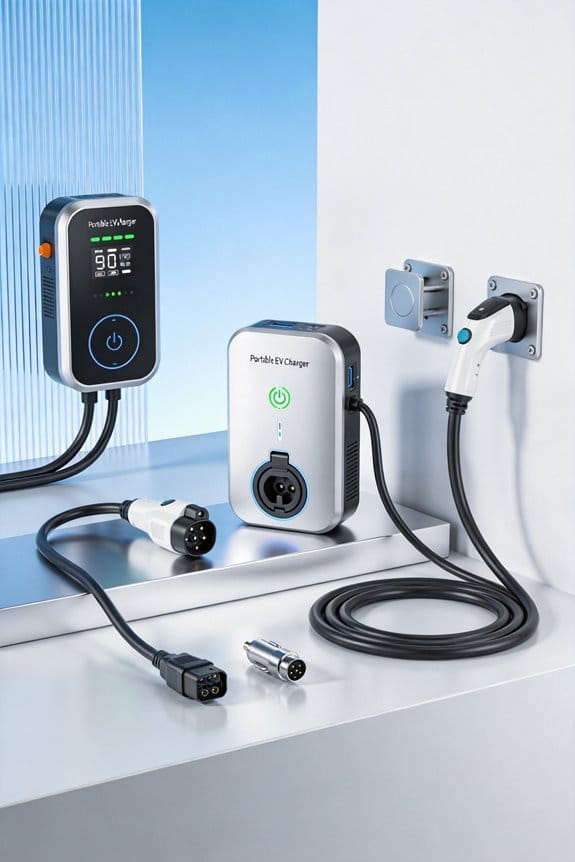
How Portable Chargers Compare With Fixed Home Charging Setups

We find that portable chargers add 2‑5 miles per hour on a 120 V outlet, while a fixed home unit on 240 V can add 10‑60 miles per hour, so home chargers are roughly three times faster. Portable units cost $200‑$700 with no installation, whereas home chargers start at $500‑$1,200 plus $300‑$800 for electrician work, but may qualify for rebates that offset the price. Portable chargers plug into any outlet and need no permits, while home chargers require a dedicated circuit and a permit. Portable units are handy for emergencies, street charging, or when garage space is limited; fixed units suit overnight charging at a permanent spot and integrate with smart‑home apps and solar. If you keep reading, you’ll see how to match a charger to your parking layout.
Key Takeaways
- Portable chargers add 2–5 mi/h (Level 1) or 10–60 mi/h (Level 2) versus home chargers typically delivering three times faster range growth.
- Portable units cost $200–$700 with no installation, while home chargers start $500–$1,200 plus $300–$800 for electrician work and may qualify for rebates.
- Portable chargers plug into existing 120 V/240 V outlets without permits; home chargers require a dedicated 240 V circuit, permit, and proper ventilation.
- Portable chargers are ideal for emergencies, street parking, or travel, whereas fixed home chargers excel for overnight charging and long‑trip depot parking.
- Home chargers offer smart‑app integration, OTA updates, and energy‑management features; portable chargers provide limited or no remote control.
Speed & Range Differences Between Portable & Home Chargers
You may be interested


Ever stuck at a coffee shop and realize your EV’s battery is barely enough for the next few miles? That moment makes you wish there was a simple way to add a few extra miles without hunting for a public station.
When you compare speed and range, portable chargers usually add 2‑5 miles of driving range per hour of charging, while home chargers can add 10‑60 miles per hour. We see that fast charging matters when you need many miles quickly. Portable units give modest range estimates, especially at Level 1. Home units deliver higher range estimates, often three times faster.
Key points
- Portable charger
- Adds 2‑5 miles per hour.
- Good for short trips or emergencies.
- No installation needed.
- Adds 10‑60 miles per hour.
- Ideal for daily use.
- Requires a dedicated 240 V outlet.
- Portable units cost $200‑$700, no install fee.
- Home chargers start at $500‑$1,200 plus $300‑$800 for a licensed electrician.
- Home setups may qualify for rebates, tax credits, or utility discounts.
- Portable chargers rarely earn incentives, but they avoid installation costs.
- If you charge daily, home charger savings from incentives can offset higher upfront cost within 3‑5 years.
- Light or occasional charging favors the lower initial outlay of a portable unit.
Recommendation
Use a portable charger when you travel often or lack a fixed spot. Install a home charger if you park at home and want rapid, consistent range growth. This balance meets most drivers’ needs without extra complexity.
Frankly, you’ll find that a portable unit is a handy backup, but a home charger is what keeps your routine smooth. Worth knowing: the home version usually needs a 240 V outlet, so plan for that when you’re setting up your garage.
Which option fits your daily drive best?
Recommended Products
Limited-Time Perks: E10 Metal Pad, Up to 12-Month 0% APR

[All-Scenario Power] - Apex 300 (2764.8Wh, 3840W) keeps homes lit, RVs rolling & off-grid sites running. Parallel 2-3 units (5.5-8.3kWh), expand to 58kWh with B300K. Never powerless.

[Storm-Ready Power] - Apex 300 & 2 B300K (8.3kWh, 3840W, 7680W surge) runs homes, RVs for 2-4 days during outages. Powers fridges, medical gear, and essentials through any storm.
Cost: Up‑Front vs. Long‑Term Savings for Portable vs Home Chargers
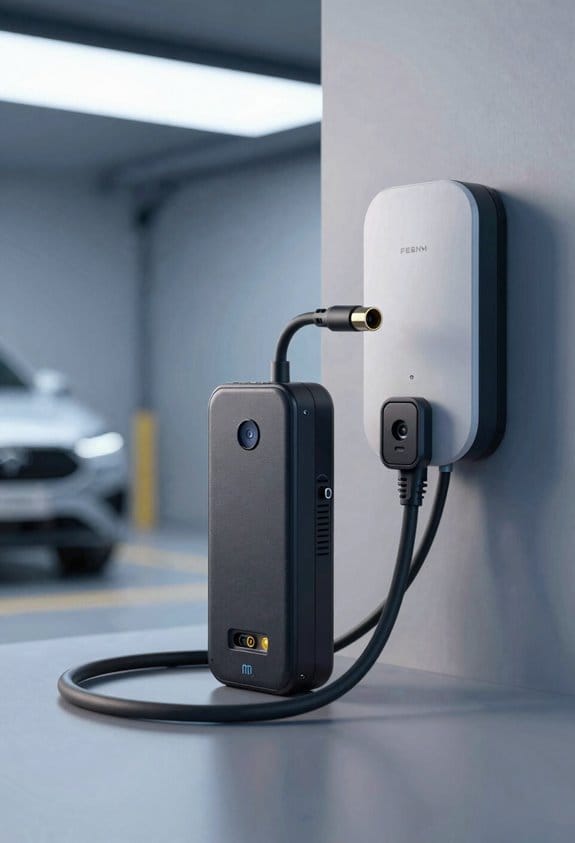
Ever wonder why your electric‑car charging cost feels like a guessing game?
You’re not alone—many folks wrestle with whether to buy a portable charger you can toss in the trunk or spend a bit more on a home setup that stays plugged in.
1. Initial outlay
2. Long‑term incentives
3. Break‑even point
Frankly, the best choice hinges on how often you plug in and whether you can snag any local rebates.
Here’s the trick: tally up your typical monthly mileage, then compare the total cost of ownership over three years for each option.
If the math shows the home charger pays for itself faster than you expected, go ahead and schedule that electrician.
If you only charge on weekends or when you’re on a road trip, the portable unit keeps your wallet happy and your car ready.
Worth knowing: many utility companies post their EV incentives online, so a quick search can reveal savings you didn’t know existed.
Choose based on how often you charge and whether incentives apply.
Ready to crunch the numbers and see which charger fits your lifestyle?
Recommended Products

HUGE PORTABLE POWER: The WGen14500DF dual fuel generator is an ideal power source for jobsites and emergency backup of larger homes. Gas: 18,000 peak watts, 14,500 running watts; Propane: 16,000 peak watts, 13,000 running watts

[All-in-One Home & RV Energy Hub] Boasting a massive 7.2kWh capacity and 6000W AC output, the F7200 drives 99.9% of heavy-duty appliances, including central ACs, pumps, and dryers. One unit handles what others need two for—the ultimate whole home battery backup

✔ PORTABLE; Weighing a modest 67 lbs when loaded with two batteries, this ultra lightweight electric wheelchair is designed to go wherever the adventure takes you; What’s more, our clever motorized folding power chair features a smart folding design for easier transport; This portable wheelchair lightweight folding solution also features 4 suspension comfy springs for a smooth ride,foldable padded footrest and armrests for extra comfort, compact for trunk space
Installation Realities: Portable vs Home Chargers
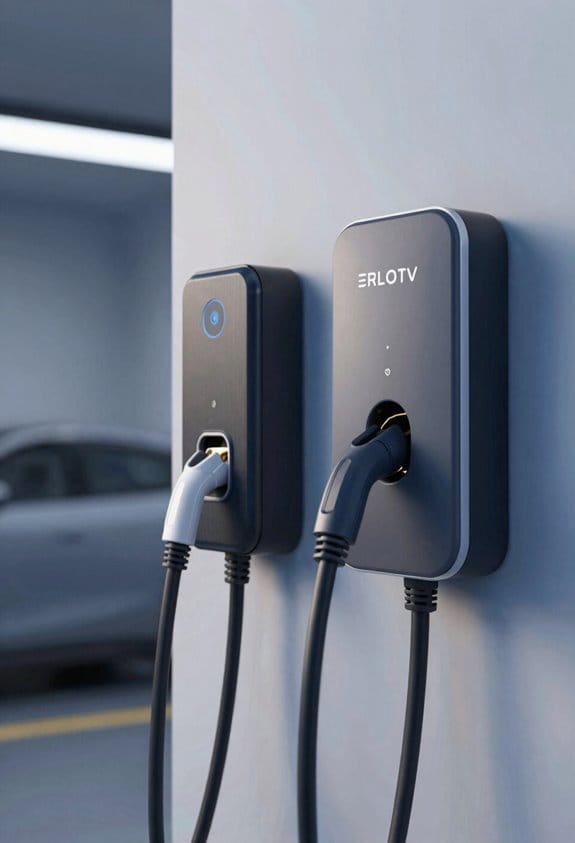
Ever wonder why your EV feels stuck at home while you’re trying to hit the road? Let’s walk through what you actually need to get each charger up and running.
Portable charger
- Plug it into any 120 V or 240 V outlet you already have.
- No permits, no paperwork—just a simple plug‑in.
- If you’re outdoors, grab a weather‑proof cover to keep it dry.
Home charger
- You’ll need a dedicated 240 V line, which means a new circuit.
- A licensed electrician must handle the wiring, and you’ll likely need a permit.
- Mount it on a wall or a pedestal, and make sure it has proper outdoor protection.
Key points
- Portable units skip the red‑tape and can be moved around.
- Home units stay put and must meet local electrical codes.
- Both need some sort of weather shielding, but home chargers usually come with built‑in enclosures.
Frankly, the biggest decision is where you’ll be charging most of the time and whether you’re up for the permitting hassle. Worth knowing: if you have a garage with a spare outlet, a portable charger might be all you need. If you drive a lot and want faster top‑ups, a home charger will pay off in the long run.
What’s your charging routine like? Let’s make sure your setup fits your life.
Recommended Products

[Energy Independence] - Apex 300 power station, B300K expansion battery (5.5kWh, 3840W, 7680W surge) delivers off-grid power for essentials, lights, and devices. Ideal for cabins, camping, and backup.

[All-Scenario Power] - Apex 300 (2764.8Wh, 3840W) keeps homes lit, RVs rolling & off-grid sites running. Parallel 2-3 units (5.5-8.3kWh), expand to 58kWh with B300K. Never powerless.

[All-Scenario Power] - Apex 300 (2764.8Wh, 3840W) keeps homes lit, RVs rolling & off-grid sites running. Parallel 2-3 units (5.5-8.3kWh), expand to 58kWh with B300K. Never powerless.
Travel & Emergency Use Cases for Portable vs Home Chargers
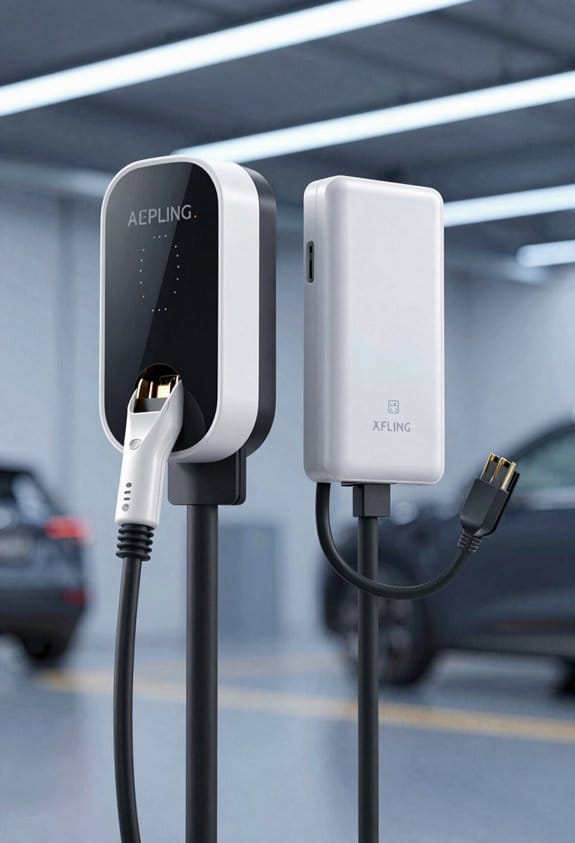
Ever found yourself stuck at a hotel parking garage with a dead EV battery and nowhere to plug in? I’ve been there, and a portable charger saved the day more than once.
Why we choose portable for travel:
- No installation required.
- Fits in the trunk.
- Works on 120 V or 240 V.
Emergency benefits:
- Provides a few extra miles while waiting for a tow.
- Keeps the battery above critical levels during power outages.
When home chargers are better:
- Long trips with dedicated parking.
- Overnight charging at a fixed location.
I keep a portable unit in my car for those unexpected moments, and I rely on a home charger for my everyday routine. Frankly, the freedom of plugging into a motel outlet or a park garage beats hunting for a charging station. Worth knowing: a portable charger can also pair nicely with roadside assistance kits, giving you a quick boost if you’re stranded.
Try this: stash the charger in your trunk and keep a short cable handy for those 120 V hotel sockets. It’s a small habit that can keep your plans on track without a lot of hassle.
Do you already have a portable charger, or are you still on the fence? Either way, having one on hand feels like a smart safety net.
Recommended Products

[All-Scenario Power] - Apex 300 (2764.8Wh, 3840W) keeps homes lit, RVs rolling & off-grid sites running. Parallel 2-3 units (5.5-8.3kWh), expand to 58kWh with B300K. Never powerless.
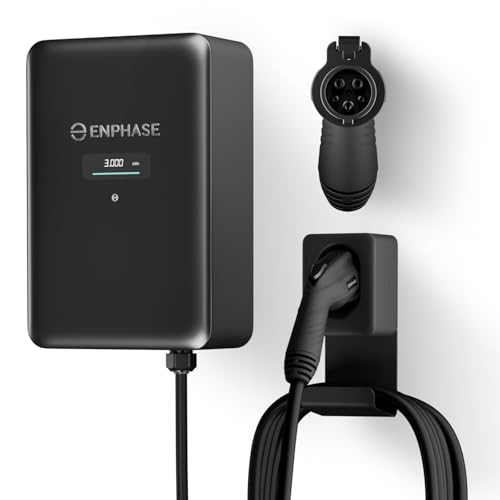
7× FASTER CHARGING: Get fast, reliable EV charging up to 9.6 kW (38 miles/hour) in a compact, flexible design that’s easy to use anywhere.
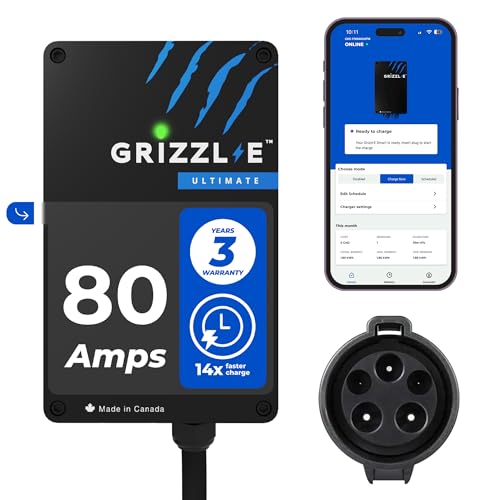
Grizzl-E Ultimate with 25ft Cable is the 80A 19.2kW, Wi-Fi-connected EV Charger with J1772 or NACS charging connector. Made in Canada with a heavy-duty UL Type 4 Indoor/Outdoor Rated metal enclosure to withstand any indoor or outdoor condition
Smart Features & Integration for Portable vs Home Chargers
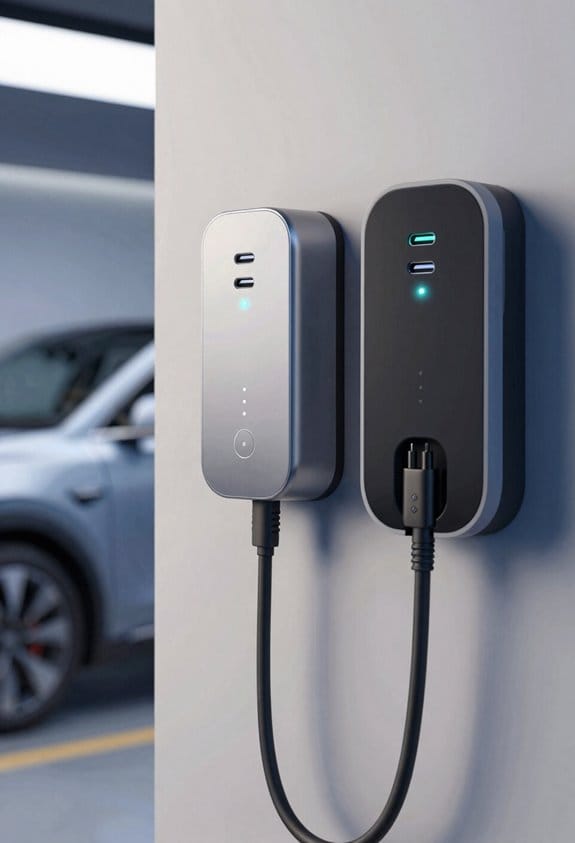
Ever found yourself stuck at a café with a dead phone and no wall outlet in sight? That’s when a portable charger can feel like a lifeline, but it’s easy to forget that the “smart” side of these devices isn’t the same as what you get at home.
Recommended Products

IMPRESSIVE POWER: Built with the latest Snapdragon X Elite processor, enjoy powerful performance and AI Capabilities

Sunlight-Readable 1800-Nit Outdoor Display: Designed for outdoor visibility, this 43-inch Full HD IPS screen delivers bright, clear content even in high ambient light—ideal for storefront promotions, sidewalk campaigns, events, and public-facing messaging.

【30LBS Ultra-Lightweight Carbon Fiber Wheelchairs】Crafted with aviation-grade carbon fiber. Compared with other carbon fiber electric wheelchairs on the market, WEYRAL wheelchair has a higher carbon content and the entire body is made of carbon fiber.this portable electric wheelchair weighs only 30 lbs, making it lighter yet sturdier than traditional models. Elderly can lift it easily. While keeping the weight low, the carbon fiber material increases the wheelchair's strength and durability, with a load capacity of up to 265 pounds.
App ecosystem
Home units usually link to a full‑featured app that lets you schedule charging, view energy use, and set limits. Portable chargers often have a simple app or none at all.
Cloud security
Home chargers store data in the cloud, so they need strong encryption and regular updates. Portable models may use local storage only, reducing exposure but also limiting remote control.
- Integration – Home chargers connect to smart‑home hubs, solar inverters, and utility demand‑response programs. Portable chargers rarely talk to other devices.
- Updates – Home systems receive OTA firmware upgrades; portable units may require manual updates via USB.
Frankly, you’ll want to match the level of integration to your daily routine and privacy comfort. Worth knowing: if you’re okay with a few extra steps, a portable charger that updates via USB can still keep your gear safe without the hassle of cloud permissions.
What matters most is how you plan to use it—whether you’re cruising between meetings or charging your car at night. Have you thought about which setup fits your lifestyle best?
Choosing the Right Charger for Your Parking Situation
Ever tried to charge your EV and felt stuck because the parking spot just isn’t set up for it? The place where you leave your car decides a lot about what charger works best. Below are some practical tips that helped me sort out the details without any hassle.
Curbside limitations
Street charging usually means a regular 120 V outlet. The power’s low, so you’ll see a slow charge. Check local rules for outlet durability and make sure the socket is protected from rain or snow.
Shared parking
Portable units can go anywhere, but you still need an outlet that’s free. A lockable cable can keep thieves away. If several cars share the same socket, set a schedule so you don’t overload the circuit.
Garage ventilation
Fixed home chargers need good airflow. Make sure your garage has a vent or a fan to move heat away. Proper ventilation protects both the charger and your battery from overheating.
Street charging
Portable chargers are the only realistic option here. Use a weather‑proof cover and a surge protector to guard against the elements. Keep the cord short to avoid tripping hazards.
Worth knowing: When you’re picking a charger, think about the space, the power source, and safety first. It saves you time and money down the road.
Got a parking spot that’s a bit tricky? Let’s figure out the best setup for you.
Frequently Asked Questions
Do Portable Chargers Work With All EV Models?
We can say, virtually every EV plugs into a portable charger, but compatibility limits surface when connector standards differ—most use J1772, while Tesla needs adapters, so you’ll need the right plug for each model.
Can a Portable Charger Be Used on a 240V Outlet Without Adapters?
We can plug a portable charger directly into a 240v outlet if the unit’s plug matches; no adapters needed. Just make sure the outlet’s aesthetics suit your garage or parking space.
What Safety Certifications Should I Look for in Portable Units?
We recommend checking that the unit is UL Listed and carries the CE Marking, ensuring it meets U.S. and European safety standards; these certifications verify reliable electrical protection and compliance.
How Does Weather Affect Portable Charger Performance?
We’ve found cold performance drops charging speed, and humidity effects can cause connector corrosion, so we recommend keeping the unit dry and insulated, using weather‑rated cables, and checking the spec sheet for temperature limits.
Are There Any Warranties Differences Between Portable and Home Chargers?
We’ve found warranties differ: manufacturers usually give portable chargers a modest term, while home units often bundle extended coverage. Expect longer, more thorough guarantees with fixed installations, especially when you upgrade.