As an Amazon Associate, we earn from qualifying purchases. Some links on this site are affiliate links at no extra cost to you. Our recommendations are based on thorough research and editorial judgment.

How Simple Accessories Can Improve Charging Safety

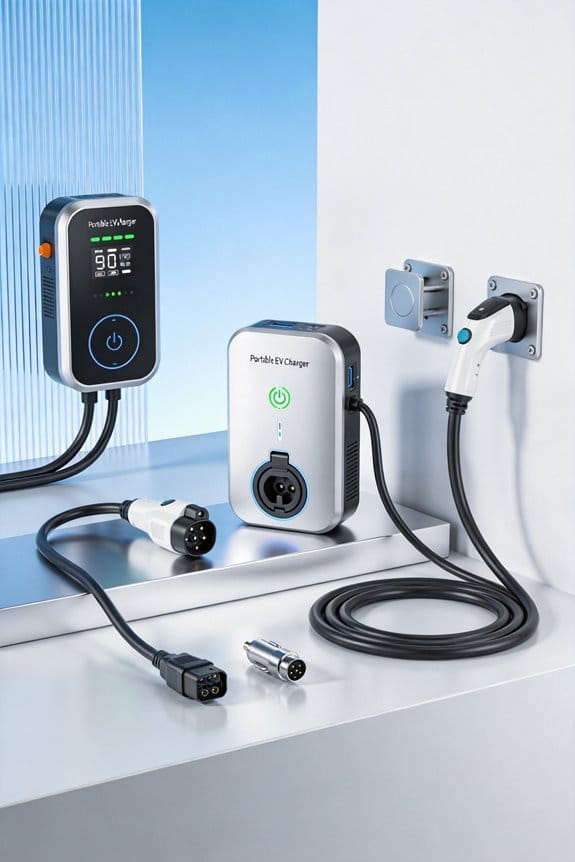
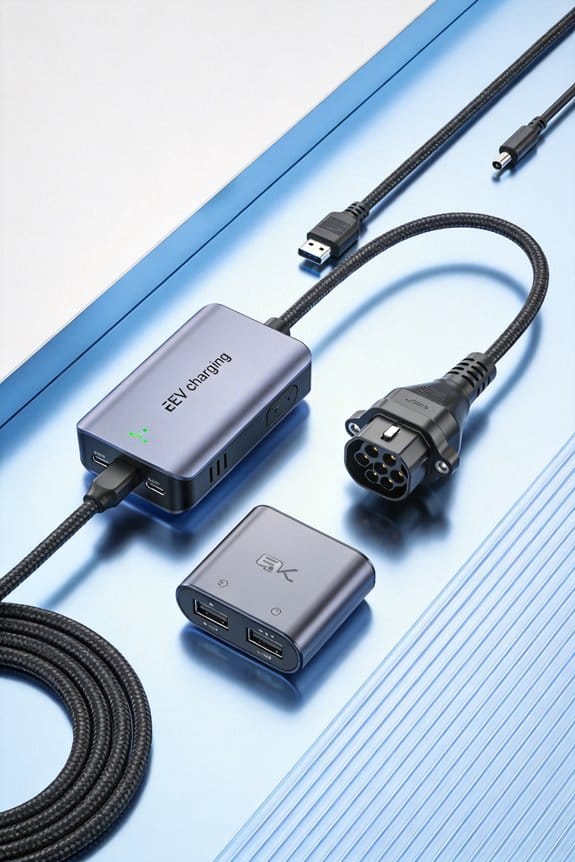
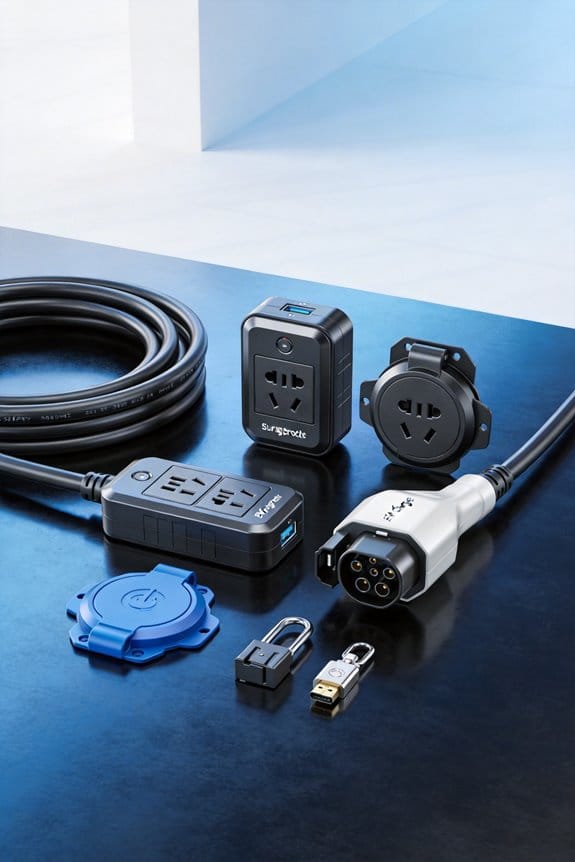
We can boost EV‑gun safety with a few cheap accessories. 1) Add a metal‑oxide varistor or TVS diode to clamp voltage spikes. 2) Install a basic load‑management controller to monitor current and shut down on overload. 3) Use waterproof seals and silicone gaskets to keep moisture out of the charger case. 4) Fit spiral conduit and heat‑resistant ties to protect cables from wear and heat. 5) Keep disposable PPE and lock‑out tags handy for quick, safe installs. These steps cut fire risk and guarantee fast fault response, and the next section shows how to expand the system.
Key Takeaways
- Install a load‑management controller to monitor and balance charger currents, preventing overloads and enabling automatic shutdown on faults.
- Add a GFCI or surge protector to instantly disconnect power during ground faults or voltage spikes, safeguarding equipment and users.
- Use waterproof seals and cable conduits to protect connectors from moisture and mechanical wear, reducing short‑circuit risk.
- Equip the setup with disposable PPE, grounding pads, and lock‑out tags for safe installation and maintenance of live components.
- Integrate a communication module that sends alerts and status updates to a central dashboard for real‑time monitoring and rapid response.
Overvoltage & Overcurrent Protection: Core EV‑Gun Safety
You may be interested

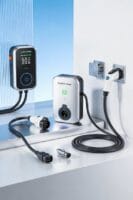

Ever had your EV‑gun flicker out right when you needed it most? That sudden drop can be a sign of overvoltage or overcurrent sneaking in, and it’s not something you want to ignore. Below is what I’ve learned from wiring a few chargers at home, and it’s helped me keep the power steady.
Voltage clamping
- Limits spikes to safe levels.
- Uses metal‑oxide varistors or TVS diodes.
- Prevents damage to the car and charger.
Current monitoring
- Detects excess flow instantly.
- Triggers a shut‑off circuit.
- Reduces fire risk.
Basic steps
- Verify protection components are rated for the charger’s max voltage.
- Test the monitoring circuit after installation.
- Keep a record of test results.
Frankly, the trick is to treat these safeguards like a seat belt—don’t skip them just because they look extra. Worth knowing: a quick visual check of the varistor and diode connections can save you a lot of hassle later. If you ever wonder why a charger trips, it’s usually the current monitor doing its job.
Try this: after you mount the EV‑gun, power it up with a low‑load test lamp. Watch the voltage readout for any spikes, and make sure the current sensor stays within the normal range. When everything looks good, lock the housing and log the numbers for future reference.
Following these steps means your EV‑gun will stay protected against overvoltage and overcurrent events. Ready to give your charger the care it deserves?
Leak‑Proof & Cable‑Management Accessories to Prevent Fires
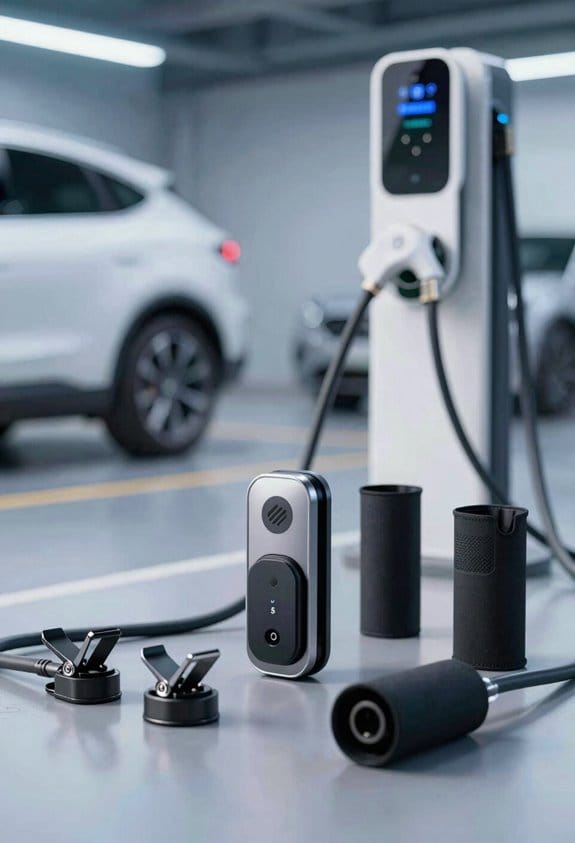
Ever had a charger that seems to attract water and mess? It’s a tiny thing, but it can turn a simple nightstand into a fire hazard. I’ve learned a few tricks that keep the area dry and the cords tidy, so you don’t have to worry about sparks when you’re half‑asleep.
First, I seal every gap around the charger housing. A good waterproof seal blocks moisture that could cause a short circuit, and it’s easier than you think. I use a silicone sealant that stays flexible, so the charger still fits snugly in its spot.
Next, I run the cables through spiral conduits. They bundle the wires together, stop wear, and keep the whole setup looking neat. The conduits are flexible enough to bend around corners, but they’re sturdy enough to protect the wires from rubbing against furniture.
Try this:
- Apply waterproof seals to the charger case.
- Install spiral conduits along the cable path.
- Secure conduit ends with zip ties.
- Keep cables away from heat sources.
- Check seals regularly for cracks.
These steps cut down on water exposure and friction, which means fewer chances of overheating. I also make sure the cords stay clear of anything that gets hot—like a lamp or a laptop charger—because heat can weaken the insulation over time.
Frankly, a tidy setup feels safer and looks better, too. When everything’s organized, you can spot a problem before it becomes a disaster. It’s a small habit that pays off in peace of mind.
What’s the one thing you’ll try first to make your charging station safer?
Recommended Products

【⚡1200W Precision Power Delivery-Uncompromised Acceleration⚡】The Eahora Juliet Electric Bike delivers relentless 1200W power and 90N·m torque, engineered for real-world demands. Experience instant throttle response that holds 31MPH during highway merges or tackles sustained 33° hills without hesitation. Dual Hall sensors eliminate motor cutouts during aggressive starts, translating pavement-to-trail power seamlessly.

Complete kit includes: (1)4PCS 110 Watt 12 Volt Flexible Solar Panel (2)40A MPPT Charge Controller(3)30ft 10AWG Solar Cable (4) 8ft 10AWG Tray Cable(5) Cable Entry Housing(5) 1 Pair Y Branch connector:1 male to 4 female(M/FFFF) and 1 female to 4 male(F/MMMM). It is compatible with solar connectors in 10AWG to 12AWG.
High Efficiency:Solar panels use new monocrystalline solar cells, with a conversion rate of up to 23%. The component contains a bypass diode and the circuit uses input overcurrent protection and reverse protection design.100W solar panel can work well even in low light conditions.
Disposable Safety Components for Quick EV‑Gun Installations
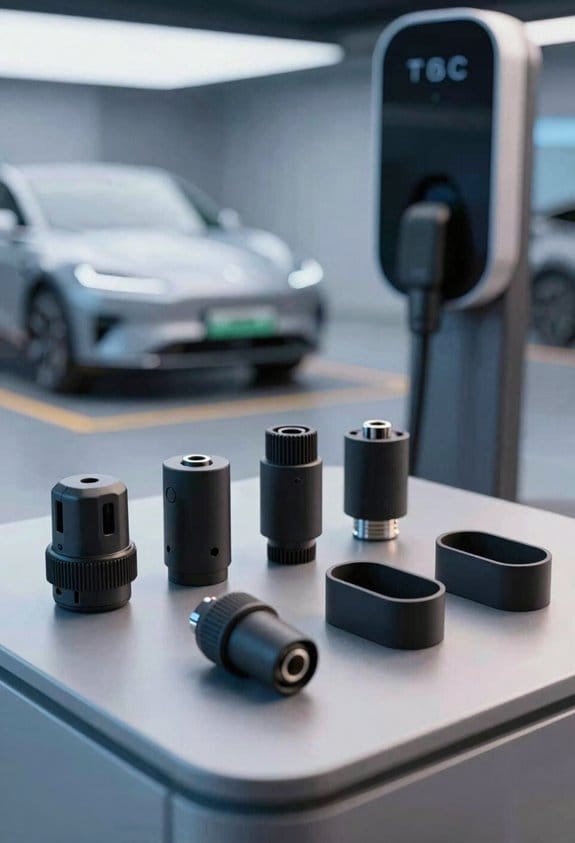
Ever tried to set up an EV‑gun and found yourself juggling wet chargers and tangled cables? Those little annoyances can turn a quick job into a safety nightmare. The good news is you can keep things tidy and safe with a few disposable items that speed up the whole process.
Wear single‑use PPE** – grab gloves, goggles, and a face shield before you even think about touching any live part**. It’s a tiny step that saves you from burns or eye injuries, and you won’t have to worry about cleaning reusable gear later.
Apply disposable grounding** – just snap a grounding pad** onto the gun housing. It pulls stray current away, so you won’t get shocked if something goes wrong. The pad sticks on fast and you can toss it after the job.
Use pre‑cut insulating sleeves** – slide these over the connectors** to keep moisture out. They’re sized right for most EV‑gun plugs, so you won’t have to cut anything yourself. A dry connection means fewer short‑circuit worries.
Attach temporary lock‑out tags**** – label the power source as “Do Not Use” while you work. It’s a clear visual cue for anyone nearby, preventing accidental energizing of the system.
These steps let you set up an EV‑gun safely in minutes, cut fire risk, and keep the system ready for the next charge. Frankly, it’s the kind of practical advice you wish you’d known before. Try this: keep a small kit of these disposables in your garage so you’re always ready for a quick install.
Got any other tricks that help you stay safe on the job? Share them below!
Recommended Products

BETTER SLEEPING, BETTER LIFE - XKETA Mat transfers the Earth's electrons into your bed through the grounding cable, which helps sleep by balancing the autonomic nervous system & reduces stress and anxiety levels. Grounding balances this system and promotes muscle relaxation, stress reduction, making it easier to fall & stay asleep.

【Instructions for Using Conductive Test Pen】The test pen is only used to test whether the product has conductivity and is not used to test whether the ground wire is connected. Even without connecting the ground wire, the tail light of the test pen will light up, proving that our product has conductivity

SAFE & NON-TOXIC MATERIALS: Our proprietary carbon-based grounding material is the culmination of two decades of Clint Ober's research and development. The Grounding Mat is made with vegan, eco-friendly, and non-toxic materials.
Residential EV‑Gun Safety Kits for Home Wiring
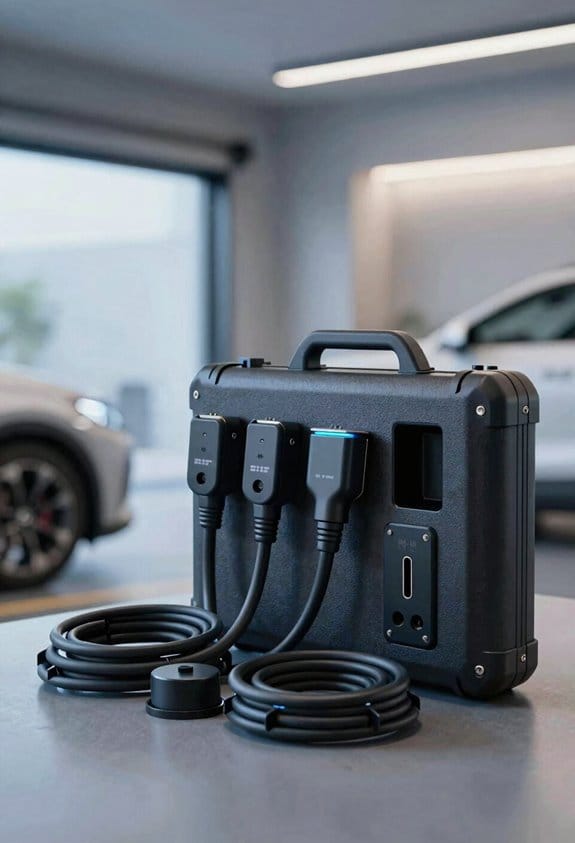
Ever wondered why your home charger feels like a guessing game? I’ve been there—trying to keep the wiring safe while not turning the garage into a fire hazard.
Recommended Products

Switch between gasoline (13000 surge, 10500 running watts), propane (11250 surge, 9000 running watts), and natural gas (10000 surge, 8000 running watts) with a simple press of a switch

Introducing the Emporia Pro Level 2 EV Charger

Faster Charging & Saving More: The electric vehicle charger offers 9X higher speed than level 1 EV chargers, providing an impressive 48 miles of range in just one hour. The EV charger for home supports APP management and Wi-Fi connectivity, you can adjust the current intensity, schedule charging time, and monitor charging data in real-time. Schedule up to 4 groups of charging sessions (3 time slots per group), adjust amperage, and set custom times with rate-based cost calculations.Take control of your electricity costs by programming charging during off-peak hours.
Ground‑fault circuit interrupter (GFCI)
A GFCI is your first line of defense. If any stray current finds its way to the metal case, it trips the breaker instantly, protecting you from shock. It’s cheap, easy to install, and saves a lot of worry.
Surge protector
Lightning or a sudden grid glitch can send a voltage spike straight into your charger. A good surge protector clamps that spike before it reaches your EV, keeping both the car and the house safe.
Heat‑resistant cable ties
Tidy wires aren’t just for looks. Using heat‑resistant ties keeps the cables from rubbing or overheating, which cuts down the fire risk dramatically.
Recommended Products

Approved by the consumer product safety committee (CPSC), UL listed, approved by insurance companies

-4℉ Low-Temperature Charging Capability: Special low-temperature electrolyte enables safe charging in extreme cold without cell damage, supporting reliable operation down to -4℉ and delivering 6,000+ long-life cycles.

POWERFUL PROCESSOR: Features Intel Core Ultra 7 356H processor with 16 cores (4 Performance + 8 Efficient + 4 Low-power cores) and up to 4.7GHz maximum frequency, delivering exceptional AI computing power and performance for demanding enterprise applications
Disconnect switch
A dedicated disconnect switch lets anyone—firefighters, electricians, or you—shut off power in a snap. It’s a small addition that makes a big difference in an emergency.
- Use a garage retrofits plan to locate the kit near the charger.
- Perform panel upgrades if your current breaker can’t handle the added load.
- Follow local code for conduit and insulation.
Frankly, the safest setup starts with a clear, organized layout. When everything’s labeled and within reach, you won’t have to scramble if something goes wrong.
Try this: before you start, turn off the main breaker and double‑check that the GFCI and surge protector are wired to the same circuit as the charger. That way you won’t miss any hidden connections.
These steps give you a reliable, low‑stress wiring job that lets you charge at home without the fear of fire or shock. Ready to get your garage wired right?
Recommended Products

Propane Garage Heaters: Reznor UDXC models work as a propane heater for indoor use and make a great space heater solution for many kinds of commercial or industrial applications such as garages, workshops, warehouses, factories, and more.
Gas Shop Heaters: UDXC series Reznor garage heater gas units come natural gas fueled and make for a great heating solution for many kinds of commercial or industrial spaces such as garages, workshops, warehouses, factories, and more.
Natural Gas Heaters: The Reznor UDXC series gas heaters for indoor use makes a great heating solution for many kinds of commercial, industrial, or residential spaces such as garages, workshops, warehouses, factories, and more.
AC vs. DC EV‑Gun Safety Gear: Choosing the Right Accessories
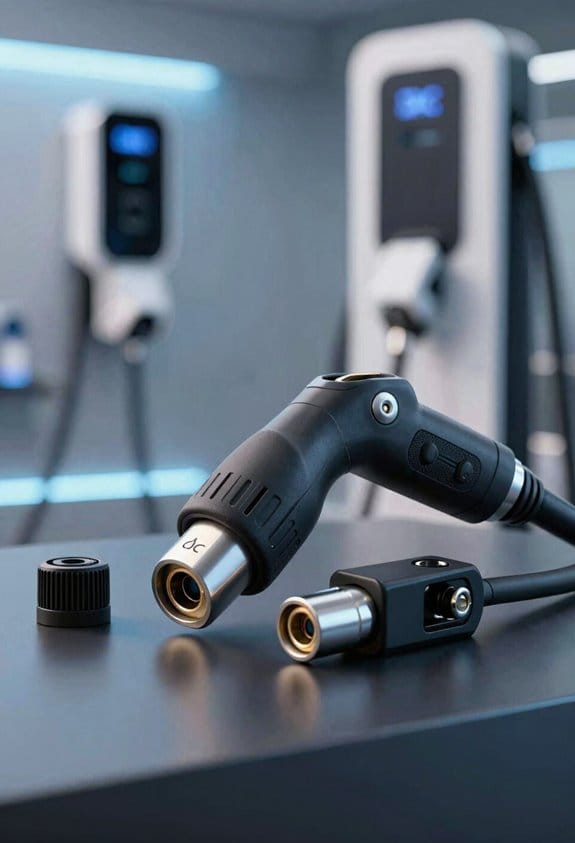
Ever tried to plug your EV‑gun into a home outlet and felt a twinge of doubt about the safety gear? You’re not alone—mixing AC and DC setups can get confusing fast. Below is the low‑down on what you actually need for each type, so you can keep your charging station safe and your mind at ease.
AC accessories
- Plug‑in safety caps protect the sine‑wave outlet.
- Flexible cable reels reduce strain on the handle.
- Ground‑fault interrupters match AC waveform.
DC accessories
- Heavy‑duty insulated connectors handle high voltage.
- Rigid cable clamps prevent movement during fast charge.
- Surge protectors designed for DC waveforms.
Frankly, the biggest mistake people make is using the wrong kit for the wrong charger. If you’re wiring a home charger, stick with the AC list; for a fast‑charge station, grab the DC gear. That simple match‑up keeps everything running smoothly and avoids costly mishaps.
Try this: before you buy any part, double‑check that the accessories line up with the gun’s voltage and waveform. It’s a quick habit that saves you a lot of hassle later on.
You’ll find that each gun works best when paired with its own protective kit. The AC accessories are perfect for home chargers, while the DC set is built for the high‑speed demands of fast‑charge stations. Pairing them correctly means fewer surprises and more reliable charging.
Got a favorite brand for these accessories? Share it below!
Smart Load‑Management & Emergency Disconnect for EV‑Gun Safety
Ever wonder why your EV‑charging spot sometimes feels like a ticking time bomb? You’re not alone—many folks worry about fire risk and grid hiccups when a charger goes rogue. The good news is you can add a few smart pieces to keep things safe and still run efficiently.
Install a load‑management controller
- It watches the current each charger draws.
- It spreads the load so no single unit gets overloaded.
Add an emergency‑disconnect relay
- It trips power in just a few seconds when something’s wrong.
- It lets first‑responders work without fear of live voltage.
Use a communication module
- It pushes alerts straight to a central dashboard.
- It can fire off an automatic shutdown if a fault is detected.
These steps make the station safer for everyone and help keep the grid stable. You’ll also cut down on fire hazards and protect users from nasty surprises. Follow local codes and give the system a regular test—don’t skip that part.
Frankly, the whole setup isn’t as pricey as you might think, and the peace of mind is worth it. Worth knowing: start with a simple load‑management controller, then layer on the relay and communication module as your budget allows.
Give it a try and see how much smoother your charging routine becomes. Ready to make your EV‑gun safer?
Frequently Asked Questions
How Often Should Leak‑Proof Seals Be Inspected for Wear?
We recommend a routine inspection every six months, like checking a lighthouse’s glass for cracks; if wear appears, schedule seal replacement promptly to keep the system watertight and safe.
Can Disposable Safety Components Be Recycled After Installation?
We can recycle disposable safety components after installation, but recycling challenges arise because material separation is difficult; we must dismantle the parts, sort plastics, metals, and composites, and then process each stream appropriately.
What Certifications Indicate Compliance With the 2022 Safety Standards?
We’ll tell you straight: look for UL Listed and IEC Certified labels—those badges scream compliance with 2022 standards, turning any charger into a fortress of safety that practically glows with reliability.
Do Smart Load‑Management Kits Require a Separate Internet Connection?
We don’t need a separate internet link; our smart load‑management kits operate with cloud independence, letting you keep local control while still syncing data when you choose to connect.
Are Emergency Disconnect Switches Compatible With Both AC and DC Chargers?
We say yes—emergency disconnect switches work with AC and DC chargers, provided we run thorough compatibility testing and adopt robust isolation methods, ensuring each circuit’s safety shield stays intact.