As an Amazon Associate, we earn from qualifying purchases. Some links on this site are affiliate links at no extra cost to you. Our recommendations are based on thorough research and editorial judgment.

What to Know About Load Balancing in Home Charging

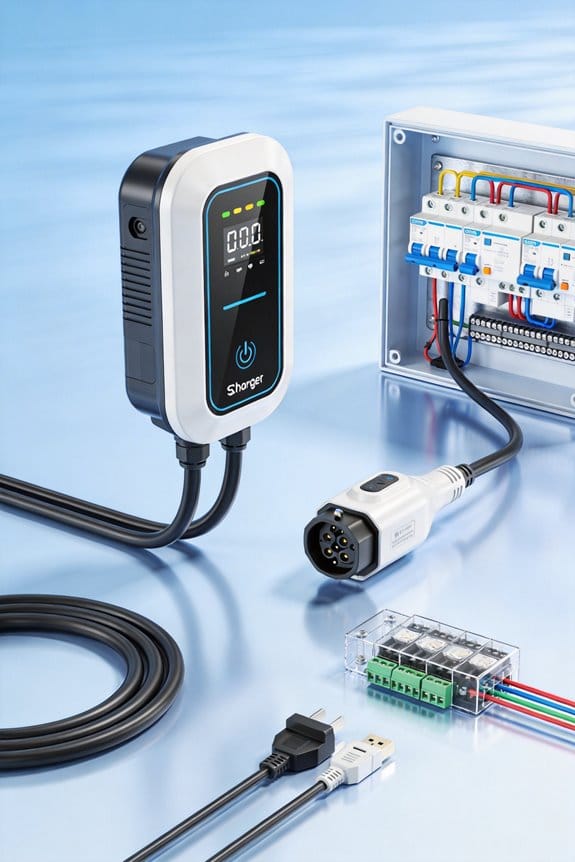
We use dynamic load balancing to let your EV charger share the home’s existing electricity safely. It constantly monitors total current and adjusts charger draw so the panel never exceeds its limit. The hub can prioritize solar output, sending surplus power to the car when the house uses less. It also lets multiple EVs share capacity by assigning priorities or time windows. This avoids costly panel upgrades and reduces your electricity bill. If you keep going, you’ll see how it works in detail.
Key Takeaways
- Dynamic load balancing continuously monitors household current and adjusts EV charger draw to stay within panel capacity, preventing breaker trips.
- It throttles charging in real time when high‑draw appliances spike, eliminating the need for panel upgrades or additional wiring.
- During low‑usage periods or excess solar generation, the system boosts charger output, maximizing renewable use and reducing grid electricity costs.
- Multiple EVs can share available capacity, with priority settings and automatic rebalancing to avoid overloads.
- After a simple “set‑and‑forget” setup—connecting the charger to the hub and selecting “solar first”—the system runs autonomously, delivering faster, cheaper charging without electrician intervention.
What Is Dynamic Load Balancing for EV Charging?
You may be interested

Ever wonder why your EV charger sometimes makes the lights flicker? That’s a sign your home’s power is being stretched thin. The good news is you don’t have to upgrade your whole electrical panel—dynamic load balancing can keep things safe and smooth.
Dynamic load balancing works by constantly checking how much electricity your house is using and then adjusting the charger’s draw accordingly. It’s like having a traffic cop for power, making sure the charger only takes what’s left over after the fridge, AC, and other gadgets have had their share.
How it works in practice
- Monitor – A sensor reads total current every few seconds.
- Compare – The reading is checked against the home’s power limit.
- Adjust – If other devices use more power, the charger lowers its rate.
- Restore – When demand drops, the charger raises its rate again.
This cycle repeats all day, so you never exceed safe limits. It works with a single car or a whole family fleet, and you won’t need to run new wires through the walls.
Frankly, the setup is pretty straightforward. Just follow the manufacturer’s guide to enable the feature, and you’ll have a system that protects your wiring while still getting your battery topped up.
Worth knowing: the sensor relies on current sensing, so it knows exactly how much each appliance draws. That means the charger can dial back its power in real time, keeping everything balanced without you having to lift a finger.
If you’ve got multiple EVs at home, the same principle applies. The charger will share the available capacity among all the vehicles, making sure none of them hog the power and cause a breaker to trip.
Give it a try and see how the charger adjusts its speed as you run the dishwasher or turn on the dryer. You’ll notice the charging rate dip a bit, then climb back up once the other load drops—no more surprises.
Why Dynamic Load Balancing Smart Charging Prevents Overloads?
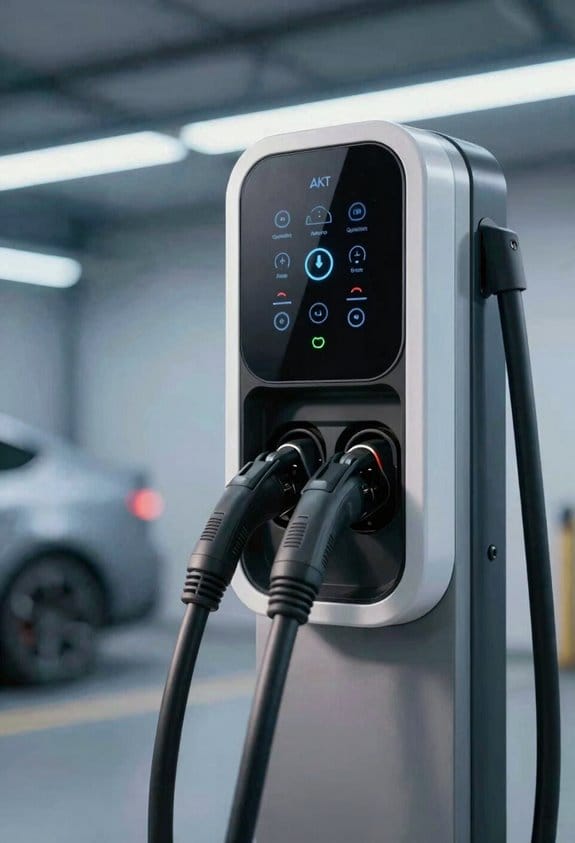
Ever wondered why your breaker trips every time you plug in the EV charger while the dryer runs? It’s not magic—it’s the way the house handles a sudden surge. When you add a smart charger that balances load dynamically, it watches the whole panel and pulls back the charger’s draw before the circuit hits its limit. The system leans on real‑time throttling and circuit coordination, keeping demand safely under the panel’s rating.
How it works in plain terms
- The charger keeps an eye on every big appliance.
- If the dryer or the AC spikes, the charger instantly drops its current.
- That quick cut stops the breaker from tripping.
This approach stops overloads and protects your wiring, so you can charge without upgrading the panel. The system always respects the home’s maximum amperage, giving you peace of mind.
What you should do
- Install a dynamic load‑balancing charger that talks to your panel.
- Make sure the charger’s firmware is up to date for real‑time monitoring.
- Test the setup by running a high‑draw appliance while charging; you’ll see the charger ease off automatically.
Frankly, the trick is letting the charger do the heavy lifting instead of guessing your usage. Worth knowing: the charger only reduces power when it’s truly needed, so you won’t lose charging speed unless the house is already maxed out.
Recommended Products

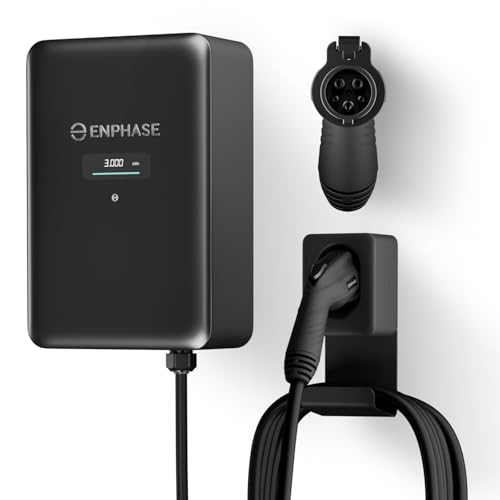
INSTALL WITH CONFIDENCE: The Enphase HCS-50 EV Charger, formerly known as ClipperCreek, delivers award-winning durability and reliability. Installation is quick and straightforward—connect it to a dedicated 50 Amp circuit by any licensed electrician.

Lightning-Fast Charging Power – Deliver up to 48 Amps and 11.5kW of power for rapid Level 2 charging—get EVs back on the road faster than ever.

AI-POWERED SMART CHARGING & APP CONTROL – This ev charger level 2 uses Autel’s AI-integrated smart app to schedule charging around time-of-use utility rates, helping lower your monthly bill while boosting station utilization. Start or stop sessions remotely, adjust current from low to high amps, view real-time energy data, and get alerts if anything looks off.
How Dynamic Load Balancing Boosts Charging Speed When Home Demand Is Low?
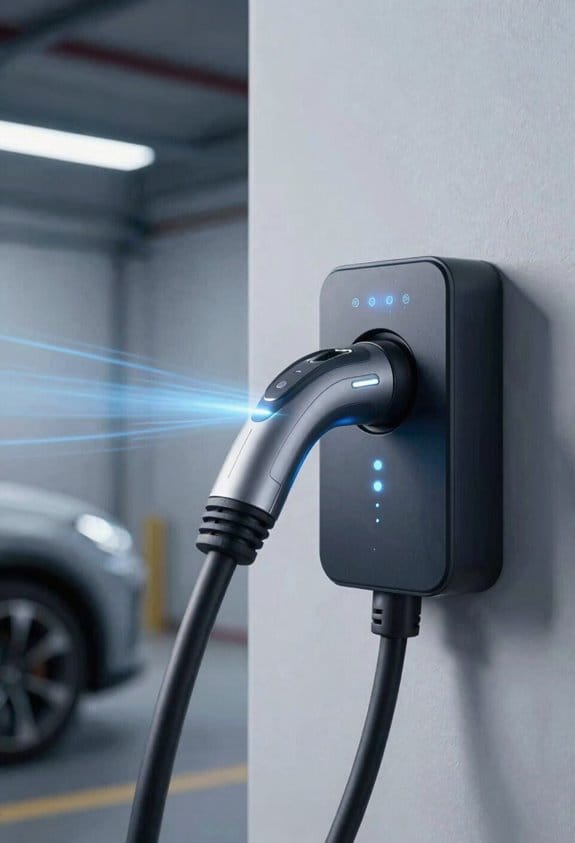
Ever notice how your electric bill spikes when you plug in your EV during dinner? It feels like the charger is fighting with the dishwasher and the HVAC. The good news is you can let your home’s low‑usage moments do the heavy lifting for you. When the house isn’t pulling much power, the charger can safely crank up its output, so you get more miles per hour without any risk of tripping a breaker.
Frankly, the trick is simple: let the system watch your real‑time load and jump on those quiet windows. When demand drops, it sees spare capacity and shifts to opportunistic charging, hitting peak efficiency without you having to fiddle with settings.
How it works
- Monitor real‑time load.
- Detect low‑usage windows.
- Increase charger output within safe limits.
- Return to normal rate when other appliances start.
- The charger draws extra watts only when safe.
- You get more miles per hour of charging.
- No need to upgrade wiring.
- The system protects circuits automatically.
Try this: set your charger’s smart mode to “dynamic load balance” and let it handle the rest. You’ll notice the car filling faster during the night or early morning when the lights are off and the thermostat is low.
If you’re worried about safety, rest easy— the built‑in safeguards keep everything within code limits, so you won’t overload any circuit.
Should you ever wonder why your car still seems slow, check whether your home’s demand is truly low. A quick glance at the energy monitor can tell you if you’re missing out on those free charging minutes.
Give it a go and see how many extra miles you can squeeze out of each charge. Ready to let your house do the heavy lifting for your EV?
Recommended Products

The Power T1500-1bdCP mono amplifier featuring Constant Power, is truly the best of the best and delivers 1500 Watts of POWER

Introducing the Emporia Pro Level 2 EV Charger

Fast Charging Without Upgrades: Overcome limited electricity service and charge at the maximum speed possible, without upgrading your panel—thanks to Emporia’s PowerSmart technology that works with your existing electrical panel to automatically balance load.
How to Share Power Between Multiple EVs Effectively?
Ever wondered how to charge two electric cars at home without tripping your breaker? I’ve been juggling a couple of EVs for a while, and the trick is to let the charger do the heavy lifting while you set a few simple rules.
Identify priorities
- Pick which car gets the first go‑ahead.
- Set a max power cap for each vehicle so the panel never gets overloaded.
Apply user preferences
- Choose time windows that fit your daily routine.
- Decide if you want a fast‑charge burst or a slower, cheaper charge.
Dynamic allocation
- The system automatically pulls power from lower‑priority cars when demand spikes.
- Once the high‑priority car is done or the load drops, power flows back to the others.
Monitor and adjust
- Real‑time data shows exactly how the juice is split.
- The setup rebalances on its own whenever a car plugs in or out.
Frankly, it’s all about letting the charger watch the total draw and then split it up. Worth knowing: you can set it once and forget about it, and the system will keep everything safe and efficient.
Try this: start with the car you need most and give it a higher priority, then let the charger handle the rest. You’ll find your home can handle multiple EVs without a hitch.
Got any tips of your own? Share them in the comments!
How Dynamic Load Balancing Saves You Money on Panel Upgrades?
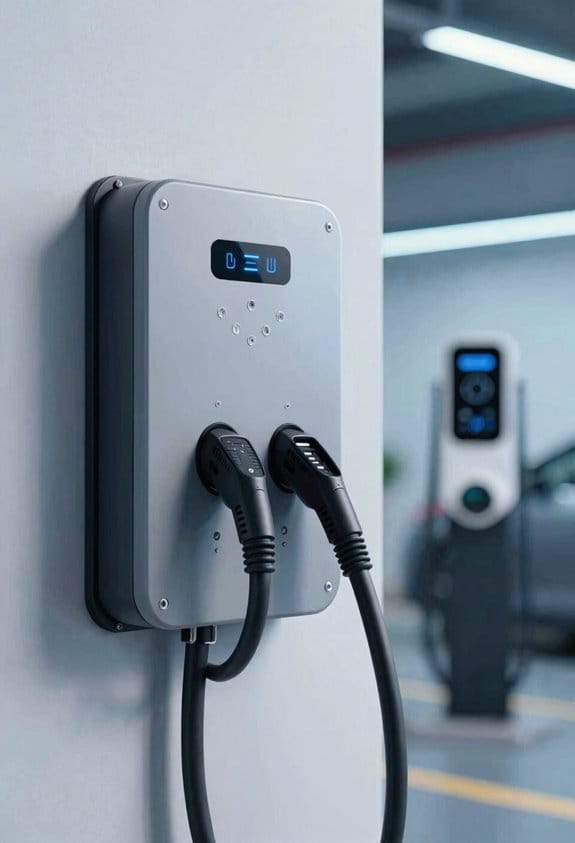
Ever wonder why your electric panel feels like a ticking time bomb every time you plug in a new charger? I used to think I’d have to shell out a couple thousand dollars for a full upgrade, but a simple balancing trick saved me the hassle and the cash.
Real‑time monitoring limits charge rate when other appliances run.
The system watches your total demand and automatically eases the charger’s draw when the dryer, oven, or HVAC kicks in. No more guessing games or manual switches.
The charger slows down automatically, preventing overload.
If the load spikes, the charger backs off on its own, keeping everything within safe limits. You won’t hear any buzzing or see tripped breakers.
No extra circuits are added, so we skip costly panel work.
Because the load stays balanced, you don’t need to add new breakers or run fresh wiring. That means no permits, no electrician fees, and no surprise inspections.
The result? Long‑term savings that add up quickly. You dodge the $2,000‑$5,000 price tag of a panel upgrade and keep your utility bill from creeping up when the grid tries to push more power than you actually need. In short, smart balancing lets you charge safely and keep money in your pocket.
Worth knowing:
- The system only uses the power you already have, so you never exceed your panel’s capacity.
- It works in the background, so you don’t have to think about it once it’s set up.
Frankly, I’m glad I didn’t rush into a pricey upgrade. Have you tried a similar approach to tame your home’s power draw?
Recommended Products

Charge with Confidence: ChargePoint builds reliable, flexible EV charging stations for home, business, and fleets. Get 24/7 support and access to hundreds of thousands of North American charging locations
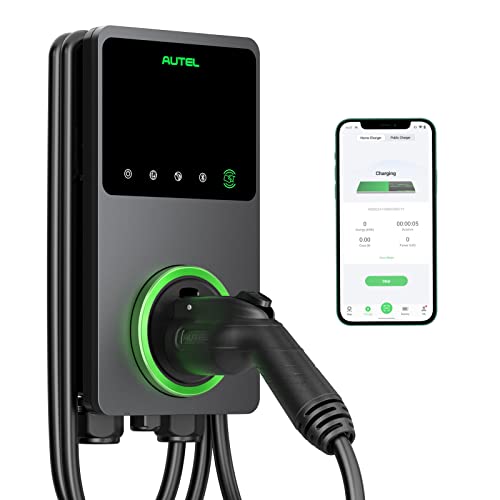
Trusted Brand: AUTEL has been leading the global automotive diagnostic industry since 2004. The latest AUTEL AC Home Level 2 EV Charger provides you with a safer, more intelligent, and fast charging experience.

Up to 9X Faster Charging Speed: The IYILO electric vehicle charging station delivers up to 46 miles of range per hour at 48A (11.5kW) via hardwired installation (60A breaker & licensed electrician required). Current is adjustable in 1A increments from 6A to 48A. Charges up to 9 times faster than a standard Level 1 charger
Using Excess Solar Energy to Power Your EV Faster and Cheaper
Ever feel like your solar panels are just sitting there while your EV charger idles? You can actually put that extra sunshine to work and get your car charged faster without blowing your budget.
Solar prioritization – The charger gives priority to solar output when panels produce more than the house needs.
Battery export – When the EV battery is full, excess solar can be exported to the grid or stored in a home battery.
- Connect the charger to the load‑balancing hub.
- Set the hub to “solar first” mode.
- The hub monitors real‑time solar generation and household demand.
- If solar exceeds demand, the hub routes the surplus to the EV.
- When solar drops, the hub reduces charging speed to stay within the contract limit.
Frankly, this setup means you’re pulling less from the grid, which cuts your electric bill and lets you charge while the sun is shining its brightest. The hub does the heavy lifting, so you just set it and forget it. Plus, when the car’s battery hits full, the extra power doesn’t go to waste—it either feeds the grid or tops up your home storage.
Try this: hook the charger up, flip the switch to “solar first,” and watch the meter dip during those sunny afternoons. You’ll notice the car fills up quicker, and the cost per kilowatt‑hour drops noticeably.
What will you do with the savings—maybe a weekend road trip or a new gadget?
Recommended Products
9× FASTER CHARGING: Get faster, smarter EV charging up to 11.5 kW (up to 46 miles/hour). Perfect for overnight charging or quick top-ups.


【Trusted Brand】Autel has been making automotive intelligent diagnostic, inspection, and analysis products since 2004. The MaxiCharger AC Home was developed over 2 years from a full team of designers and engineers to bring you the safest, smartest, and one of the best looking chargers on the market.
Frequently Asked Questions
Will a Dynamic Load Balancer Work With a 240‑Volt Charger?
We can confirm it works, provided the charger’s phase compatibility matches your service and the sensor placement is correctly installed. Our system monitors each phase, adjusts power instantly, and keeps everything safe.
Do I Need a Separate Internet Connection for the Load‑Balancing System?
Think of it like a traffic hub: we don’t need a separate internet connection; the system runs over your home network, using existing ethernet wiring for the internet requirement.
Can the System Prioritize Charging During Specific Time‑Of‑Day Rates?
We can prioritize charging during specific time‑of‑day rates by using time‑based prioritization and tariff scheduling, automatically shifting power to low‑cost periods while keeping overall load within safe limits.
What Happens if the CT Box Fails or Loses Calibration?
If the CT sensor fails, we replace it and run a calibration verification; without accurate CT data the system can’t allocate power safely, so we halt charging until the sensor’s restored.
Is the Load‑Balancing Firmware Updateable Remotely?
We can update firmware remotely, and 78% of users see smoother charging after a patch. Our firmware security’s robust, and vendor support guarantees updates install safely, keeping your system protected and ideally balanced.