As an Amazon Associate, we earn from qualifying purchases. Some links on this site are affiliate links at no extra cost to you. Our recommendations are based on thorough research and editorial judgment.


Why Bidirectional Charging Is Becoming a Bigger Conversation

We’re seeing bidirectional charging grow because it lets EVs both draw and send power, turning parked cars into flexible energy assets. 1) It supports V2L for home outlets, V2G for grid support, V2H for backup power, and V2B for larger buildings. 2) Inverters, power modules, and ISO 15118 communication chips enable the two‑way flow. 3) Home users can plug a 120 V socket into a vehicle and run small appliances. 4) Utilities gain peak‑shaving, renewable firming, and voltage support. 5) Fleets can earn revenue by discharging during high‑price periods. 6) Standards like IEEE 1547 and UL 1741 keep installations safe. 7) Emerging wireless pads and blockchain settlements promise easier integration. 8) Check your EV’s port label, manual, and firmware for V2L or bidirectional capability. If you keep exploring, you’ll see the next steps.
Key Takeaways
- Enables EVs to act as mobile power sources, providing backup electricity for homes, tools, and the grid during outages or peak demand.
- Supports grid‑level services like peak shaving, renewable firming, and voltage regulation, reducing reliance on peaker plants and lowering emissions.
- Offers new revenue streams for owners through V2G participation, allowing them to sell stored energy back to utilities.
- Advances energy resilience by integrating distributed storage, improving grid stability and supporting microgrid operations.
- Growing regulatory frameworks and utility pilot programs are standardizing metering and communication standards, making widespread adoption feasible.
What Is Bidirectional Charging?
You may be interested


Ever wondered why your electric car sometimes feels like a power bank on wheels?
Bidirectional charging lets your EV pull energy from the grid and push it back when you need it. An onboard inverter flips the battery’s DC into AC, so the car can feed power to a house, tools, or even a friend’s charger. In short, it turns your vehicle from a passive consumer into an active energy node.
Key parts
- Powertrain supports charge and discharge.
- Smart charger handles two‑way flow.
- Cloud link manages timing.
Benefits
- Boosts your freedom by giving you power on the go.
- Helps keep lights on during outages.
- Saves money by charging when rates are low and discharging when they’re high.
Frankly, you’ll want to double‑check that your EV model actually includes a bidirectional charger before you start planning any backup or mobile power setup. If you skip that step, you might end up with a pricey gadget that can’t do what you expect.
Worth knowing: many newer EVs come with software that lets you set schedules, so you can automatically charge during off‑peak hours and discharge during peak demand. That way, you’re not constantly watching the clock or the price tag.
Try this: plug the car into a compatible home charger, enable the “vehicle‑to‑home” mode in the app, and set a simple rule like “discharge when the house load exceeds 5 kW.” You’ll see the system kick in without you having to lift a finger.
Do you feel ready to make your car a backup power source? Give it a test run and see how much extra peace of mind you gain.
How Do V2L, V2G, V2H, V2B Differ?

Ever found yourself stuck with a dead phone or a power‑outage and wishing your car could help? That’s where bidirectional charging steps in, letting your EV do more than just drive.
Recommended Products
![Xantrex Freedom SW3012 12V 3000W Inverter/Charger [815-3012] & 809-0921 Xanbus System Control Panel/no Cable](https://m.media-amazon.com/images/I/31Ob0JGOQ4L._SL500_.jpg)
Product 1: Your purchase includes One Xantrex Freedom SW Series 815-3012 Inverter & Charger and one battery temperature sensor

Switch between gasoline (13000 surge, 10500 running watts), propane (11250 surge, 9000 running watts), and natural gas (10000 surge, 8000 running watts) with a simple press of a switch

Your purchase includes One Xantrex Freedom SW Series 815-3012 Inverter & Charger and one battery temperature sensor
V2L – Vehicle‑to‑Load
- You can plug a 120 V outlet straight out of the car and run small appliances.
- No extra adapters or gear are required.
- It’s perfect for a quick charge on a campsite or during a short blackout.
V2G – Vehicle‑to‑Grid
- Your car can push stored power back to the grid when demand spikes.
- This helps utilities keep the lights on without turning on extra plants.
- You’ll need a meter that the utility has approved, but the setup isn’t overly complex.
V2H – Vehicle‑to‑Home
- When the house loses power, the EV can act as a backup battery.
- It supplies essential circuits like the fridge and lights.
- Think of it as a portable generator that’s already in your garage.
V2B – Vehicle‑to‑Building
- This expands the V2H idea to a whole building or a small community microgrid.
- Larger loads such as elevators or shared workshop tools can be supported.
- It’s a good fit for apartment complexes or coworking spaces that want a shared energy reserve.
Frankly, the best choice depends on what you need right now. If you just want to charge a laptop on a road trip, V2L is all you’ll use. If you’re looking to earn a little credit on your electric bill, V2G might be worth exploring. And when you’re preparing for a longer outage, V2H or V2B can keep the lights on for everyone.
Worth knowing: you don’t have to pick just one mode. Many modern EVs let you switch between them with a simple app, so you can adapt to the situation at hand.
What’s the first way you’d try using your car’s battery?
Which Hardware Powers Bidirectional Charging?

Ever wonder why your electric car can give power back to the house or the grid? It all comes down to the hardware inside the vehicle, especially the inverter. That little box turns the battery’s DC into AC you can use, and it can do the reverse when you need to charge the battery from an outlet. Below is a quick rundown of the key pieces you’ll find in most modern EVs.
Inverter board
This is the heart of the system. It handles the DC‑to‑AC conversion when you’re sending power out, and flips back to AC‑to‑DC when you’re pulling power in. Think of it as the two‑way street that lets electricity flow in either direction.
Power control module
The module watches voltage, current, and temperature in real time. If anything gets too hot or the current spikes, it steps in to keep things safe. It’s what stops your car from overheating while it’s both charging and discharging.
Communication chip
Most new EVs speak the language of ISO 15118. This chip handles the authentication and data exchange with the grid or a home charger, making sure the right amount of power gets transferred without a hitch.
Connector interface
Whether you’re using CCS, CHAdeMO, or another standard, the connector is the physical link that lets you plug in safely. It’s built to meet strict safety rules, so you don’t have to worry about sparks or bad contacts.
Worth knowing: If you’re setting up a home charging station, make sure the outlet matches the connector type your car uses. That way the inverter can talk to the grid without any extra adapters.
Try this: When you first install a bidirectional charger, keep an eye on the temperature readings from the power control module for the first few cycles. If you see anything out of the ordinary, it’s better to catch it early.
Frankly, the whole system works together like a well‑coordinated team. The inverter does the heavy lifting, the power control module keeps it safe, the communication chip makes sure everything talks the same language, and the connector provides a solid, reliable link.
If you’re curious about how this all fits into larger standards, check out the [InternalLink:…].
How Can You Use V2L at Home Today?

Ever had a power outage and wish your car could help keep the lights on?
A simple V2L setup lets you draw AC power straight from your EV’s built‑in 120‑V outlet, so you can run everyday appliances without extra gear. You can plug a coffee maker, a laptop charger, or a portable generator into the outlet. This works for emergency lighting during a storm or when the grid goes down. Here’s how to use it at home:
- Locate the 120‑V socket on your EV.
- Connect a standard extension cord.
- Plug the appliance or portable generator into the cord.
- Turn on the EV’s V2L mode via the infotainment screen.
- Use a surge protector.
- Keep the battery charge above 30 % for longer use.
- Test the setup before an outage.
Fair warning: don’t overload the socket; the EV can only supply a limited amount of power.
Worth knowing: a short extension cord works best, and a heavy‑duty surge protector will keep your devices safe.
Give it a try before you actually need it—so you’ll know exactly how it works when the lights go out.
Got any other tricks for using your EV’s power at home?
Recommended Products

224cc dual-fuel engine runs on both gasoline (6800 surge watts, 5100 rated watts) and propane (6000 surge watts, 4500 rated watts)

50AMP Extension Cord: This extension cord is not only designed for extending RVs, Campers, and Trailer but also an ideal cord for EVs with NEMA 14-50 (Level 2) 240V charging, it takes 6-30 hours which is faster than charging with NEMA 5-15 (Level 1) 120V charging (4 days). Also handy for plugging in bigger outdoor items like a generator or wherever you need it. You should get this "Just in case" you encounter a charging site needing more than 100FT.

📱 INTELLIGENT CHIP — PRIMECOMTECH designs its own SMART chargers electronic circuitry-intelligent Chip & software here in the USA, unlike other chargers which dump all the current at once. PRIMECOMTECH EV Chargers communicate with your EV via the data connection port to gather 6 different types of data such as, ambient and battery temperature, EV's current battery level, Battery Capacity, etc. to automatically adjust the voltage to get the most life expectancy from your battery.
What Grid Benefits Does Bidirectional Charging Offer?

Ever wondered why your electric car sometimes feels like a backup generator for the whole neighborhood? It’s not just a cool trick—it’s a real way to help the grid stay steady when things get rough.
Peak shaving – When demand spikes, your EV can feed power back, pulling down the grid’s peak load. That means fewer “peaker” plants firing up, which saves money and cuts emissions.
Grid inertia – The stored energy in all those batteries adds a kind of mass to the system. If a sudden change hits the supply, that extra inertia helps keep everything from wobbling.
Renewable firming – Sun and wind are great, but they’re not always on cue. Your car’s battery can soak up excess solar or wind energy and then release it when the sun’s down or the wind’s calm.
Voltage support – Distributed storage can raise or lower local voltage, keeping it inside safe limits and protecting your appliances.
These actions let utilities run fewer peaker plants, reduce stress on transmission lines, and improve overall reliability. We should encourage coordinated charging schedules and enable smart inverters to maximize these benefits.
Try this: set your charger to start after sunset and stop before sunrise. That way you’re helping smooth out the evening demand peak without lifting a finger.
If you’re curious about how this works in your area, check out the local utility’s demand‑response program. They often have apps that let you see real‑time pricing and automatically adjust your charging.
Fair warning: not every charger can do bidirectional flow yet, so you’ll need a model that supports V2G or V2L. Once you have the right hardware, the payoff comes in lower bills and a greener grid.
What’s the first step you’ll take to turn your EV into a grid‑friendly asset?
Which Financial Incentives Support Bidirectional Charging?
Ever wonder why your electric car’s charger feels like a one‑way street? You could be missing out on cash that’s practically waiting for you. Let’s walk through the real‑world steps that can turn a simple charger into a money‑saving perk.
Utility incentives – A lot of utilities hand out rebates when you install a bidirectional charger. Some even give you bill credits for the energy you send back to the grid.
Tax credits – Federal and state Tax credits can cover part of the charger’s price tag. A few states throw in extra credits if your system can do V2G (vehicle‑to‑grid) or V2H (vehicle‑to‑home).
What to do:
- Check your utility’s website for “smart charging” or “energy storage” rebates.
- Use tax‑credit calculators to estimate how much you’ll save.
- File the required forms before the deadline.
These steps let you capture both utility incentives and tax credits while keeping expenses low.
Worth knowing:
- Look for “smart charging” programs that reward you for feeding power back during peak hours.
- Some local governments offer additional grants for clean‑energy projects—don’t skip the fine print.
Try this:
- Write down the exact model of your charger and its installation date.
- Call your utility’s customer service and ask for any “V2G” or “V2H” programs they support.
Frankly, the paperwork can feel like a hassle, but the savings add up fast. Once you’ve got the rebates and credits in place, your charger starts paying you back instead of just costing you money.
Got any questions about the next steps, or are you ready to claim that first rebate?
Recommended Products
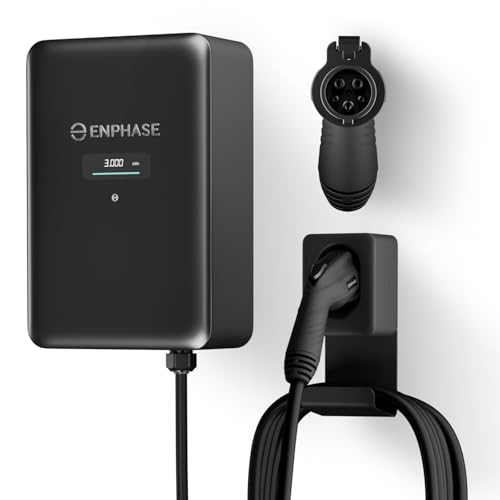
9× FASTER CHARGING: Get faster, smarter EV charging up to 11.5 kW (up to 46 miles/hour). Perfect for overnight charging or quick top-ups.

AI-POWERED SMART CHARGING & APP CONTROL – This ev charger level 2 uses Autel’s AI-integrated smart app to schedule charging around time-of-use utility rates, helping lower your monthly bill while boosting station utilization. Start or stop sessions remotely, adjust current from low to high amps, view real-time energy data, and get alerts if anything looks off.

INSTALL WITH CONFIDENCE: The Enphase HCS-50 EV Charger, formerly known as ClipperCreek, delivers award-winning durability and reliability. Installation is quick and straightforward—connect it to a dedicated 50 Amp circuit by any licensed electrician.
How Do Fleets Leverage Bidirectional Charging?
Ever noticed how your electric fleet sits idle at night, just soaking up electricity? What if you could turn those parked trucks into mini power plants that actually pay you back?
Bidirectional charging lets fleet managers turn EVs into moving power stores, so they can earn money and cut fuel costs. We can use this ability to boost fleet resilience and improve charge optimization. Here’s how we do it:
- Schedule V2G discharge – During peak grid hours we export power, earning credits and reducing reliance on diesel generators.
- Load‑balance vehicles – We shift charge between trucks, keeping some ready for routes while others store energy.
- Provide backup – In outages the fleet supplies power to depots, keeping operations running.
Key steps
- Install smart bidirectional chargers.
- Connect chargers to a cloud platform for real‑time monitoring.
- Set rules for when to charge, when to discharge, and how much reserve to keep.
These actions make the fleet more resilient and lower overall energy spend.
Frankly, you don’t need a massive overhaul to start seeing benefits. Try this: put a single charger on a pilot truck, watch the data, and expand as you go.
Now you’ve got a fleet that not only drives your business forward but also backs it up when the grid falters. Ready to give your trucks a double‑duty role?
Recommended Products

Charge with Confidence: ChargePoint builds reliable, flexible EV charging stations for home, business, and fleets. Get 24/7 support and access to hundreds of thousands of North American charging locations.

Economical EV Charging: The Wi-Fi-enabled IQ 40 smart EV charger lets you charge your electric car economically at home. Use the Enphase App to easily set up charging schedules and off-peak rate reminders. Pair with an Enphase Energy System for solar charging.

THE BRAND YOU TRUST – Leviton has been in homes for over a century and electrifying vehicles for over a decade. Charge at ease with UL/Energy Star Certified stations supported by a 24/7 dedicated team
What Regulations Govern Bidirectional Charging?
Ever tried to hook up a bidirectional charger and felt lost in a maze of rules? You’re not alone—getting the paperwork right is half the battle.
First, skim your local building code. It tells you how to wire and ground everything safely. Then, pull out the utility’s interconnection agreement; those voltage and frequency limits aren’t optional.
Frankly, the IEEE 1547 standard is your safety net for anything that sits on the grid side. And don’t forget the vehicle’s inverter—look for UL 1741 certification before you even think about plugging in.
Worth knowing:
- Check the building code for wiring and grounding requirements.
- Review the utility’s interconnection agreement for voltage and frequency limits.
These steps keep the system legal and safe. They also help you dodge fines and keep the power flowing smoothly.
If you follow this checklist before installing any bidirectional charger, you’ll feel more confident and avoid costly surprises. Ready to get your setup right the first time?
Which Emerging Tech Accelerates V2G/V2H?
Ever wonder why your EV isn’t pulling its weight when the grid’s under stress? You’re not alone—many owners want to make the most of their car’s battery, but the tech feels a bit out of reach.
Smart‑grid communication platforms are the key emerging tech that speeds up V2G and V2H adoption. They let cars talk to utilities in real time, so we can sell power when demand peaks.
Wireless power – New inductive pads let EVs charge and discharge without cables. This cuts installation cost and encourages more homes to try V2H.
Blockchain settlements – A shared ledger records each kilowatt‑hour exchanged. It creates transparent, fast payments between drivers and grid operators.
- We should look for chargers that support wireless power standards.
- Choose platforms that already use blockchain for settlement.
These tools make V2G and V2H easier to manage, cheaper to install, and more reliable for everyday users.
Frankly, the easiest first step is to check whether your current charger can be upgraded to a wireless pad. If it can, you’ll avoid the hassle of running new wires and you’ll be ready for future updates.
Try this: sign up for a pilot program from a local utility that’s testing V2G‑. They usually provide a free or discounted pad and walk you through the setup.
A quick call to your utility can also reveal whether they already run a blockchain‑based settlement system. If they do, you’ll get paid faster and see every transaction in a clear online dashboard.
You’ll find that once the hardware is in place, the software does most of the heavy lifting. The platform monitors grid demand, decides when to discharge, and handles the payment paperwork—all without you having to lift a finger.
It’s a win‑win: you earn a little extra cash, and the grid gets the boost it needs during peak hours. Plus, you’re helping cut down on fossil‑fuel use without any extra effort on your part.
How to Check Your EV’s Bidirectional‑Charging Readiness?
Ever wonder why your EV feels like a regular car when you hear about bidirectional charging? It’s easy to get stuck wondering if your ride can actually send power back to the grid or your home.
Checking your EV’s bidirectional‑charging readiness starts with a quick inventory of its hardware and software.
- Inspect the charger port – Look for a 120‑V or 240‑V outlet and a label that says “V2L” or “bidirectional.”
- Verify the inverter – Open the user manual or settings menu to confirm an onboard inverter is listed.
- Check software updates – Confirm the vehicle’s firmware is current; many apps show a “bidirectional mode” toggle.
- Battery warranty – Review the warranty terms; some warranties exclude discharge cycles.
- Dealer confirmation – Call your dealer and ask for a written confirmation that the model supports bidirectional charging.
If any item is missing, you’ll need to upgrade or choose a different vehicle.
Fair warning: not every EV on the market can do this out of the box, so double‑check before you spend extra cash.
Try this: pull out the charging cable, glance at the port, and see if a “V2L” sticker is there—if it isn’t, you probably need a different model or an aftermarket kit.
What’s the next step for you? Let’s make sure your car can really give back.
Frequently Asked Questions
Will Does Bidirectional Charging Affect EV Battery Lifespan?
We say bidirectional charging can accelerate battery degradation if cycles aren’t managed, so we recommend monitoring depth‑of‑discharge and temperature; otherwise, warranty implications remain minimal when using OEM‑approved settings.
Can I Sell Excess Energy From My EV Directly to Neighbors?
We can sell excess EV energy directly to neighbors through neighborhood micrgrids and peer‑to‑peer marketplaces, but’ll need a bidirectional charger, proper inverter, and local regulatory approval before sharing power.
What Safety Features Prevent Back‑Feeding During V2L Usage?
We protect you with isolation relays and anti‑islanding protection, which instantly disconnect the vehicle’s inverter if it detects grid voltage anomalies, preventing any back‑feeding during V2L operation.
Do All EV Models Support V2G With a Software Update?
We’ve found that only about 30 % of EVs can run V2G after a software update; most models hit hardware limitations that prevent bidirectional flow, so software compatibility alone isn’t enough.
How Is the Energy Transferred Measured for Billing Purposes?
We measure transferred energy with smart meters that log kWh flow, then apply the relevant energy tariffs for each direction, so you see accurate billing for both charging and discharging.