As an Amazon Associate, we earn from qualifying purchases. Some links on this site are affiliate links at no extra cost to you. Our recommendations are based on thorough research and editorial judgment.


What Makes a Home EV Charger Easy to Use Every Day

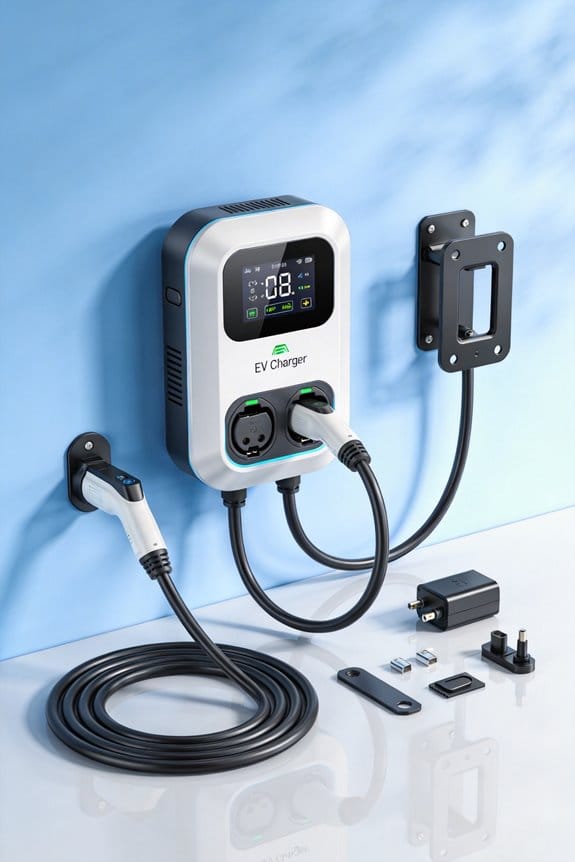
We find an easy‑to‑use home EV charger is a plug‑and‑play model that fits your daily routine. 1) Choose a Level‑2 unit (3‑7 kW) for 2‑4 hour 80 % charges if you need fast turns; use Level‑1 (1‑2 kW) for overnight fills. 2) Pick a cord 5‑7 ft long and store it on a wall‑mounted reel to avoid bulk and tripping. 3) Make certain the charger connects to a 2.4 GHz Wi‑Fi network, install the official app, and set schedules for off‑peak rates. 4) Look for transparent pricing, solid warranty, and no mandatory subscriptions. 5) Simple installation and minimal upkeep keep daily use smooth, and the next sections will show how to optimize each point.
Key Takeaways
- Plug‑and‑play chargers with a simple outlet connection eliminate installation delays and maintenance.
- Level 2 power (3‑7 kW) provides 2‑4 hour 80 % charge, fitting short daily windows; Level 1 (1‑2 kW) works for overnight charging.
- A 5‑7 ft cord with wall‑mounted reel or strap keeps the cable tidy, reduces tripping hazards, and matches typical garage parking distances.
- Built‑in Wi‑Fi on 2.4 GHz, a dedicated app, and schedule mode enable remote start/stop and off‑peak rate optimization.
- Transparent pricing, solid warranty, and no mandatory subscription ensure long‑term satisfaction and reliable daily use.
Home EV Charger Speed vs. Power Rating: Everyday Impact
You may be interested
Ever find yourself juggling work, kids, and a car that never seems to get enough juice? You’re not alone. The type of home charger you pick can either smooth out your day or add another hassle.
Power draw
- Level 2: 3‑7 kW
- Level 1: 1‑2 kW
Charging window
- Level 2: 2‑4 hours for 80 % charge
- Level 1: 8‑12 hours for 80 % charge
Recommendations
- Choose Level 2 if you need a short charging window.
- Use Level 1 only when you can leave the car plugged overnight.
These choices affect daily routine without adding complexity.
Frankly, the difference shows up in how often you have to think about your car’s battery. If you’re a commuter who needs a quick top‑up before heading out, Level 2 is the clear winner. It lets you plug in after work and be ready to go by morning, so you don’t have to plan around a long charge.
Worth knowing: Level 1 is fine for a second car that sits in the driveway most of the time. You can just leave it plugged overnight and wake up to a full battery, no rush required.
But, if you’re tight on budget and your driving habits are light, the slower charger can save you some cash upfront. Just remember that the longer charge time means you’ll need to be more deliberate about when you plug in.
Plug‑and‑Play vs. Complex Installations: Which Gives the Smoothest Daily Use?
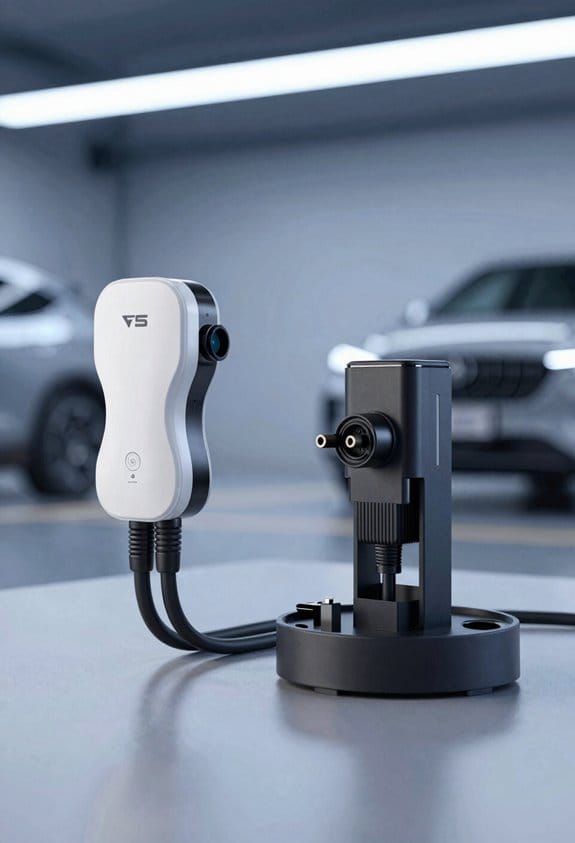
Ever tried to charge your EV at home and felt stuck with a mess of wires and a schedule full of appointments? You’re not alone. Picking the right charger can make or break your daily routine, so let’s break down what you’ll actually experience.
Recommended Products

Limited-Time Perks: E10 Metal Pad, Up to 12-Month 0% APR
[All-Scenario Power] - Apex 300 (2764.8Wh, 3840W) keeps homes lit, RVs rolling & off-grid sites running. Parallel 2-3 units (5.5-8.3kWh), expand to 58kWh with B300K. Never powerless.

[All-Scenario Power] - Apex 300 (2764.8Wh, 3840W) keeps homes lit, RVs rolling & off-grid sites running. Parallel 2-3 units (5.5-8.3kWh), expand to 58kWh with B300K. Never powerless.
Quick setup
- Plug‑and‑play chargers just plug into an existing outlet.
- Complex installs need an electrician and permits.
Recommended Products

[Energize Almost Everything] The EcoFlow DELTA Pro 3 supports 120V/240V voltage and has a 4000W output (6000W with X-Boost, scalable up to 12000W), powering nearly all essential home appliances, such as a 3-ton* central AC or a 1 HP water pump.

[Storm-Ready Power] - Apex 300 & 2 B300K (8.3kWh, 3840W, 7680W surge) runs homes, RVs for 2-4 days during outages. Powers fridges, medical gear, and essentials through any storm.

[Energy Independence] - Apex 300 power station, B300K expansion battery (5.5kWh, 3840W, 7680W surge) delivers off-grid power for essentials, lights, and devices. Ideal for cabins, camping, and backup.
Minimal upkeep
- Simple units have fewer parts, so maintenance is rare.
- Complex systems may need periodic inspections.
Recommended Products
2 Upgraded Heating Modes: 12V 320Ah Mini Self-Heating Battery comes with Regular and Energy-Efficient options. Regular mode activates heating below 41℉(5℃) when charged, stops at 50℉(10℃) to begin charging—suits cold-weather needs.

Energize Almost Everything. The EcoFlow DELTA Pro 3 supports 120V/240V voltage and has a 4000W output (6000W with X-Boost, scalable up to 12000W), powering nearly all essential home appliances, such as a 3-ton* central AC or a 1 HP water pump.

[Iconic Chopper Style at an Unbeatable Value] – Own the road without breaking the bank. The M1P delivers the legendary "Harley" cruiser silhouette that turns heads on every corner. With its signature high-rise handlebars, premium sea-gem blue finish, and classic diamond-stitched seat, you’re not just buying a scooter—you’re investing in a high-end lifestyle at an entry-level price.
Immediate access
- With plug‑and‑play, you plug in and start charging.
- Complex installs may need a wall box to be located.
Simple controls
- Most plug‑and‑play models use a single button or LED.
- Complex setups often include apps and settings.
Frankly, the plug‑and‑play option feels like the smoothest daily use. You get quick setup, minimal upkeep, immediate access, and simple controls without the hassle of a full‑scale installation.
Worth knowing: if you want a hassle‑free experience, go with the plug‑and‑play charger and enjoy charging without the extra steps. How will you simplify your charging routine?
Recommended Products

Drive Faster, Further, and Longer in Minutes: Lithium Rhino 48V 105Ah lithium battery for golf cart with conversion kit allows you to transform your cart with boosted performance, drive range, and zero maintenance for all-day worry-free riding on a single charge. Made with the highest grade A EVE cells for up to 50 miles range per charge and 6000+ Charge Cycle life.

[All-Scenario Power] - Apex 300 (2764.8Wh, 3840W) keeps homes lit, RVs rolling & off-grid sites running. Parallel 2-3 units (5.5-8.3kWh), expand to 58kWh with B300K. Never powerless.

[All-Scenario Power] - Apex 300 (2764.8Wh, 3840W) keeps homes lit, RVs rolling & off-grid sites running. Parallel 2-3 units (5.5-8.3kWh), expand to 58kWh with B300K. Never powerless.
How Cord Length and Storage Affect Your Home EV Charging Routine
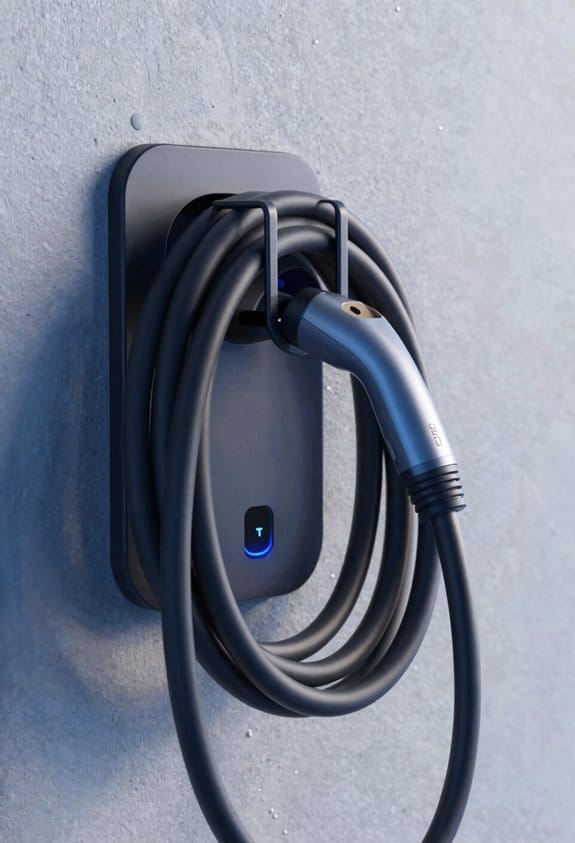
Ever tried to plug in your EV at home and realized the cord’s either too short or a tangled mess? It’s a tiny hassle that can turn a simple routine into a morning scramble.
A longer cord gives you room to park a few feet away from the wall, but it also means a bulkier coil that can sit on the floor. Good cable management keeps the coil tidy and cuts down on tripping hazards. Here’s the trick:
- Pick a cord length that matches the usual distance you park (5‑7 ft works for most garages).
- Use a wall‑mounted reel or a simple strap to keep the cord flat.
- Store the charger near the outlet so you can reach it without stretching.
A short cord saves space but may force you to move the car a bit. A long cord offers flexibility but needs a dedicated holder. Try this: keep the charger close to the outlet for easy access, and use a strap to keep the coil neat.
Frankly, a tidy setup saves you time and keeps the garage looking neat. You’ll notice fewer trips over loose cords and a smoother charging routine.
Got your own tip for keeping EV cords out of the way? Share it below!
Keeping Your Home EV Charger Connected: Wi‑Fi, Apps, and Smart Features
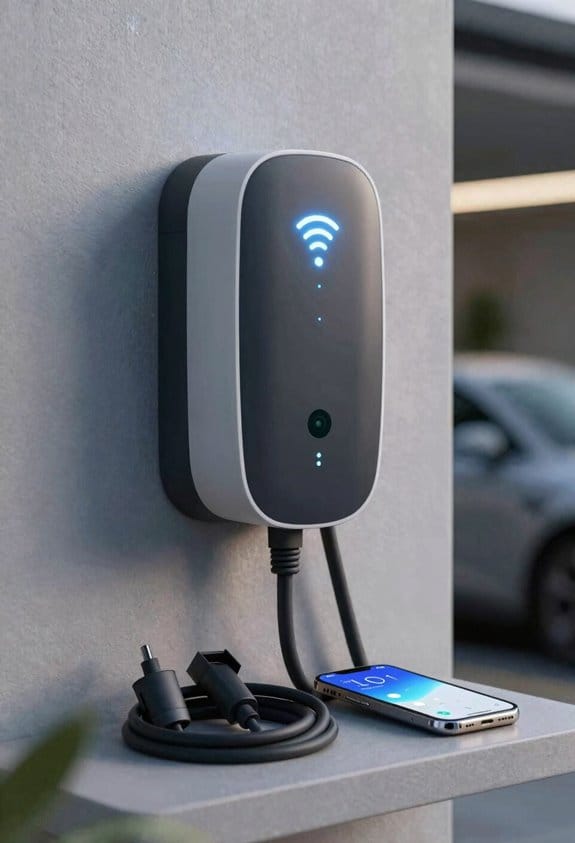
Ever had your EV charger act up right when you need it most? It’s frustrating, but a quick routine can keep the Wi‑Fi link, app, and smart features humming together.
Wi‑Fi troubleshooting
- Restart the router and charger.
- Verify the charger is on the 2.4 GHz band.
- Check signal strength; move the router if needed.
App setup
- Install the official app on your phone.
- Log in with a strong password.
- Enable notifications for charging status.
Smart features
- Turn on schedule mode for off‑peak rates.
- Use remote start/stop for convenience.
Data privacy
- Review the app’s privacy policy.
- Disable data sharing if you prefer minimal collection.
Frankly, a little check‑up now saves you headaches later. Worth knowing: keeping the charger close to the router and updating the app each month helps everything stay in sync.
Give it a try and see how smooth your charging routine becomes. Want to keep your charger reliable and your data safe?
Balancing Cost, Smart Features, and Long‑Term Satisfaction for Home EV Chargers
Ever feel like picking a home EV charger is a maze of price tags and tech jargon? You want something that won’t break the bank, works smoothly, and lasts for years. Let’s break it down into three things you should really check before you click “buy”.
Pricing transparency
- Pick a charger that lists its price up front, no hidden surprises.
- Weigh the upfront cost against the money you’ll save on electricity over time.
- Look out for extra fees for installation or software updates that aren’t mentioned at first glance.
Smart features
- Choose a model that lets you set a charging schedule without forcing a subscription.
- Test the Wi‑Fi connection; a shaky link can cause about a third of all issues.
- Make sure the companion app gives you control over your data and lets you turn sharing on or off.
Long‑term satisfaction
- Go for a unit built to last and backed by a solid warranty.
- Think about future upgrades like bidirectional power that could turn your charger into a backup energy source.
- Read recent customer reviews to gauge reliability and how well the company handles support after the sale.
Frankly, the best way to avoid regrets is to compare a few options side by side and ask yourself if each feature truly adds value for your daily routine. Try this: write down the three most important things you need, then rank each charger against that list.
Got a favorite brand that’s already proven itself? Share your experience in the comments.
Frequently Asked Questions
Do I Need a Dedicated Circuit for a Level 2 Charger?
We recommend a dedicated breaker for a Level 2 charger because the electrical load exceeds typical circuits; you’ll need to check permit requirements, and you can choose a hard‑wired outlet or a certified NEMA 14‑50 option.
Can a Portable Level 2 Charger Be Used Outdoors Safely?
We’re absolutely certain you can safely run a portable Level 2 charger outdoors—its weatherproof housing and built‑in ground fault protection guard against rain, snow, and electrical mishaps, giving you peace of mind.
How Does Weather Affect Charger Performance and Reliability?
We’ve found temperature effects can slow charging rates and cause battery management throttling, while precipitation impacts—especially moisture intrusion—can trigger safety shutdowns, so we recommend sealed, weather‑rated units for reliable daily use.
Are There Any Tax Credits or Rebates for Installing a Home EV Charger?
Like a sunrise, federal incentives and utility rebates can brighten your savings, and we’ll find that many states offer up to $1,000 credits, plus local utility programs that further offset installation costs.
What Maintenance Does a Home Charger Require to Stay Reliable?
We recommend checking cable inspection regularly and applying software updates promptly, so your charger stays reliable. Keep the cord clean, test for wear, and make sure the firmware is current to avoid interruptions.