As an Amazon Associate, we earn from qualifying purchases. Some links on this site are affiliate links at no extra cost to you. Our recommendations are based on thorough research and editorial judgment.

Why Public Charging Compatibility Still Matters in [year

We need to note that standardized connectors—CCS, CHAdeMO, and NACS—let us plug in anywhere without adapters, saving minutes on trips. Plug‑&‑Charge and ISO 15118 handle payment automatically, keeping data safe and avoiding cashier delays. OCPP‑compatible chargers improve reliability by sharing uptime data and allowing quick maintenance. Mapping urban and rural coverage helps us avoid “desert zones” and plan buffer stops. Adding V2G, wireless pads, and high‑power chargers future‑proofs our EV for new stations, and the next sections explore each topic in depth.
Key Takeaways
- Standardized connectors (CCS, CHAdeMO, NACS) let drivers plug in anywhere, avoiding adapters and saving minutes on long trips.
- Plug‑&‑Charge with ISO 15118 automates billing, keeping payment data secure and eliminating cashier delays.
- OCPP‑compliant chargers ensure network reliability, allowing quick firmware updates and real‑time uptime monitoring.
- Urban‑rural coverage gaps require pre‑planned routes and backup apps to prevent unexpected dead‑ends on long journeys.
- Future‑proof upgrades—V2G, wireless pads, and 300 kW+ chargers—maintain compatibility as new public stations emerge.
How Standardized Connectors Boost Your EV Charging Experience in 2026
You may be interested


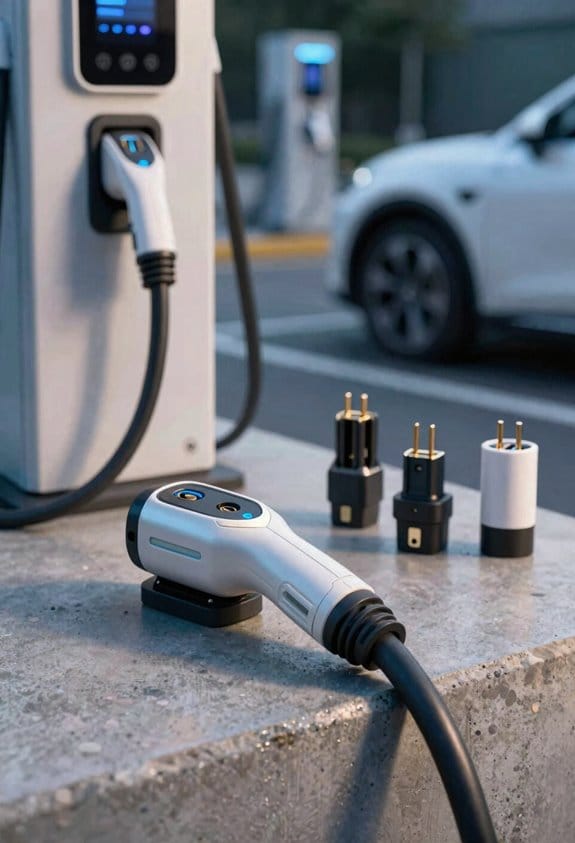
Ever been stuck at a public charger, scrolling through the app while you wonder if the plug will even fit? You’re not alone—those mismatched connectors used to be a real hassle. Luckily, most stations now stick to the same three types: CCS, CHAdeMO, and NACS. That means you can drive across the country and still find a spot that works with your car.
Why it matters
- Compatibility across networks.
- Faster plug‑in without adapters.
- Easier payment through Plug & Charge.
Tips for good etiquette
- Check the connector before parking.
- End sessions promptly.
- Use the app to report issues.
Following these steps keeps stations available and your journey smooth. Frankly, the less time you spend figuring out the hardware, the more you can enjoy the road. Worth knowing: a quick glance at the connector type can save you minutes, maybe even an hour, on a long trip.
If you keep an eye on the charger’s label before you pull in, you’ll avoid the awkward “oops, wrong plug” moment. End your session as soon as you’re done, and don’t forget to tap the button in the app to flag any problems. This simple habit helps everyone and keeps the network running smoothly.
Next time you’re planning a road trip, glance at the map for stations that list CCS, CHAdeMO, or NACS. You’ll feel more confident knowing you won’t need an adapter or a backup plan. And when you finish charging, a quick “done” tap in the app lets the next driver know the spot is ready.
Got a favorite charging tip you swear by? Share it in the comments and let’s keep each other moving forward.
Recommended Products

INSTALL WITH CONFIDENCE: Formerly ClipperCreek, the core technology that comes inside every Enphase EV charger has earned its award-winning reputation by delivering industry-leading durability and reliability. Now they're made even better with a 5-year limited manufacturer warranty and 24/7 customer support. This HCS-40 comes fully assembled and offers quick installation via a 12 inch 240V input plug with any NEMA 14-50R outlet on a minimum 40 Amp dedicated circuit.

UNIVERSAL COMPATIBILITY: Seamlessly transitions between NACS and J1772 connectors, accommodating all major North American EVs including Tesla Vehicles

COMPATIBILITY: Wall Connector is compatible with all Tesla models: Model S, Model 3, Model X and Model Y.
How OCPP Interoperability Improves EV Charging Reliability
Ever tried to charge your EV at a public station, only to find the charger dead? You’re not alone. When different charger brands can talk to each other, the whole network runs smoother, and you spend less time hunting for a working plug.
Run regular protocol testing
- Verify firmware updates meet OCPP standards.
- Simulate vehicle connections before rollout.
Track uptime metrics****
- Record each port’s availability hourly.
- Compare against industry benchmarks.
Use data to improve reliability
- Schedule maintenance when metrics dip.
- Share alerts with other operators for faster fixes.
Frankly, keeping an eye on these numbers helps you spot weak spots before they turn into full‑blown outages. Worth knowing: a quick check on your charger’s uptime can save you a lot of frustration on the road.
Following these steps keeps public chargers online longer and cuts down unexpected outages for drivers. Have you tried any of these tricks at your local stations?
Recommended Products
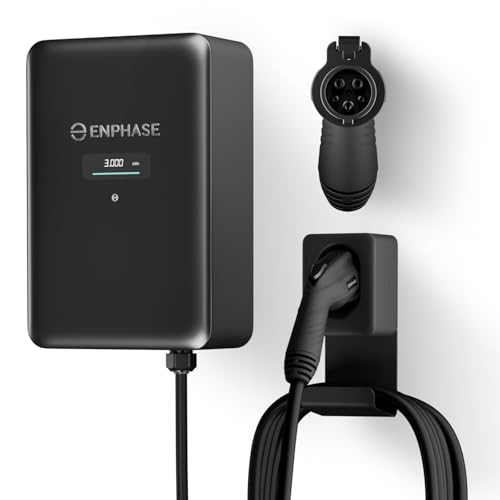
9× FASTER CHARGING: Get faster, smarter EV charging up to 11.5 kW (up to 46 miles/hour). Perfect for overnight charging or quick top-ups.

INSTALL WITH CONFIDENCE: The Enphase HCS-50 EV Charger, formerly known as ClipperCreek, delivers award-winning durability and reliability. Installation is quick and straightforward—connect it to a dedicated 50 Amp circuit by any licensed electrician.

Earn Revenue with Every Charge: Set custom pricing and idle fees. Monthly payouts and usage reports included.
How Plug‑&‑Charge Simplifies EV Charging Payments on the Road
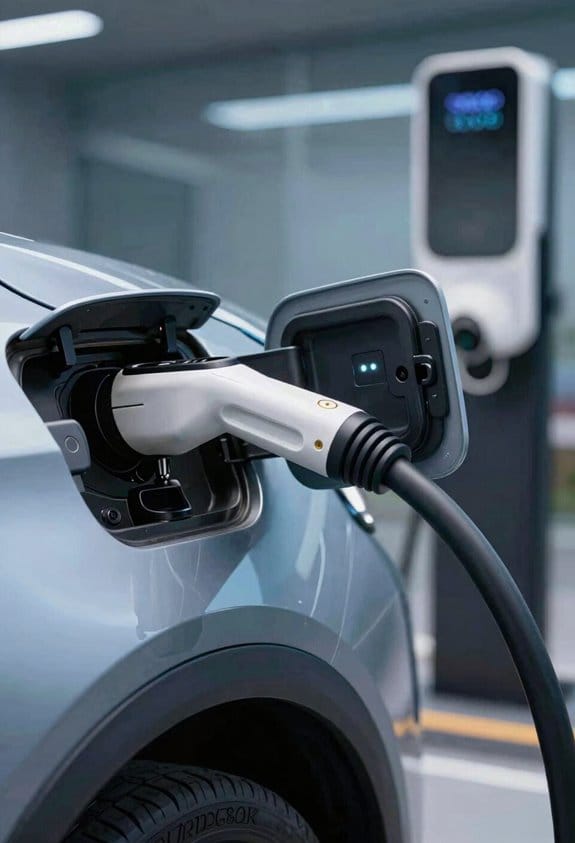
Ever gotten stuck at a charger, fumbling for a card or app while the line backs up behind you? That pause can turn a quick pit stop into a mini‑frustration. With Plug‑&‑Charge, the whole payment step just fades away. You pull up, plug in, and the car talks to the station on its own. The bill pops into your account automatically, so you can get back on the road without a second thought.
How it works:
- Your vehicle sends a secure digital ID.
- The station checks that ID.
- Charging starts and the system logs every kilowatt‑hour.
- Billing info is sent straight to your account.
Why it matters:
- Saves time on busy trips.
- Cuts down on mistakes from manual entry.
- Keeps your payment data safe.
Frankly, the biggest win is the peace of mind. No more digging through wallets or hunting for the right app. Just plug, charge, and go. Worth knowing: make sure your car supports ISO 15118 and that the charger you’re using is Plug‑&‑Charge‑compatible. That combo gives you the smoothest experience.
If you’re planning a road trip, add a quick check to your prep list. Look up stations that list ISO 15118 support, and you’ll avoid the hassle of pulling out a card at the last minute. It’s a small step that makes a big difference when you’re on the move.
Give it a try on your next charging stop and see how much easier the whole process feels. Ready to leave the card‑swiping behind?
Recommended Products

AI-POWERED SMART CHARGING & APP CONTROL – This ev charger level 2 uses Autel’s AI-integrated smart app to schedule charging around time-of-use utility rates, helping lower your monthly bill while boosting station utilization. Start or stop sessions remotely, adjust current from low to high amps, view real-time energy data, and get alerts if anything looks off.

Fast Charging Without Upgrades: Overcome limited electricity service and charge at the maximum speed possible, without upgrading your panel—thanks to Emporia’s PowerSmart technology that works with your existing electrical panel to automatically balance load.

Charge with Confidence: ChargePoint builds reliable, flexible EV charging stations for home, business, and fleets. Get 24/7 support and access to hundreds of thousands of North American charging locations
How Urban‑Rural Coverage Gaps Affect Your EV Trip Planning
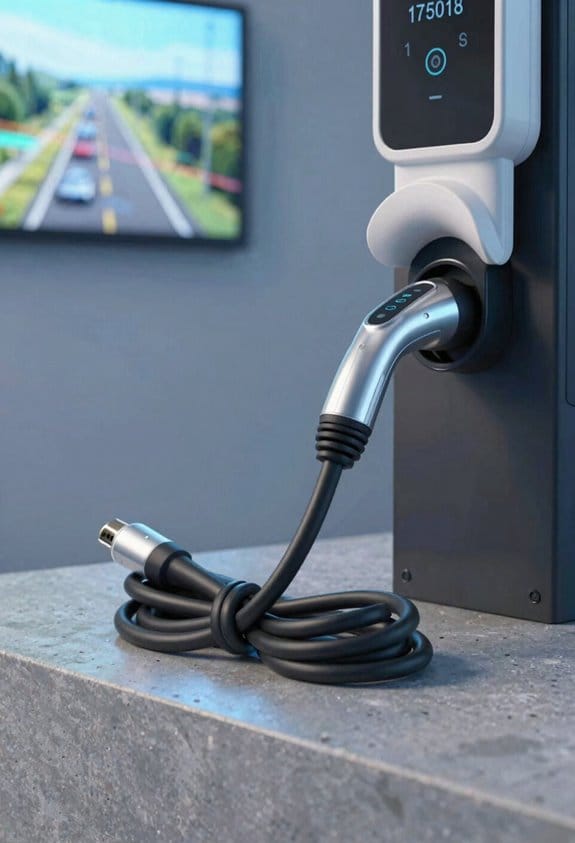
Ever tried to leave the city for a weekend getaway and then spent half the drive hunting for a charger? You’re not alone. The truth is, urban areas are packed with stations, but once you hit the open road, the options thin out fast, and that can turn a fun trip into a stressful one.
First thing you should do is map your route before you head out. Pull up a reliable map app, plot your stops, and look for fast‑charging points along the highway. If you spot any stretch longer than about 100 km without a station, flag it as a potential desert zone. In those spots, it’s smart to plan a buffer charge at the nearest town before you push on.
Worth knowing: keep a backup charger app that shows real‑time availability. Some apps let you filter by fast chargers, others give you live status updates, so you won’t waste time at a dead outlet. Also, consider carrying a portable Level 2 charger for emergencies—it’s a handy safety net if the nearest station is out of service.
- Map your route before you depart.
- Identify fast‑charging stops on highways.
- Mark any gaps of more than 100 km.
In desert zones, plan a buffer charge in the nearest town. Keep a backup charger app that shows real‑time availability. Carry a portable Level 2 charger for emergencies.
Fair warning: don’t rely on a single source for charger info. Cross‑check a couple of apps or websites, and if you can, call ahead to confirm a station is working. That little extra step can save you from a dead‑battery panic.
Recommended Products

⚡【 HIGH POWER - 80 AMP - UP TO 75 MILES OF RANGE PER HOUR CHARGING 】— Up to 20 times faster than a standard 110V charger, providing up to 75 miles of range with every hour of charge, delivering up to 19.2 kWh. The Primecom 80Amp EV Charger offers adjustable amperage ranging from: 80A, 50A, 48A, 40A, 32A, 30A, 28A, 24A.

🔋 This charger is manually amperage adjustable from 50-Amps, 48, 40, 32, 30, 28, 25, 12 Amps Modes with front button selection provides upto 12KWh power up to 10X Faster charging (compare the the Factory provided 110V Charger). 📱 LONGER CORD OPTIONS & INTELLIGENT CHIP — Intelligent chip automatically provides the requested amperage from your EV.

Grizzl-E Ultimate with 25ft Cable is the 80A 19.2kW, Wi-Fi-connected EV Charger with J1772 or NACS charging connector. Made in Canada with a heavy-duty UL Type 4 Indoor/Outdoor Rated metal enclosure to withstand any indoor or outdoor condition
Future‑Proof Your EV With V2G, Wireless Power & New EV‑Charging Technologies
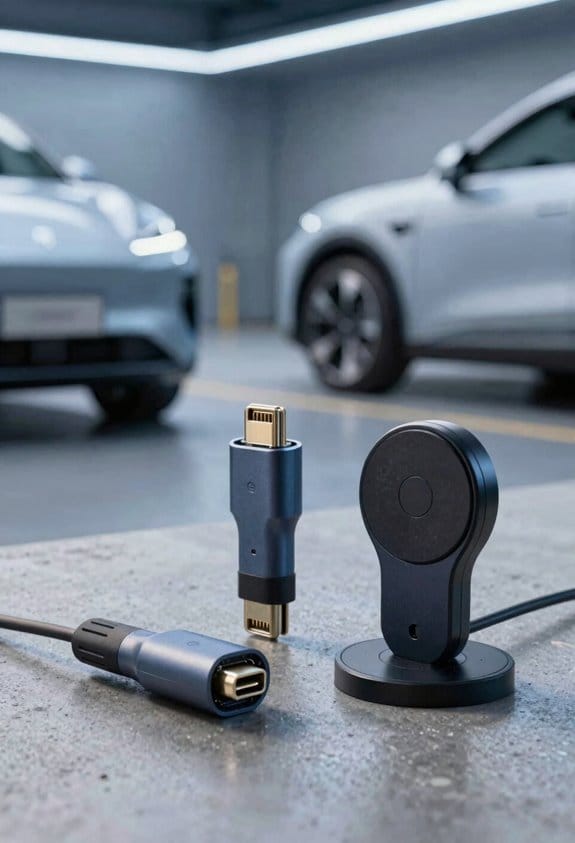
Ever wonder why your EV feels like it’s falling behind as new chargers pop up? The trick is to add a few upgrades now so you won’t have to scramble later.
1. Install a Vehicle‑to‑Grid (V2G) unit
- It lets your car push power back to your home or the grid.
- You can shave money off your bill and help balance renewable energy.
2. Choose inductive charging (wireless) pads for home or work
- No cables—just park over the pad and the car charges itself.
- This cuts down on connector wear and makes daily charging a breeze.
3. Upgrade to a fast‑charging system that handles 300 kW+ and supports CCS, NACS, and ISO 15118
- You’ll be ready for highway trips without hunting for a compatible station.
- New public chargers will work right out of the box, so you won’t miss a beat.
Frankly, the best way to stay ahead is to treat these upgrades like a simple checklist. Try this: start with the V2G unit, then add the wireless pad, and finally swap in a high‑power charger that covers all the major standards. You’ll find the whole process smoother than you expect.
Recommended Products

Complete Off-Grid Power: This RV solar panel kit with 400W solar panels provides reliable solar power for campers, trailers, and off-grid setups, keeping your 12V batteries charged wherever you go.
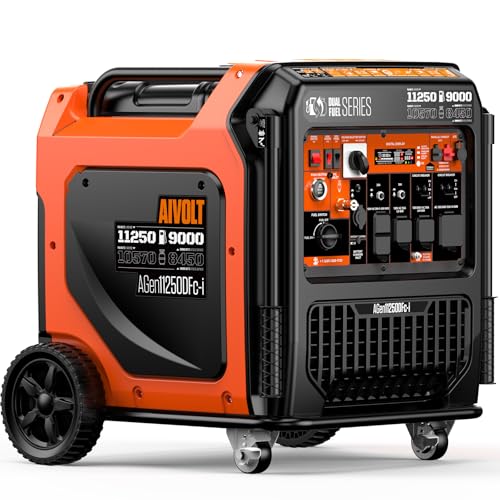
Meets U.S. Standards: This generator follows strict U.S. environmental and safety rules. EPA & CARB Compliant. Available for purchase in CA
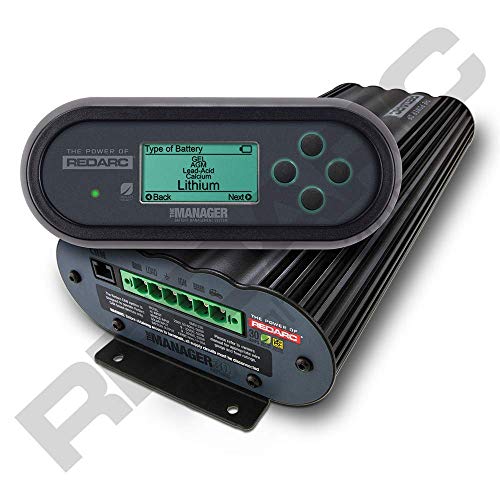
All-in-One Battery Management System: The Manager30 combines AC, DC, and solar charging in one unit. It’s a 30A charger, battery isolator, load disconnect controller, and remote monitor, delivering complete off-grid power control
Frequently Asked Questions
How Do Pricing Structures Differ Between Networks and Affect Total Charging Cost?
We see 1.4% of US ports temporarily unavailable, meaning you’ll often pay per‑session rates that vary by network. Tiered pricing and subscription models can flatten costs, but differing structures still shift total charging expenses.
What Impact Do Local Permitting Delays Have on New Charger Installations?
We’ve seen permitting timelines stall projects, and inspection bottlenecks push rollout dates back months, so we’re forced to prioritize easier sites, delaying network expansion and increasing costs for operators and drivers alike.
How Does Charger Uptime Vary Across Different US Regions and Operators?
We see regional uptime fluctuating—coastal operators often hit 98%+ availability, while Mid‑west and Southern networks lag around 93‑95% due to operator variability, maintenance schedules, and grid constraints.
Are There Incentives for Installing Chargers in Rural or Underserved Areas?
We’ve got federal rebates and utility partnerships that target rural and underserved zones, so we can tap those funds and collaborate with local grids to expand charging access where it’s needed most.
What Security Risks Exist With Contactless and Plug‑&‑Charge Payment Methods?
We see secure pairing preventing token theft, yet hackers exploit wireless signals; by encrypting each transaction and authenticating devices, we protect users while preserving the convenience of contactless and Plug‑&‑Charge.