As an Amazon Associate, we earn from qualifying purchases. Some links on this site are affiliate links at no extra cost to you. Our recommendations are based on thorough research and editorial judgment.

What Drivers Need to Know About Travel-Friendly EV Chargers

We should match charger type to trip length, using Level 2 for overnight or meal stops and DC fast (Level 3) for highway gaps. Check battery chemistry first and limit fast‑charge sessions to about 80 % SOC to protect the pack. Use EV apps like PlugShare or A Better Routeplanner to map stations, filter by speed, and add 30‑minute fast‑charge stops. Verify public access, keep plugs clean, and move the car promptly when charging ends. Portable Level 1/2 chargers help at hotels or campsites, and monitoring pricing avoids surprise fees. Cold‑weather pre‑conditioning and avoiding fast charging below 0 °C keep the battery efficient. Following these steps will give you a solid foundation for a smooth road trip.
Key Takeaways
- Choose chargers matching trip length: Level 2 for overnight or meal stops, DC fast (Level 3) for highway gaps.
- Keep fast‑charging sessions to ~80 % SOC, especially in cold weather, to preserve battery health and maintain speed.
- Use EV‑specific apps (PlugShare, ChargePoint, ABRP) to filter stations by charger type, speed, and price, and sync routes with vehicle navigation.
- Verify public access and connector type (CCS, J1772) before relying on destination chargers; bring a portable Level 1/2 charger and adapters for hotels or campsites.
- Follow etiquette: move the car promptly after charging, keep ports clean, and respect station rules to ensure spot for for. other
Choose the Right Charger Type for Your EV Road Trip
You may be interested


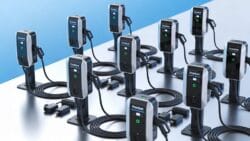
Ever wonder why your EV road trips sometimes feel like a game of musical chairs with chargers? I’ve been there, and the trick is to match the charger to your day’s plan and the spots you’ll hit.
We usually start by matching the charger type to the trip length and the places we’ll stop. First, we check the battery chemistry. If it’s a lithium‑ion pack, Level 2 chargers give the best balance of speed and cost. For long stretches, DC fast chargers (Level 3) add 100‑200 miles in half an hour, but we should respect charging etiquette: avoid hogging a spot longer than needed and keep the plug clean.
Steps to choose:
- Identify total miles per day.
- Pick Level 2 for overnight stays or meals.
- Use DC fast for highway gaps.
Tips:
- Arrive early to secure a spot.
- Limit fast‑charge sessions to 80 % SOC for peak health.
- Follow station rules and clean up after use.
Frankly, the best way to keep your trip smooth is to plan your stops before you hit the road. Try this: map out where Level 2 chargers sit near your hotels or restaurants, and keep a list of DC fast stations for those long highway stretches. This way you won’t be left hunting for a plug when you’re low on time.
Recommended Products

⚡【 HIGH POWER - 80 AMP - UP TO 75 MILES OF RANGE PER HOUR CHARGING 】— Up to 20 times faster than a standard 110V charger, providing up to 75 miles of range with every hour of charge, delivering up to 19.2 kWh. The Primecom 80Amp EV Charger offers adjustable amperage ranging from: 80A, 50A, 48A, 40A, 32A, 30A, 28A, 24A.
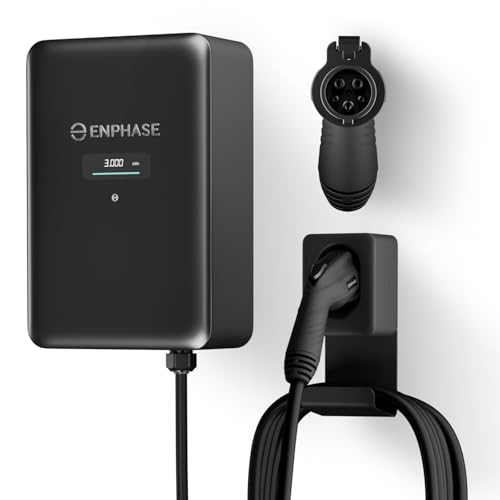
9× FASTER CHARGING: Get faster, smarter EV charging up to 11.5 kW (up to 46 miles/hour). Perfect for overnight charging or quick top-ups.

INSTALL WITH CONFIDENCE: The Enphase HCS-50 EV Charger, formerly known as ClipperCreek, delivers award-winning durability and reliability. Installation is quick and straightforward—connect it to a dedicated 50 Amp circuit by any licensed electrician.
Map Your EV Road Trip Route With EV‑Specific Apps
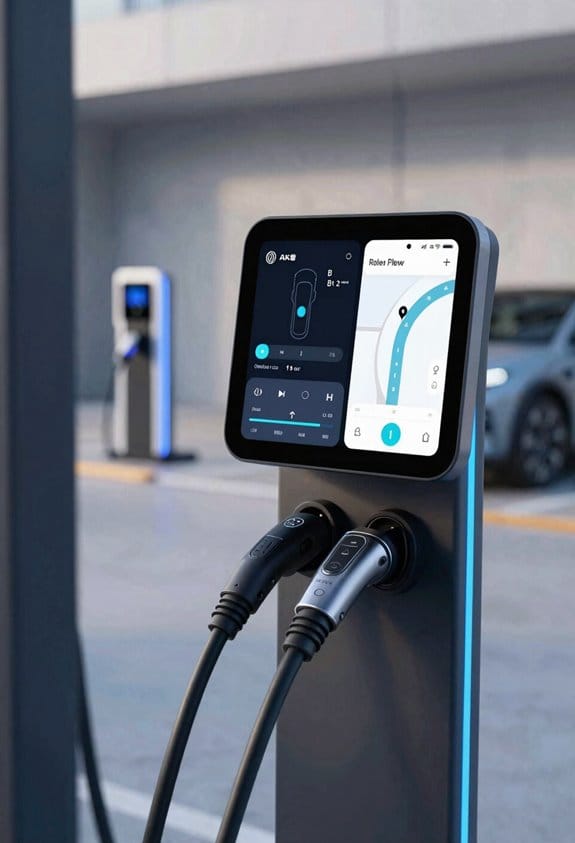
Ever tried to map out a road trip only to realize you’ll run out of juice before the next town? It’s a hassle that can turn a fun adventure into a stressful scramble for a charger. The trick is to start with an EV‑specific app that shows you exactly where the stations sit along your route.
Choose an app (PlugShare, ChargePoint, A Better Routeplanner).
Enter your start and end points, then let the map display clustered stations near highways, towns, and attractions. You can filter by charger type and speed, then pick a stop where the cluster offers a 30‑minute fast charge. Save the route and sync it with your car’s navigation.
Frankly, this simple routine lets you plan efficient charging breaks and avoid detours. The result is a clear, practical route with reliable charging points.
Try this:
- Review the map for clustered stations.
- Add a stop where the cluster offers a 30‑minute fast charge.
Discover Charger Availability at Hotels, Theme Parks, and Scenic Sites
Ever tried to map out an EV road trip only to hit a dead‑end because the hotel you booked has no charger? That frustration is all too common, but a few simple steps can save you a lot of hassle.
Mapping your route with an EV app shows where you’ll charge, but the next step is finding reliable plugs at where you’ll stay or visit. We should check hotel chargers before we book a room, because many chains now list Level 2 spots on their websites. Look for “hotel chargers” in the amenities section and verify them with the app.
Where to look:
- Hotels – Use the hotel’s own app or a booking site filter for EV‑friendly rooms.
- Theme parks – Scan the park map for ChargePoint or Electrify America icons near entrances and parking.
- Scenic stations – Search “scenic stations” on PlugShare; these are often at trailheads, overlooks, or state parks.
Tips:
- Call ahead to confirm availability.
- Note the connector type (CCS or J1772).
- Plan a short stop to charge while you eat or explore.
Frankly, the best way to avoid surprises is to treat charging like any other amenity you’d check before a trip. Try this: open the hotel’s website, scroll down to “Amenities,” and look for a plug icon or a note about EV charging. If it’s missing, a quick call can clear things up.
Worth knowing: many theme parks now have charging stations right by the main parking lot, so you can top up while you’re waiting in line for a ride. It’s a good idea to note the exact location on your phone so you don’t waste time wandering around.
Truth is, scenic spots are perfect for a quick charge, but they can be busy on weekends. Arriving early or planning a lunch break around the charger can keep your day on track.
Fair warning: not every Level 2 spot is open to the public. Some are reserved for staff or require a membership. Double‑check the access rules before you count on them.
Got a favorite charging spot you’ve discovered on a road trip? Share it in the comments—let’s help each other stay powered up.
Recommended Products

🔋 This charger is manually amperage adjustable from 50-Amps, 48, 40, 32, 30, 28, 25, 12 Amps Modes with front button selection provides upto 12KWh power up to 10X Faster charging (compare the the Factory provided 110V Charger). 📱 LONGER CORD OPTIONS & INTELLIGENT CHIP — Intelligent chip automatically provides the requested amperage from your EV.

AI-POWERED SMART CHARGING & APP CONTROL – This ev charger level 2 uses Autel’s AI-integrated smart app to schedule charging around time-of-use utility rates, helping lower your monthly bill while boosting station utilization. Start or stop sessions remotely, adjust current from low to high amps, view real-time energy data, and get alerts if anything looks off.

Grizzl-E Ultimate with 25ft Cable is the 80A 19.2kW, Wi-Fi-connected EV Charger with J1772 or NACS charging connector. Made in Canada with a heavy-duty UL Type 4 Indoor/Outdoor Rated metal enclosure to withstand any indoor or outdoor condition
Maximize Speed by Charging to 80 % SOC
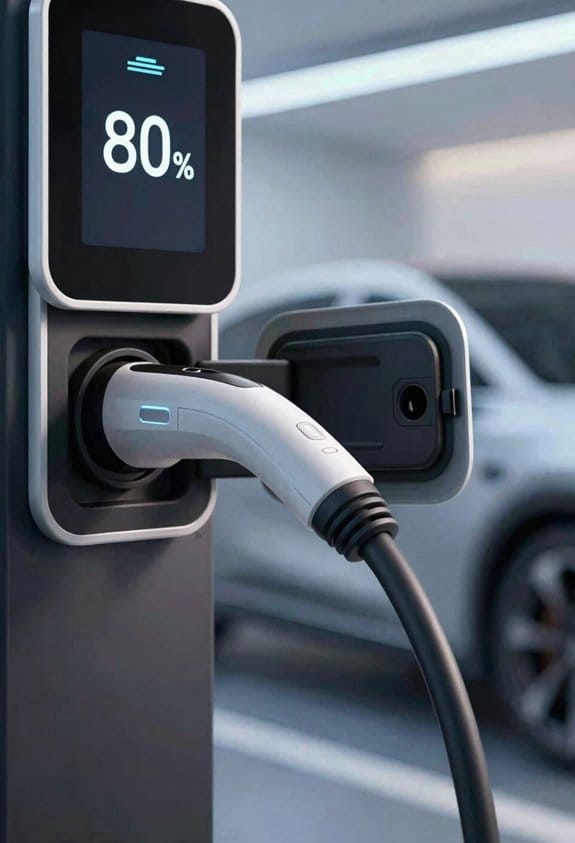
Ever found yourself stuck at a fast‑charging station, watching the minutes tick by while your trip stretches out? The trick is to keep your battery in its sweet spot – around 80 % state of charge. That’s where it pulls in power fastest, so you can add miles without the long wait. It also helps the pack last longer and keeps you in the optimal charging range, which is a big win on those long hauls.
Frankly, you don’t need a fancy plan to make this work. Just treat each stop like a quick coffee break. Pull up an app, spot a charger that fits your route, and aim for a 20‑30‑minute dwell time. When the meter hits 80 %, unplug and move on. That way you’re not hogging a spot, and you keep your schedule on track.
Worth knowing: the best chargers are the ones that let you hit that 80 % mark without slowing down. If you linger past it, the charging speed drops and you waste precious time. So, keep an eye on the display and be ready to roll as soon as you hit the target.
Plan stops – Use apps to locate 80 % chargers along the route.
Limit dwell time – Aim for 20‑30 minutes at DC fast stations.
Monitor SOC – Stop charging once the meter hits 80 %.
Share space – Move the car when charging ends to free the spot.
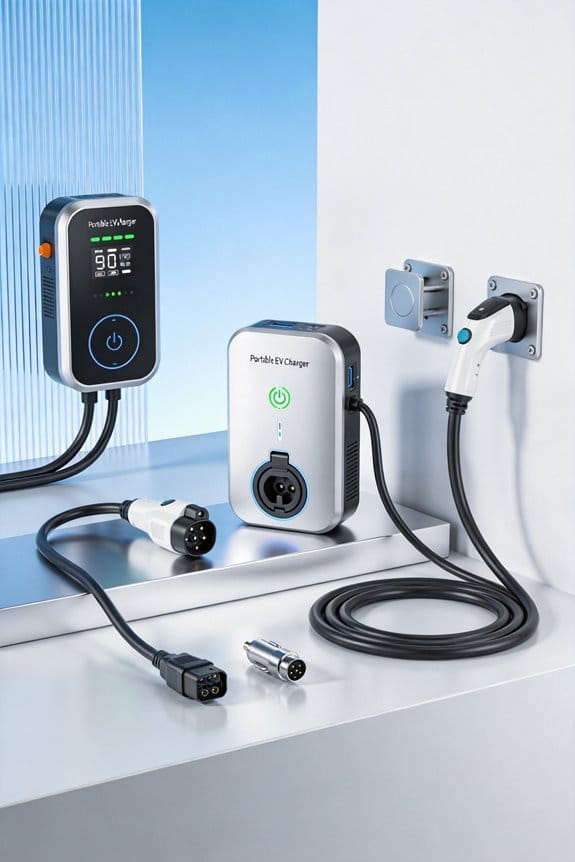
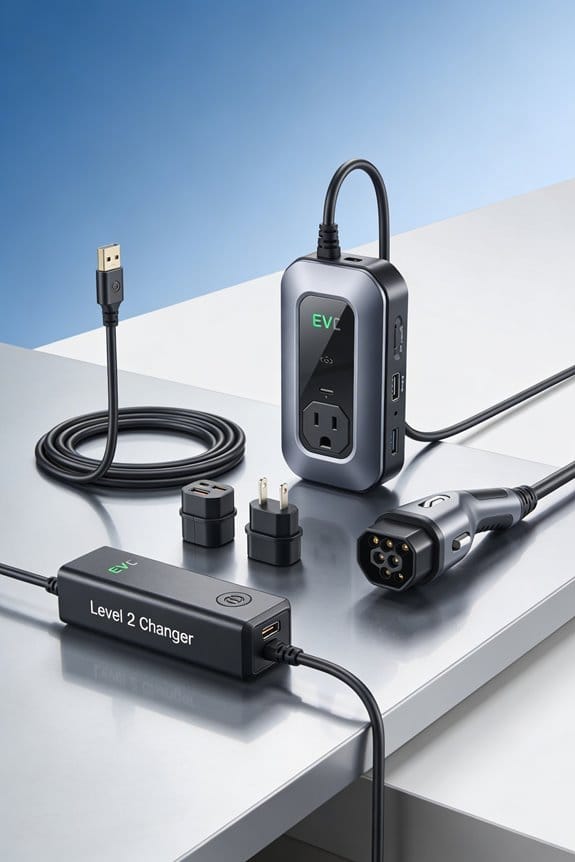
Use Portable Level 1 + 2 Chargers on the Road
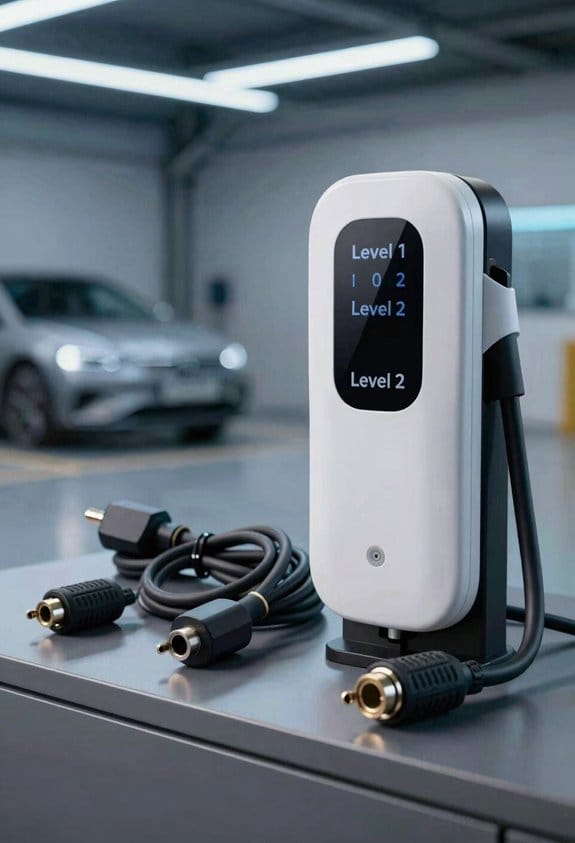
Ever found yourself stuck at a rest stop, wondering how to keep your EV charged without hunting for a fancy station?
- Pick a portable Level 1 + 2 charger that works with both 120V and 240V plugs.
- Plug it into a hotel room outlet, a truck stop, or a campsite.
- The charger’s flexibility lets you go from a slow overnight charge to a quick two‑hour boost.
- Campsite convenience means you can charge while you set up a tent or cook dinner.
We recommend stashing the charger in the trunk with a short extension cord and a adapters adapter. Test the unit before a long trip. Check the battery’s temperature and avoid charging above 80 % when you can. This routine keeps the vehicle ready for the next leg of the journey.
Honestly, keeping a portable charger handy saves you a lot of stress on the road. Try this: always have a spare adapter in your glove box so you’re never caught off guard.
What’s the best spot you’ve found to charge on a road trip?
Recommended Products

Energize Almost Everything. The EcoFlow DELTA Pro 3 supports 120V/240V voltage and has a 4000W output (6000W with X-Boost, scalable up to 12000W), powering nearly all essential home appliances, such as a 3-ton* central AC or a 1 HP water pump.

Lightest 4-wheel scooter in the industry: only 37Lbs with battery!

Charge with Confidence: ChargePoint builds reliable, flexible EV charging stations for home, business, and fleets. Get 24/7 support and access to hundreds of thousands of North American charging locations.
Manage Costs by Spotting Transparent Pricing
Ever wonder why your EV bill sometimes feels like a mystery?
Frankly, the trick is to treat each charging stop like a quick grocery run—look, compare, and decide before you plug in.
- Look for clear signage at the station. It should list price per kWh and any session fees.
- Choose sites that use metered billing. The meter shows exactly how many kilowatt‑hours you draw.
- Compare prices before you plug in. Apps like ChargePoint let you see rates side‑by‑side.
- Avoid stations that hide fees in fine print. If the price isn’t obvious, walk away.
- Use a credit card that tracks each charge. This helps you spot unexpected charges later.
Here’s the trick: keep a quick note on your phone of the stations you trust, and you’ll spend less time hunting for prices and more time on the road.
You’ll find that a little patience at the pump saves you both cash and hassle. Have you tried a few of these steps yet? Give it a go and see how quickly your charging costs drop.
Recommended Products

CSA Certified & 8 Protections:Wolfbox electric vehicle charger is CSA&FCC certified and meets UL2594 standards with 8 advanced electrical protections including leakage current,over current, and short circuit. Built with robust NEMA 4X waterproof and dustproof protective housing, making it resilient to external influences. Backed by 24/7 customer support and lifetime assistance. Charge with absolute confidence knowing your vehicle and home are protected by multiple safety layers.

EFFICIENT LEVEL 1 CHARGING - With a NEMA 5-15 plug and 15 Amp output, this charger delivers reliable and efficient Level 1 charging, adding approximately 40-50 miles of range overnight

Equipped with NEMA 14-50 Plug:SEGUMA 32Amp level 2 charger is equipped with EV specific NEMA 14-50 plug, heavy-duty, easy to install, just plug into a NEMA 14-50 outlet at home, RV park or workplace, you'll get a fast charging for your car. Note: Do not use with other outlets such as NEMA 5-15, 6-20,10-30, 14-30 or 6-50 without the proper adapter, as they are not directly compatible
Keep Your Battery Efficient With Cold‑Weather Tips
Ever notice how your car’s range seems to shrink the moment the temperature drops below freezing? That sluggish feeling isn’t just in your head – the battery’s chemistry actually slows down. Below are a few real‑world tricks that have helped me keep my range steady when winter bites.
Battery preconditioning
Start warming the pack while you’re still plugged in. A few minutes of pre‑conditioning get the battery to its sweet spot before you hit the road, so you lose less energy and your range stays more predictable.
Cabin heating
Seat heaters are a lifesaver compared to blasting the whole cabin. Turn them on only when you need them, and keep the windows shut to trap the heat. You’ll stay warm without draining the battery as fast.
Charging habits
In bitter cold, aim for about 80 % charge instead of a full 100 %. If the pack is below 0 °C, skip the fast‑charge option – it can stress the cells and reduce efficiency.
Parking tips
Whenever you can, park in a garage or a shaded spot. If you have a charger at home, leave the car plugged in overnight; that way the battery can stay at a moderate temperature even while you sleep.
Frankly, these small adjustments add up. Your car feels more responsive, and you won’t be caught off guard by a sudden drop in range. Worth knowing: a little extra care now means smoother rides later.
Give one of these a try next time you’re heading out in the cold—how much difference will you see?
Pack Essential Gear for Your EV Road Trip
Ever been stuck on a long stretch of highway because you forgot something essential for your EV road trip? I’ve learned the hard way that a little prep goes a long way, so here’s how I keep things running smooth.
Recommended Products

Economical EV Charging: The Wi-Fi-enabled IQ 50 smart EV charger lets you charge your electric car economically at home. Use the Enphase App to easily set up charging schedules and off-peak rate reminders. Pair with an Enphase Energy System for solar charging.

Compatibility: Generac Level 2 48 Amp EV Charger, compatible with all major electric vehicle brands including Ford, Nissan, BMW, Rivian, Hyundai, Volkswagen, Kia, Chevrolet, Audi, Mercedes-Benz, Porsche, and Tesla (Tesla charger adapter sold separately)

📟 DISPLAY SCREEN — Our charger features a real time data screen that displays relevant information such as, real-time charging Amperage, actual charging Voltage, total kilowatt consumption, current temperature, and other informative data values.
Safety supplies
- A compact first‑aid kit with bandages, antiseptic wipes, and pain relievers.
- An emergency blanket and a bright flashlight with extra batteries.
Charging accessories
- A portable Level 1/2 charger plus the right adapters for campsite outlets.
- A sturdy cable organizer and a couple of spare connectors in case a plug dies.
Camping and comfort
- A lightweight cookware set for cooking meals on the go.
- Reusable water bottles and a small cooler to keep snacks fresh.
Frankly, a basic tool kit, a spare tire, and a phone charger are lifesavers too. Pack everything in a rugged bag that slides easily into the trunk, and give the list a quick glance before you head out. This habit saves time and cuts down on stress when the miles pile up.
Try this: keep a checklist on your phone and tick off each item as you load it. You’ll be surprised how often you forget something small but crucial.
What’s the one thing you wish you’d never left behind on a road trip?
Frequently Asked Questions
How Do I Protect My EV Charger From Extreme Weather?
We understand you worry about rain and heat, but we protect our charger by installing a weatherproof enclosure and adding surge protection, ensuring it stays safe and functional no matter the conditions.
Can I Use a Standard Household Outlet for Level 2 Charging?
We can’t use a regular 120V outlet for true Level 2 charging; it’s limited to Level 1 power. You’d need an adapter that handles higher voltage, but the outlet’s 120V limitations prevent proper Level 2 performance.
What Safety Features Should I Look for in a Portable Charger?
We recommend portable chargers with overcurrent protection and thermal sensors; 92% of users report fewer incidents. They’ll shut off automatically if currents spike or temperatures rise, keeping you and your vehicle safe.
How Does Charging Speed Vary With Different CCS Cable Lengths?
We’ll see that longer CCS cables increase cable resistance, causing voltage drop, which slows charging speed; shorter cables keep resistance low, preserving voltage and delivering the fastest possible charge.
Are There Any Tax Incentives for Installing Roadside Chargers?
We’ve found tax credits and utility rebates often cover a sizable portion of roadside charger costs, so you should check federal, state, and local programs to maximize financial support for installation.