As an Amazon Associate, we earn from qualifying purchases. Some links on this site are affiliate links at no extra cost to you. Our recommendations are based on thorough research and editorial judgment.


What the Future of Charging Convenience Could Look Like

We’ll see fast‑charging networks that place 600‑minutehour‑hour routestraffic hubs near highways and workplaces, so a quick pause under five minutes ends range anxiety. Universal NACS plugs will let any car plug in without adapters, and dual‑port stations will support both old and new connectors. 600 kW, 800‑volt chargers will cut 300‑mile top‑ups to 10‑15 minutes, while AI‑driven scheduling shifts charging to cheap off‑peak times and balances grid load. V2G will let EVs supply home power during outages, and autonomous ride‑sharing fleets will use adaptive routing and real‑time charger availability to stay on schedule. Continue and, and you’ll see more details.
Key Takeaways
- Ultra‑high‑power 800‑volt stations (600 kW+) will cut 300‑mile top‑ups to 10‑15 minutes, making quick “pit‑stop” charging routine.
- Nationwide NACS‑compatible hubs with dual‑port chargers will eliminate plug‑mismatch worries and streamline plug‑and‑play access.
- AI‑driven platforms will auto‑schedule charging during off‑peak, low‑price windows and balance grid load, reducing electricity costs.
- Integrated V2G and bidirectional chargers will let EVs supply home power or grid services, turning vehicles into mobile energy assets.
- Adaptive routing and real‑time charger availability apps will steer drivers to open stations, minimizing wait times and optimizing fleet efficiency.
How Fast‑Charging Networks Cut Range Anxiety
You may be interested


Ever feel stuck wondering if you’ll find a charger before your battery hits zero? That nervousness is real, but the new fast‑charging corridors are making it a lot easier to keep moving.
We’ve got a growing web of stations that line highways, zip into cities, and sit near workplaces. Most of them now show wait times right in the app, so you know exactly how long you’ll be parked before you get back on the road.
Try this:
- Pull up the map and look for nearby corridors.
- Check the app for real‑time wait times.
- Aim for stops where the queue is under five minutes.
These simple steps cut out a lot of guesswork. You can plan a coffee break or a snack stop without fearing a long line. Because the network is so dense, many trips only need one quick pause.
Frankly, the biggest win is that you can schedule your route with confidence. No more pulling over in a sketchy lot hoping a charger will free up. Just follow the routine, and you’ll keep your journey smooth and stress‑free.
Recommended Products

Customized Billboard: The charging station's first background can be customized according to your own design. In the design, you can put your company logo as an advertising to show your promotional needs.

Lightning Fast Chargin with Digital Displayg: Enjoy lightning-fast charging with this 10-port USB charging station that features built-in 4 Type-C PD Ports, including 2PD Max 30W, 2PD Max 100W. The Type-C PD 100W support fast charging for Apple, Samsung, Chromebook, HP, and Dell USB-C computer laptops and devices. Type-C PD 30W can charge your iPhone 15/14 series up to 3x faster than the original charger. Stay informed about your device's charging status with Unitek charging station's LED digital display that provides real-time updates.

8 Charging Ports: There are 3 Type C cable, 2 Micro cable and 3 iPhone lighting cables. The charging station is perfect for charging most of electronic devices.
How NACS Standard Simplifies Plug Compatibility

Ever tried to pull up at a charging stop and then realize you need a different plug? It’s a hassle that most of us have faced, especially on long trips. The good news is that the NACS standard is making that a thing of the past.
If you pick a car that supports NACS, you can head to any public station that shows the NACS logo and just plug in. The charging speed stays the same because the power delivery hasn’t changed—only the connector has.
- NACS cuts down confusion on highways.
- Dual‑port stations smooth the transition.
- Ford and GM now ship NACS‑ready models.
Try this: look for the NACS symbol on the charger before you pull in. That way you avoid the “wrong plug” scramble and keep your journey moving.
Honestly, the shift feels natural once you get used to it. You’ll find that most new stations are already set up for the new plug, so you won’t have to hunt for a specific brand. It’s a small change that makes a big difference in everyday driving.
What’s your next road trip plan? Ready to plug in without a second thought?
Recommended Products

Universal Compatibility: The IQ 60 EV Charger features a ruggedized NACS connector and is ideal for Tesla electric vehicles and other NACS-compatible electric vehicles with acceptance rates up to 11.5kW. Plus, you may qualify for federal and local tax credits and rebates for home electric car charging.
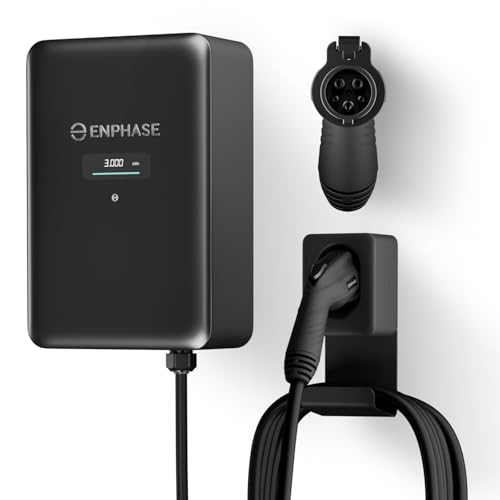
9× FASTER CHARGING: Get faster, smarter EV charging up to 11.5 kW (up to 46 miles/hour). Perfect for overnight charging or quick top-ups.
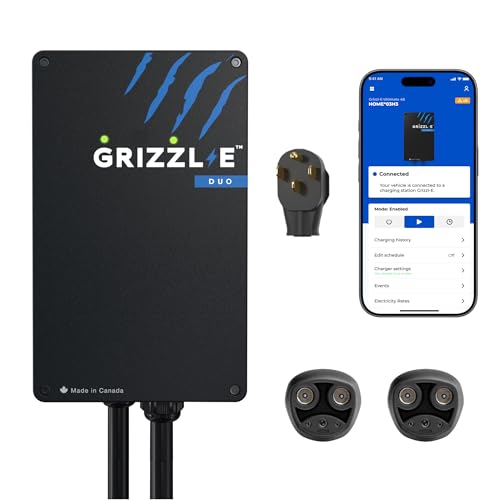
Wi-Fi connected. Smart Charger powered by Grizzl-E Connect software. Real-time charging monitoring, charging schedules, detailed energy consumption statistics, updates, diagnostics, and more. Charging works with or without an online connection. Unlock advanced charging capability with premium OCPP, Recieve seamless integration and future-ready flexibility. A one-time activation fee applies.
How 600 kW & 800‑Volt Chargers Trim 300‑Mile Top‑Ups

Ever stuck at a rest stop wondering why your EV still feels sluggish after a quick charge? Those 600 kW, 800‑volt stations can slash a 300‑mile top‑up from half an hour to just ten‑fifteen minutes. Higher power pushes more energy in each second, so the battery fills fast. The higher voltage also means less current, which keeps the pack cooler and eases thermal stress.
Plan stops – Look for 800‑volt chargers along the highway. You’ll find them at most big service areas, and they’re usually marked with a bright sign. Picking the right spot means you won’t have to hunt for a plug later.
Monitor temperature – Your car’s system will dial back the charge if it gets too hot. Keep an eye on the dashboard readout and let it do its thing. It’s a small step that protects the battery in the long run.
Use fast‑charge mode**** – When you have a few minutes to spare, flip the switch to the 600 kW setting. It’s as simple as tapping a button on the screen, and you’ll feel the difference right away.
- Faster fills mean fewer breaks.
- Lower heat improves battery life.
- Consistent power keeps travel times predictable.
Try this: set your navigation to highlight 800‑volt stations on your route. It saves you the guesswork and lets you stick to a tight schedule.
Fair warning: pushing the battery hard every day can wear it down faster, so mix in regular slower charges when you can.
Following these tips should make your long drives feel a lot smoother. Ready to give your next road trip a speed boost?
Recommended Products

AI-POWERED SMART CHARGING & APP CONTROL – This ev charger level 2 uses Autel’s AI-integrated smart app to schedule charging around time-of-use utility rates, helping lower your monthly bill while boosting station utilization. Start or stop sessions remotely, adjust current from low to high amps, view real-time energy data, and get alerts if anything looks off.

Grizzl-E Ultimate with 25ft Cable is the 80A 19.2kW, Wi-Fi-connected EV Charger with J1772 or NACS charging connector. Made in Canada with a heavy-duty UL Type 4 Indoor/Outdoor Rated metal enclosure to withstand any indoor or outdoor condition

【Trusted Brand】Autel has been making automotive intelligent diagnostic, inspection, and analysis products since 2004. The MaxiCharger AC Home was developed over 2 years from a full team of designers and engineers to bring you the safest, smartest, and one of the best looking chargers on the market.
How AI‑Powered Management Lowers Charging Costs

Ever felt the sting of a pricey fast‑charge bill? You’re not alone—those 600 kW, 800‑volt chargers zip you up in minutes, but the cost can add up fast. I’ve been testing an AI‑driven system that helps keep those numbers down, and here’s what I’ve learned.
Dynamic pricing
AI watches the grid’s demand in real time, so it can shift your charge to cheaper off‑peak periods. You end up paying less without having to set a timer or guess when rates will dip. It’s a simple way to save, especially if you charge every day.
Predictive maintenance
Sensors feed data straight into the AI, which flags wear before anything breaks. Early repairs mean you avoid the big, unexpected downtime that can cost a ton of money. It’s like having a mechanic that never sleeps.
Smart load balancing
The AI spreads the load across all the chargers, preventing overload penalties that can spike your bill. By keeping energy use efficient, you stay within the limits and keep your wallet happy.
Worth knowing: you can set the system to prioritize the cheapest slots automatically, so you never have to think about it.
Try this: schedule a test run during a low‑demand window and compare the bill to a regular peak‑time charge. The difference is usually noticeable.
Got any tips of your own for cutting charge costs? Share them below!
How V2G Turns Your EV Into a Home Power Plant

Ever had the lights flicker during a storm and wished your car could help? V2G lets your EV act like a backup generator, feeding electricity back to your home when the grid drops. You get a reliable power source and even help the larger system during peak demand.
How it works
- Your car stores excess solar or cheap night‑time electricity.
- When the grid is stressed, the car supplies power to lights, fridge, and HVAC.
- You earn credits or lower bills by returning energy.
Steps to set it up
- Install a bidirectional charger that supports V2G.
- Set the charger to discharge only during outages or high‑price periods.
- Enable smart‑management software to track demand and automate flow.
Frankly, the biggest benefit is peace of mind. You won’t be left in the dark, and you’ll see a small dip in your electric bill. The system also eases stress on the grid, which can lower overall rates for everyone.
Worth knowing: you can program the charger to start discharging when your utility’s price spikes, so you’re always using the cheapest power available. This way, your EV becomes a low‑cost home power plant without any extra hassle.
Give it a try and see how your car can keep the lights on when you need them most. Ready to turn your EV into a backup power source?
How Autonomous Ride‑Sharing Shapes On‑Demand Charging
Ever wonder why your electric ride‑sharing car seems to be stuck at a charger longer than it should? The truth is, if you treat charging like a regular pit stop, you’ll waste time and money. I’ve been watching a few fleets get their act together, and they’ve found a few tricks that keep the cars rolling and the riders happy.
First off, think about where you park the cars when they need a boost. Placing hubs near busy streets or popular spots means drivers don’t have to drive far just to plug in. The closer the hub, the quicker the car can get back on the road. It also cuts down on traffic congestion around the charging area.
Next, let the software do the heavy lifting. Adaptive routing lets each vehicle find the nearest open charger in real time, so you’re never stuck waiting for a spot to open up. It’s like having a GPS that knows which gas stations are empty, but for electric plugs. This simple tweak can shave minutes off every trip.
Try this: schedule most of the charging during off‑peak hours. Electricity rates dip after sunset, and the grid isn’t as strained. By timing the charge when demand is low, you’ll see lower bills and a greener footprint. Plus, the cars are ready to go when the rush hour hits.
Frankly, keeping an eye on battery health is a must. A quick check of charge cycles and temperature can prevent deep‑cycle wear that shortens the battery’s life. Some fleets set alerts for when a battery drops below a safe threshold, so they can swap cars before a problem shows up.
Place hubs near high‑traffic zones – short travel to charge.
Use adaptive routing – cars reroute to open chargers in real time.
Schedule charging during low‑demand periods – lower electricity costs.
Monitor battery health – avoid deep‑cycle wear.
Frequently Asked Questions
Do EV Owners Need a Subscription for Access to Fast‑Charging Networks?
We’ve found that many networks now offer subscription models, but they’re not mandatory; roaming agreements let us charge without a plan, though a subscription can give lower rates and guaranteed spots.
Can I Use a Single App to Locate and Pay at All Charging Providers?
We’ve got you covered—our app lets you locate and pay everywhere, with unified billing and cross‑network roaming. Imagine 94 % of Californians charging within ten minutes; that seamless access is now real.
Will Home‑Installed Chargers Support Bidirectional V2G Without Upgrades?
We can tell you that most home‑installed chargers already support bidirectional V2G via home retrofitability and firmware upgradeability, so you won’t need major hardware changes to enable two‑way power.
How Does Plug‑And‑Charge Technology Protect My Payment Data?
We protect your payment data by using encrypted authentication and tokenized payments; with 94% of Californians within ten minutes of a charger, we guarantee every transaction stays secure and private.
Are There Incentives for Installing Ultra‑Fast Chargers at Workplaces?
Yes, we’re seeing tax credits, workplace grants, reduced tariffs and employer subsidies all bundled to offset ultra‑fast charger costs, making installations at offices far more affordable and attractive for businesses.