As an Amazon Associate, we earn from qualifying purchases. Some links on this site are affiliate links at no extra cost to you. Our recommendations are based on thorough research and editorial judgment.

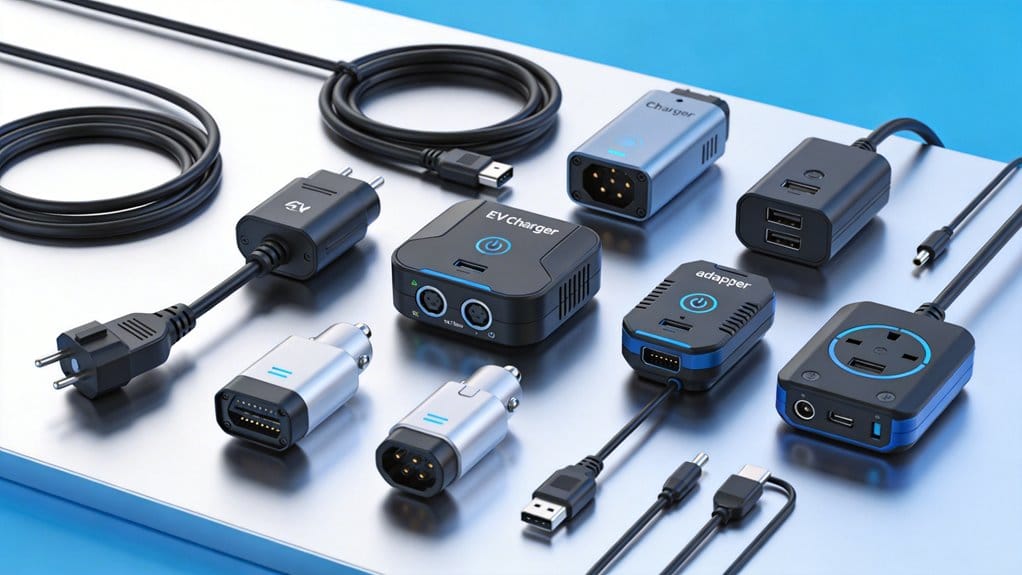
10 Best EV Charger Adapters Every Driver Should Own

1. Tesla Charger Adapter NEMA5‑15P to 14‑50R – LED, 1875 W, ETL listed. 2. LENZ J1772‑to‑Tesla – 80 A, 250 V, UL 2251, IP54. 3. CircleCord NEMA10‑30P to 14‑50R – 12 in, 10 AWG, ETL, indoor/outdoor. 4. Tesla Supercharger to CCS1 – up to 500 A, 1000 V, 3‑yr warranty. 5. Fast Charge NACS‑to‑CCS1 – 500 A, 1000 V, UL/IEC, under 2 lb. 6. 32 A Type2‑to‑Type1 – 7.2 kW, IP65. 7. Tesla to J1772 – 60 A, 250 V, IP65. 8. CCS1‑to‑CCS2 – DC 1000 V/250 A, AC 32 A. 9. Portable 12‑ft Level 2 cable – 30 A, UV‑resistant. 10. Heavy‑duty 24‑ft NEMA14‑50 to 14‑50R – 50 A, weatherproof. These adapters cover home, road‑trip, and fast‑charging needs, and the next section explains why each one matters.
Key Takeaways
- Choose adapters that match your vehicle’s port (NACS, J1772, CCS) and the charger’s outlet (NEMA, Tesla) for seamless compatibility.
- Prioritize safety certifications (ETL, UL, CSA) and built‑in overload protection to prevent overheating and fire risks.
- Select the appropriate power rating: Level 1 (≤15 A/120 V), Level 2 (≤80 A/250 V), or DC fast charge (up to 500 A/1000 V) based on your charging needs.
- Consider cable length, IP rating, and UV‑resistant jackets to ensure durability for indoor and outdoor use.
- Verify warranty length and support options (e.g., 2‑year protection plans) for reliable after‑sales service.
| Tesla Charger Adapter NEMA5-15P to 14-50R with LED Indicator | 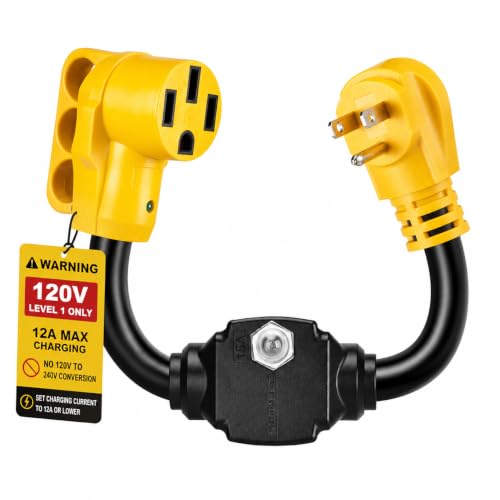 | Best Overall | Compatibility: Tesla (UCM, Cybertruck, Model 3/ Y/ X/ S) & J1772 EVs | Maximum Current: 15 A (recommended ≤12 A) | Maximum Voltage: 125 V (AC) | VIEW LATEST PRICE | Read Our Analysis |
| LENZ J1772 to Tesla Charging Adapter – Level 1 & 2 AC 80A Max UL 2251 Certified | 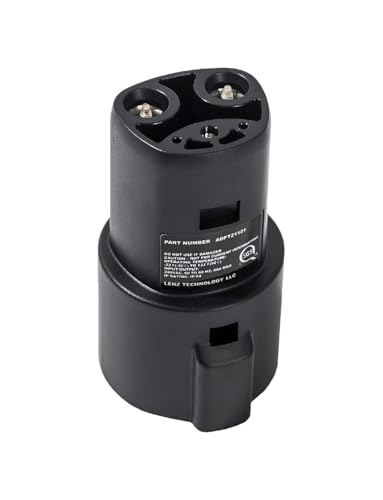 | High-Power Pro | Compatibility: Tesla & NACS‑equipped EVs (2026+ Hyundai, Kia, Rivian, Toyota bZ, Lexus RZ, Lucid Gravity) | Maximum Current: 80 A | Maximum Voltage: 240 V (AC) | VIEW LATEST PRICE | Read Our Analysis |
| CircleCord NEMA 10-30P to 14-50R EV Adapter Cord | Compact Essential | Compatibility: Tesla Model 3/S/X/Y | Maximum Current: 24 A recommended (30 A plug) | Maximum Voltage: 250 V (AC) | VIEW LATEST PRICE | Read Our Analysis | |
| Tesla Supercharger to CCS1 Adapter (500A 1000V) | 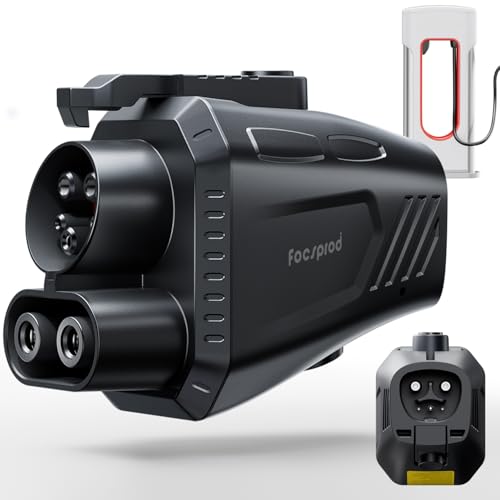 | Supercharger Access | Compatibility: NACS‑to‑CCS1 (Tesla Supercharger network) for CCS1 EVs (Ford, GM, Rivian, etc.) | Maximum Current: 500 A | Maximum Voltage: 1000 V (DC) | VIEW LATEST PRICE | Read Our Analysis |
| Fast Charge NACS to CCS1 Adapter for Tesla & Rivian EVs | 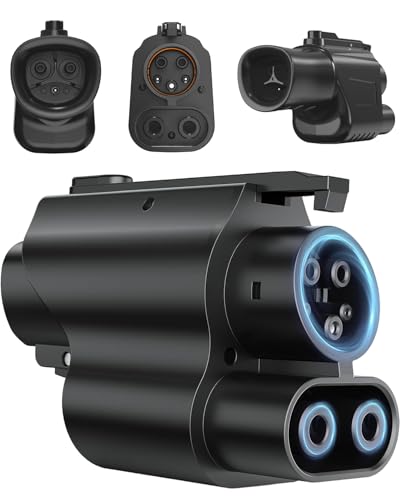 | Fast‑Charge Specialist | Compatibility: NACS‑to‑CCS1 for Rivian & Ford EVs | Maximum Current: 500 A | Maximum Voltage: 1000 V (DC) | VIEW LATEST PRICE | Read Our Analysis |
| NEMA 6-50P to 14-50R EV Charger Adapter Cord (50A) | Heavy‑Duty Choice | Compatibility: Tesla (UCM, Cybertruck, Model 3/Y/X/S) & J1772 EVs | Maximum Current: 50 A (recommended ≤32 A) | Maximum Voltage: 250 V (AC) | VIEW LATEST PRICE | Read Our Analysis | |
| EV Charger Adapter Type 1 to Type 2 SAE J1772 IEC62196 | 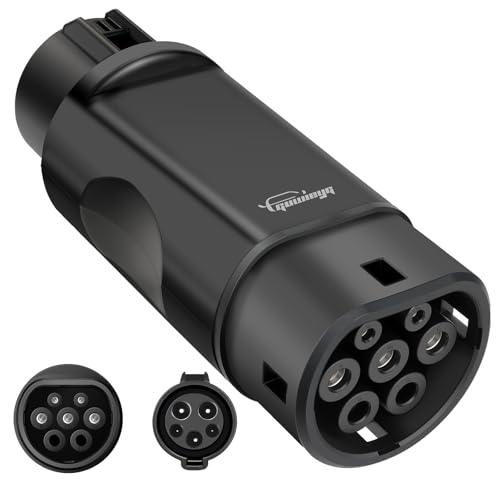 | International Versatile | Compatibility: Type 1 (SAE J1772) ↔ Type 2 (IEC 62196) vehicles | Maximum Current: 32 A | Maximum Voltage: 250 V (AC) | VIEW LATEST PRICE | Read Our Analysis |
| 32A Type2 to Type1 EV Charging Adapter (7.2kW) | 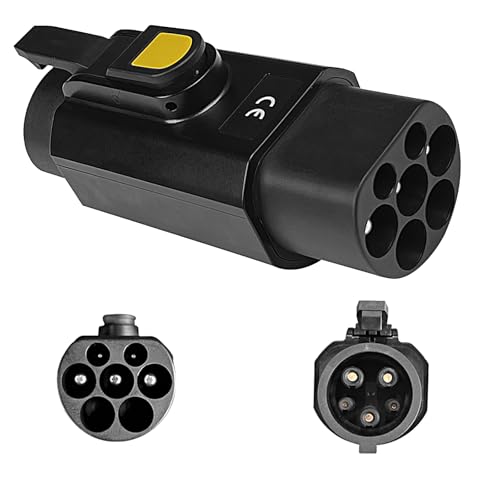 | European Compatibility | Compatibility: Type 2 ↔ Type 1 (SAE J1772) vehicles (non‑Tesla) | Maximum Current: 32 A (max working 60 A) | Maximum Voltage: 240 V (AC) | VIEW LATEST PRICE | Read Our Analysis |
| Tesla to J1772 EV Charger Adapter (60A 250V IP65) | 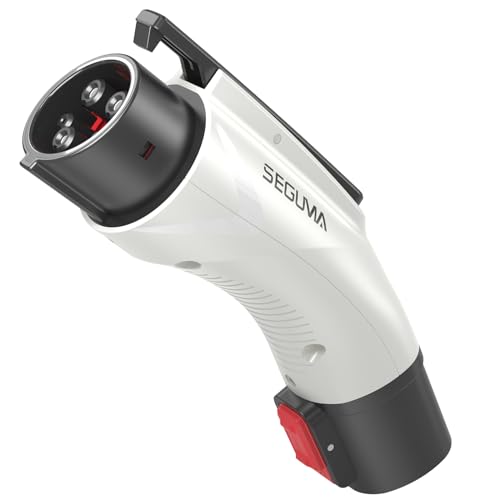 | J1772 Adapter | Compatibility: Tesla (NACS) ↔ J1772 EVs (Ford, Hyundai, Kia, etc.) | Maximum Current: 60 A | Maximum Voltage: 250 V (AC) | VIEW LATEST PRICE | Read Our Analysis |
| CCS1 to CCS2 EV Charger Adapter (DC 1000V/250A AC 32A) | 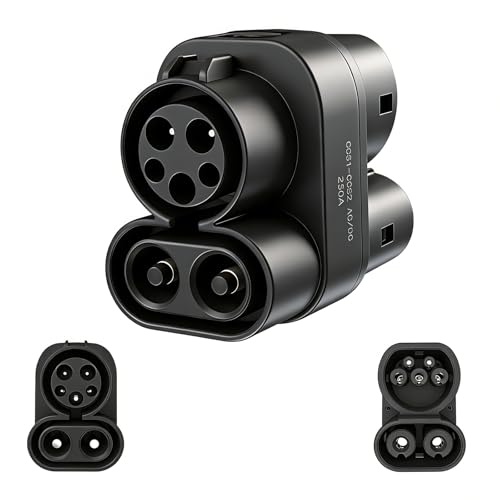 | Dual‑Mode Adapter | Compatibility: CCS1 ↔ CCS2 (DC) and Type 1 ↔ Type 2 (AC) vehicles | Maximum Current: 250 A DC, 32 A AC | Maximum Voltage: 1000 V (DC), 250 V (AC) | VIEW LATEST PRICE | Read Our Analysis |
You may be interested


More Details on Our Top Picks
Tesla Charger Adapter NEMA5-15P to 14-50R with LED Indicator
If you own a Tesla or another EV that uses a 14‑50 charger, the NEMA 5‑15P to 14‑50R adapter with LED indicator is a practical choice. It lets you plug a standard 120 V outlet into a 14‑50 port for Level 1 charging. The cord uses 10 AWG copper, a double‑layer waterproof jacket, and a flame‑retardant, UV‑resistant cover. It’s ETL listed and includes a built‑in circuit breaker that trips above 15 A. Keep the current under 12 A to avoid heat and trips.
Key points
- 1 ft length, yellow color
- Handles up to 1875 W (125 V × 15 A)
- LED shows power status
- Fits Tesla Model 3, Y, X, S, Cybertruck, and J1772 EVs
Usage tips
- Connect the male 5‑15P end to your wall outlet.
- Attach the female 14‑50R end to the charger.
- Monitor the LED; if it blinks, reduce load.
Warranty lasts 24 months; support is available if needed.
- Compatibility:Tesla (UCM, Cybertruck, Model 3/ Y/ X/ S) & J1772 EVs
- Maximum Current:15 A (recommended ≤12 A)
- Maximum Voltage:125 V (AC)
- Certification / Safety Standard:ETL Listed
- Length / Size:1 ft cable
- Warranty / Support:24‑month warranty, customer support
- Additional Feature:LED charging status indicator
- Additional Feature:Ergonomic handle design
- Additional Feature:Outdoor‑ready waterproof jacket
LENZ J1772 to Tesla Charging Adapter – Level 1 & 2 AC 80A Max UL 2251 Certified
The LENZ J1772‑to‑Tesla adapter is the go‑to choice for drivers who need to charge any Tesla or new NACS‑equipped EV at standard J1772 stations.
- Compatibility
- Works with all Tesla models (S, 3, X, Y, Cybertruck).
- Fits 2026+ Hyundai, Kia, Rivian, Toyota bZ, Lexus RZ, Lucid Gravity, future NACS EVs.
- Power
- Handles up to 80 A, 250 V.
- Supports Level 1 and Level 2 AC, giving faster charging than lower‑rated adapters.
- Build & Safety
- Premium PC housing, silver‑plated copper pins.
- IP54, UL 2251, CSA C22.2 No. 282‑17 certified.
- Design
- Light, glove‑box size, easy to carry.
- Support
- Two‑year protection plan, dedicated LENZ support.
Weight 8.4 oz; dimensions 5.16 × 3.31 × 2.52 in. Model ADPT21101.
- Compatibility:Tesla & NACS‑equipped EVs (2026+ Hyundai, Kia, Rivian, Toyota bZ, Lexus RZ, Lucid Gravity)
- Maximum Current:80 A
- Maximum Voltage:240 V (AC)
- Certification / Safety Standard:UL 2251, CSA C22.2 No. 282‑17
- Length / Size:Glove‑box sized (portable)
- Warranty / Support:2‑year protection plan, dedicated support
- Additional Feature:Glove‑box sized portability
- Additional Feature:IP54 weather resistance
- Additional Feature:Silver‑plated copper pins
CircleCord NEMA 10-30P to 14-50R EV Adapter Cord
CircleCord’s NEMA 10‑30P to 14‑50R adapter lets Tesla Model 3, S, X, and Y owners plug into a 30‑amp dryer outlet safely. It converts a 30‑amp, 125/250 V dryer plug into a 50‑amp, 125/250 V charger socket. The cord is 12 inches, uses 10‑gauge copper wire, and has a molded, flame‑retardant plug. It is ETL listed and water‑resistant for indoor or outdoor use.
Key points
- Only for EV charging – do not use with RVs or dryers.
- Pair with an amplifier ≤ 24 A for safe charging.
- Blue, 1.23 lb, weighs 7.68 × 7.03 × 2.52 in.
Benefits
- Safer than DIY builds.
- Cheaper than custom wiring.
- Durable, UV‑resistant jacket.
- Compatibility:Tesla Model 3/S/X/Y
- Maximum Current:24 A recommended (30 A plug)
- Maximum Voltage:250 V (AC)
- Certification / Safety Standard:ETL Listed
- Length / Size:12 in cable
- Warranty / Support:Product warranty (duration not specified)
- Additional Feature:Blue color coding
- Additional Feature:12‑inch compact length
- Additional Feature:Molded plug safety design
Tesla Supercharger to CCS1 Adapter (500A 1000V)
Looking for a way to charge a CCS‑compatible EV at Tesla Superchargers? The Tesla Supercharger to CCS1 Adapter (500A 1000V) lets you plug a CCS‑standard car into a Tesla station. It supports up to 500 amps and 1000 volts, giving about 150 miles in 15 minutes if the charger and battery allow.
Key points
- Compatibility – Works with Ford, GM, Rivian, and other CCS‑1 vehicles. Verify your car’s NACS support and manufacturer’s protocol access.
- Usage – Attach the dark‑black adapter to your vehicle port, then plug into any V3 or V4 Tesla Supercharger.
- Specs – 1.9 lb weight, 6.42 × 5.63 × 3.9 in package, 3‑year warranty, FOCSPROD brand.
Check your EV’s firmware before buying.
- Compatibility:NACS‑to‑CCS1 (Tesla Supercharger network) for CCS1 EVs (Ford, GM, Rivian, etc.)
- Maximum Current:500 A
- Maximum Voltage:1000 V (DC)
- Certification / Safety Standard:Not specified (manufacturer claim)
- Length / Size:Compact adapter (no cable)
- Warranty / Support:3‑year warranty, support
- Additional Feature:500 A fast‑charge rating
- Additional Feature:Dark black aesthetic
- Additional Feature:3‑year warranty coverage
Fast Charge NACS to CCS1 Adapter for Tesla & Rivian EVs
If you own a Rivian or Ford EV and travel often, you’ll need a Fast Charge NACS‑to‑CCS1 adapter to use Tesla Superchargers and other NACS stations. This adapter lets you plug a CCS1‑equipped vehicle into NACS DC fast chargers. It supports up to 500 A and 1000 V, delivering up to 500 kW. It includes over‑current, over‑voltage, and overheating protection, meeting UL and IEC standards. The rugged, lightweight design fits in a 7.75 × 5.38 × 4‑inch case and weighs under 2 lb.
Key points
- Plug‑and‑play with Tesla Superchargers.
- Works for Rivian R1T, R1S, R2, R3 and Ford EVs.
- Compact, portable, and easy to store.
- 30‑day Amazon return policy.
- Compatibility:NACS‑to‑CCS1 for Rivian & Ford EVs
- Maximum Current:500 A
- Maximum Voltage:1000 V (DC)
- Certification / Safety Standard:UL, IEC
- Length / Size:Compact adapter (no cable)
- Warranty / Support:30‑day return, Amazon policy
- Additional Feature:500 kW power claim
- Additional Feature:Lightweight portable form
- Additional Feature:UL & IEC certifications
NEMA 6-50P to 14-50R EV Charger Adapter Cord (50A)
The NEMA 6‑50P to 14‑50R adapter is ideal for drivers who need a compact, reliable link between a 250 V, 50 A dryer outlet and a Level‑2 EV charger.
- Fit and Use
- Connects a 6‑50P dryer plug to a 14‑50R EV charger.
- Works with Tesla, UMC, Cybertruck, Model 3/Y/X/S, and J1772 chargers.
- Not for RV use.
- Specs
- 1‑ft black cable, 6 AWG copper conductors.
- Handles 250 V, 50 A, up to 12 500 W.
- Set charger current ≤ 32 A for safety.
- Build
- Heavy‑duty, flame‑retardant, UV‑resistant sheath.
- Ergonomic plug, easy to insert and remove.
- Warranty & Support
- 18‑month warranty, 24/7 customer service.
Use this cord for home dryer outlets when you need a short, sturdy connection to your Level‑2 charger.
- Compatibility:Tesla (UCM, Cybertruck, Model 3/Y/X/S) & J1772 EVs
- Maximum Current:50 A (recommended ≤32 A)
- Maximum Voltage:250 V (AC)
- Certification / Safety Standard:ETL Listed
- Length / Size:1 ft cable
- Warranty / Support:18‑month warranty, 24/7 support
- Additional Feature:6 AWG heavy‑duty copper
- Additional Feature:Black ergonomic grip
- Additional Feature:18‑month warranty
EV Charger Adapter Type 1 to Type 2 SAE J1772 IEC62196
You need a reliable way to charge Type 1 EVs at Type 2 stations, and this adapter delivers it. The GUWIEYG Type 1‑to‑Type 2 adapter plugs into any J1772 wall connector, destination charger, or mobile connector and lets you charge IEC62196 vehicles. It handles up to 32 A and 32 kW, so you get fast charging without extra equipment.
Key specs
- Max current: 32 A
- Power: 32 kW
- Temperature range: –22 °F to 122 °F
- Rating: IP54, UL94‑V‑0 flame‑retardant
Features
- Compact, thermoplastic housing
- Portable (15.5 oz)
- 1‑year warranty
What you get
- Adapter only (model J1772‑to‑Type2)
- Dedicated support team
Use it whenever you find a Type 2 charger and need to power a Type 1 EV. It’s simple, durable, and fits in a glove box.
- Compatibility:Type 1 (SAE J1772) ↔ Type 2 (IEC 62196) vehicles
- Maximum Current:32 A
- Maximum Voltage:250 V (AC)
- Certification / Safety Standard:UL94‑V‑0, IP54
- Length / Size:Portable adapter (no cable)
- Warranty / Support:1‑year warranty, dedicated team
- Additional Feature:Thermoplastic durable housing
- Additional Feature:IP54 waterproof rating
- Additional Feature:-94‑V‑0 flame‑retardant
32A Type2 to Type1 EV Charging Adapter (7.2kW)
A Type2 to Type1 EV charging adapter is essential for owners of Type 1 electric cars who need to use public Type 2 chargers. It lets you plug a Type 2 cable into a Type 1 vehicle and draw up to 7.2 kW. The adapter handles 200‑240 V AC, 32 A input, and works from –30 °C to +50 °C. Its IP54 rating protects against dust and rain.
Key points
- Compatibility – Fits most American Type 1 EVs and PHEVs; not for Tesla or Type 2 EVs.
- Construction – Silver‑plated copper alloy contacts, durable plastic housing, anti‑theft clip.
- Dimensions – 19 × 7.5 × 7.5 cm, weighs 432 g.
Use tips
- Connect the adapter to a public Type 2 charger, then to your car’s SAE J1772 inlet.
- Ensure the charger supplies no more than 32 A.
- Store the adapter dry to keep the IP54 seal effective.
- Compatibility:Type 2 ↔ Type 1 (SAE J1772) vehicles (non‑Tesla)
- Maximum Current:32 A (max working 60 A)
- Maximum Voltage:240 V (AC)
- Certification / Safety Standard:IP54, UL‑listed materials
- Length / Size:19 × 7.5 × 7.5 cm (compact)
- Warranty / Support:No explicit warranty listed
- Additional Feature:Silver‑plated copper contacts
- Additional Feature:Anti‑theft safety clip
- Additional Feature:Compact 19 × 7.5 cm size
Tesla to J1772 EV Charger Adapter (60A 250V IP65)
If you own a J1772‑compatible EV and often park near Tesla chargers, this SEGUMA adapter is the practical choice. It links your Ford, Kia, Hyundai, Toyota, or similar vehicle to a Tesla wall connector, destination charger, or mobile charger. You can draw up to 60 A at 250 V, giving fast, reliable charging while staying safe thanks to lightning, leakage, and over‑current protection. The IP65 rating keeps it dry outdoors.
Key points
- Compact size – 7.87 × 3.93 × 3.93 in, 1.2 lb.
- Easy lock for secure connection.
- 12‑month warranty and technical support.
- Not for Superchargers or Jeep Wrangler 4xe.
Store it in your trunk or garage for quick access.
- Compatibility:Tesla (NACS) ↔ J1772 EVs (Ford, Hyundai, Kia, etc.)
- Maximum Current:60 A
- Maximum Voltage:250 V (AC)
- Certification / Safety Standard:UL, IP65
- Length / Size:7.87 × 3.93 × 3.93 in (compact)
- Warranty / Support:12‑month warranty, technical support
- Additional Feature:IP65 dust‑tight rating
- Additional Feature:Security lock mechanism
- Additional Feature:12‑month premium warranty
CCS1 to CCS2 EV Charger Adapter (DC 1000V/250A AC 32A)
The CCS1 to CCS2 EV charger adapter is essential for drivers who own a US‑spec electric car but travel to Europe, where charging stations use the IEC 62196 Type 2 connector.
- Compatibility
- Converts CCS1 (US) to CCS2 (Europe).
- Works with DC up to 1000 V / 250 A and AC up to 32 A.
- Supports SAE J1772 and IEC62196 protocols.
- Features
- Silver‑plated guide pin for low resistance.
- Heavy‑duty housing and anti‑impact box.
- Temperature monitoring from –30 °C to 50 °C; stops at 85 °C, resumes below 65 °C.
- Practical tips
- Follow plug‑in sequence.
- Check vehicle’s auto‑resume behavior.
Weight is 0.634 oz; black finish; two ports. Brand: EVHIKING, model CCS1‑002. Warranty via Amazon 30‑day return.
- Compatibility:CCS1 ↔ CCS2 (DC) and Type 1 ↔ Type 2 (AC) vehicles
- Maximum Current:250 A DC, 32 A AC
- Maximum Voltage:1000 V (DC), 250 V (AC)
- Certification / Safety Standard:Not specified (manufacturer claim)
- Length / Size:Heavy‑duty box, no cable length specified
- Warranty / Support:30‑day return guarantee, warranty via page
- Additional Feature:Automatic DC/AC switching
- Additional Feature:Real‑time temperature monitoring
- Additional Feature:Anti‑impact transport box
Factors to Consider When Choosing an EV Charger Adapter
- Check the connector compatibility matrix to make sure the adapter fits your car and the charging station.
- Verify the power rating limits and connector type standards so the adapter can handle the voltage and current you need.
- Look for required safety certifications and choose a cable length that fits your parking setup.
Connector Compatibility Matrix
Many drivers overlook how a charger adapter’s compatibility matrix shapes charging speed and safety.
- Match the vehicle port.
- NACS, J1772, IEC62196 Type 1/2, CCS1/CCS2 must line up with the adapter’s input.
- NEMA, CCS, J1772, etc., must be supported on the adapter’s output.
- Check current and voltage ratings (e.g., 16 A/125 V, 80 A/250 V, 32 A/250 V DC). Higher ratings allow faster charging but require compatible stations.
- Verify the charging level: Level 1/2 AC or DC fast charging. Use the right type for your car and station.
- Look for IP54 or IP65 and UL/ETL listings for outdoor or rugged use.
- Ensure temperature protection and automatic switching (stop at 85 °C, resume below 65 °C) for reliable operation.
Power Rating Limits
Matching the right connector is only half the story; you also need to watch the adapter’s power rating limits.
- Check amperage and voltage.
- Look for ratings like 15 A @ 125 V (≈1.9 kW) or 80 A @ 250 V for AC.
- For DC fast charge, you may see 500 A @ 1000 V.
- Stay below the max, e.g., 12 A on a 15 A adapter, to limit heat and avoid trips.
- Choose adapters with built‑in breakers that cut power if current exceeds the rating.
- Ensure the adapter’s rating fits both your car’s intake and the charger’s output.
Following these steps keeps charging safe and efficient.
Connector Type Standards
Which connector does your car need, and what does the station offer? Identify the plug shape and receptacle type before you buy an adapter.
- Match physical standards
- NEMA 5‑15P → standard 120 V household outlet.
- NEMA 14‑50R → 240 V, 50 A dryer plug.
- J1772 Type 1 → North‑American AC.
- Type 2 IEC 62196 → European AC.
- NACS/Tesla → Tesla’s proprietary plug.
- Use a J1772‑to‑NACS adapter for a Tesla on a public charger.
- Use a Type 1‑to‑Type 2 adapter when traveling abroad.
- Ensure the adapter handles your station’s max,e.g., 32 A AC or 80 A DC).
- Look for IP ratings (IP54/65) and UL/ETL listings for durability.
Pick the adapter that aligns with your vehicle’s connector and the station’s supply to keep charging smooth.
Safety Certifications Required
If you want a safe EV charger adapter, first check its safety certifications. Look for ETL Listed, UL 2251, or CSA C22.2 marks. These show the product passed independent tests and meets national electrical safety standards.
- Certification scope
- Verify the rating covers the adapter’s voltage and current (e.g., 125 V/15 A, 240 V/80 A, 1000 V/250 A DC).
- Ensure both the internal circuitry and the connectors are covered.
- Choose an IP rating that matches your use.
- IP54 protects against dust and splashing water; IP65 adds stronger water resistance for outdoor charging.
- Certified adapters lower the chance of overheating, short circuits, or fire.
- They give you confidence that the adapter can handle high‑current charging safely.
Cable Length Considerations
How far you need to park from the charger drives your choice of cable length. Pick a length that matches your typical parking spot. Too short, and you’ll waste time aligning the car; too long, and you risk voltage drop and heat.
- Measure the distance between your vehicle’s inlet and the outlet.
- Choose a 1‑3 ft cord for tight garage spaces.
- Use a 5‑10 ft cord for drive‑way or outdoor stations.
- Longer cords can cause voltage loss at high current.
- Short cords reduce clutter and tripping risk.
- Outdoor jackets and UV resistance help long cords last.
Match the length to your parking habit and avoid overstressing the cord. This keeps charging safe and efficient.
Environmental Weather Ratings
What weather conditions will your adapter face? You’ll need an adapter that can handle rain, dust, and sun.
- IP rating – Choose at least IP54. It blocks dust and splashes, so you can park outdoors without worrying about moisture.
- UV resistance – Look for a UV‑stable jacket or housing. Sunlight won’t crack the plastic, so the adapter lasts longer.
- Temperature range – Pick a model rated –30 °C to 50 °C. It will work in winter freezes and summer heat without failing.
- Flame‑retardant material – A fire‑resistant shell lowers risk if the charger gets hot.
- Rugged enclosure – Seals and sturdy casings keep rain out and dust from entering.
These points ensure reliable charging across most climates.
Warranty And Support Options
When choosing an EV charger adapter, check the warranty and support options right away.
- Warranty length – Look for 12‑24 months. Some brands offer 2‑year extensions.
- Coverage – Make sure it includes parts, labor, and a clear return or replacement policy for defects.
- Exclusions – Read the fine print. Misuse, user modifications, or damage from accidents often aren’t covered.
- Claim process – Note the steps, required documents, and how long the provider says it will take to approve a claim.
- Support channels – Choose a seller that offers phone, email, or chat. Check business hours and if they answer on weekends.
- Transferability – If you sell the adapter, see whether the warranty moves with it or stays tied to the original purchase.
These points help you avoid surprise costs and keep your charger running smoothly.
Frequently Asked Questions
Will the Adapter Affect My Vehicle’s Warranty?
Yes, the adapter can affect your vehicle’s warranty if it causes damage or doesn’t meet manufacturer standards.
- Use only adapters approved by your car maker.
- Check the warranty booklet for specific clauses.
- Keep receipts and documentation of the adapter.
- Install it correctly; avoid DIY modifications.
- If a problem occurs, report it promptly to the dealer.
Following these steps helps protect your warranty while using an adapter.
Can I Use the Adapter Outdoors in Rain?
- Yes, you can use most adapters outdoors in rain if they have an IP‑rated enclosure.
- Look for adapters rated at least IP‑44; they keep water out of the contacts.
- Connect the adapter before plugging the charger in, then secure the cable to avoid water pooling.
- Inspect the adapter for damage after each storm; replace it if the seal is cracked.
- Store the adapter in a dry place when not in use to prolong its life.
Do Adapters Require a Separate Ground Fault Circuit Interrupter?
Think of safety as a lifeline. Yes, most adapters need a separate ground‑fault circuit interrupter (GFCI).
- Plug the GFCI into the outlet first.
- Connect the adapter to the GFCI.
- Verify the GFCI’s test light is on.
- Use a GFCI rated for your charger’s amperage.
- Replace the GFCI if it trips repeatedly.
- Outdoor adapters must have a weather‑proof GFCI enclosure.
How Long Does It Take to Install the Adapter Safely?
- You’ll need 30‑45 minutes for a safe install.
- First, turn off power at the breaker.
- Then, mount the adapter bracket and connect the wiring according to the manual.
- Next, secure the ground‑fault circuit interrupter if required.
- Finally, restore power and test the connection.
Follow each step carefully; rush can cause mistakes. This timeline assumes basic tools and a standard residential outlet.
Will the Adapter Reduce Charging Speed on High‑Power Stations?
You’ll see a slight drop in speed if the adapter isn’t rated for the station’s full power. For example, a 50 kW charger with a 30 kW‑rated adapter will cap at 30 kW.
- Choose adapters that match or exceed the station’s kW rating.
- Verify the connector type (CCS, CHAdeMO, Tesla).
- Check the cable’s gauge; thicker wires keep loss low.
Following these steps keeps charging close to the station’s maximum.