As an Amazon Associate, we earn from qualifying purchases. Some links on this site are affiliate links at no extra cost to you. Our recommendations are based on thorough research and editorial judgment.

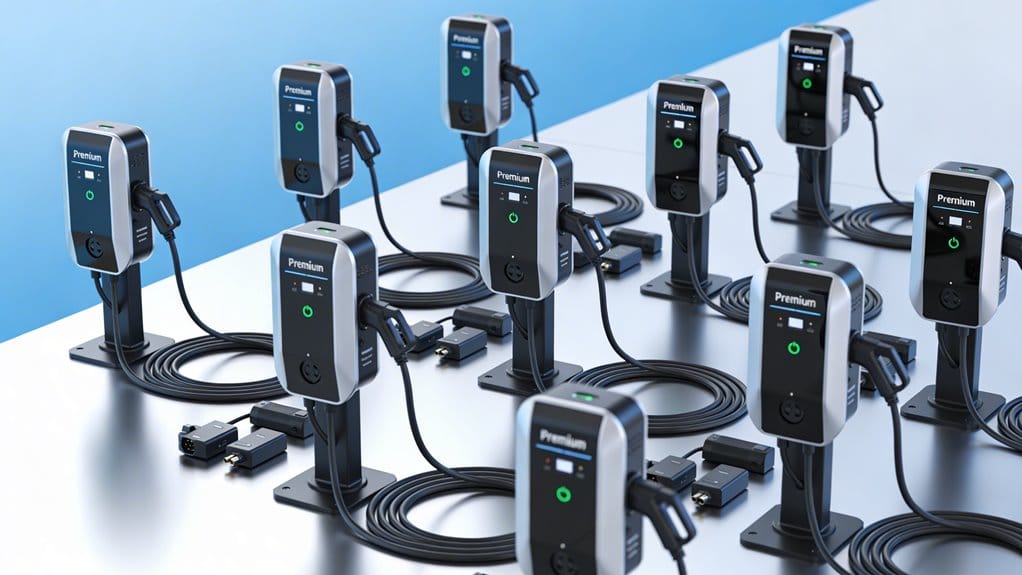
10 Best Level‑2 EV Chargers That Power Your Ride Faster

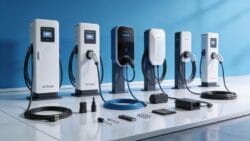
1. AIMILER 32A with Wi‑Fi app – 25 ft cable, wall‑mount, J1772, NEMA 4/IP66. 2. Level 2 40A with 25 ft NEMA 14‑50 cable – adjustable 10‑40A, TFT display, peak‑hour scheduling. 3. Portable 40A with NEMA 14‑50P – 25 ft cable, 10‑40A, 1‑12 hr delay, 2‑year warranty. 4. Grizzl‑E Classic 40A – wall‑mount, 24 ft cable, UL‑tested, IP67, built‑in GFCI. 5. EMPORIA 48A – hardwired or NEMA 14‑50, Wi‑Fi, ENERGY STAR, OTA updates. 6. EVIQO 48A – 11.5 kW, IP66, OTA, Tesla adapter. 7. Portable 40A with NEMA 6‑50 – 9.6 kW, 25 ft cable, UL/ETL. 8. Bokman 16A – 20 ft cable, compact, J1772. 9. 50A portable – 25 ft cord, high‑power, weather‑rated. 10. Tesla Wall Connector 48A – 24 in cable, integrated app, NEMA 14‑50. You’ll find more specs and buying tips if you keep going.
Key Takeaways
- Choose a charger with adjustable amperage (10‑48 A) to match your circuit breaker and maximize charging speed without overloading.
- Prioritize models with Wi‑Fi apps for scheduling, remote monitoring, and real‑time energy cost tracking.
- Select units with robust, weather‑rated enclosures (IP66/IP67, NEMA 4) and built‑in GFCI or leak detection for indoor and outdoor safety.
- Opt for longer, drop‑resistant cables (24‑25 ft) and portable mounting options to reach your vehicle anywhere in the garage.
- Verify J1772 compatibility (and Tesla adapter support) and certifications (UL, ETL, ENERGY STAR) for reliable performance and rebate eligibility.
Level 2 EV Charger 32A with Wi‑Fi App, Portable Plug‑Play
If you own a J1772‑compatible EV and need a fast, portable charger that you can set up at home or on the road, the AIMILER Level 2 EV Charger 32A with Wi‑Fi app is a solid pick. It works with all North‑American J1772 EVs and PHEVs. You get a 25 ft drop‑resistant cable, a hand‑bag, and a wall‑mounted holder. The unit outputs 32 A on a 40 A breaker, 24 A on a 30 A breaker, and 16 A on a 20 A breaker. You can set amperage via the touch screen or the app.
- Wi‑Fi app lets you schedule charging, view history, and get a full‑charge alert.
- Safety features include anti‑leak detection and NEMA 4/IP66 enclosure.
- No extra GFCI breaker needed; just use a 240 V NEMA 14‑50 socket.
You may be interested


Follow the app setup steps, and you’ll have reliable, fast charging wherever you plug in.
Level 2 EV Charger 40A with 25FT NEMA 14-50 Cable
Who needs a fast, reliable home charger that fits in a garage or a driveway? The Level 2 EV Charger 40A with a 25‑ft NEMA 14‑50 cable delivers up to 9.6 kW at 240 V, charging up to six times faster than Level 1.
- Adjustable current – Choose 10 A, 16 A, 20 A, 24 A, 32 A, or 40 A to match your vehicle and electricity plan.
- Delay timer – Set start times to avoid peak‑hour rates.
- Safety features – Leak detection, grounding, over‑voltage, under‑voltage, over‑current, overcharging, overheating, and short‑circuit protection.
- Display: 2.4‑inch TFT shows amperage, voltage, power, time, and status.
- Connector: J1772 works with most BEVs/PHEVs; Tesla needs an adapter.
- Durability: IP66 rating, operates from –22 °F to +122 °F.
The 25‑ft cable lets you park farther from the outlet, and the holder with storage bag keeps it tidy. The unit weighs 11.71 lb and fits in a 13″ × 4″ × 15″ space. Manufacturer warranty covers defects. This charger offers practical speed, flexibility, and safety for daily home use.
Level 2 EV Charger 40A Portable with NEMA 14-50P
The EVDANCE Level 2 EV Charger 40A with a NEMA 14‑50P plug is a portable, high‑power solution for drivers who need fast charging at home, work, or on the road. It delivers 240 V, 40 A, and up to 9.6 kW, letting you charge most EVs in a few hours. You can set the current at 10 A‑40 A and program a delay of 1‑12 hours. The 2.4″ TFT screen shows voltage, power, and time. Safety features include leak, over‑voltage, and short‑circuit protection, and it shuts off automatically when the battery is full.
- Weight: 11.5 lb
- Cable: 25 ft, J1772 (Tesla adapter needed)
- IP66 rating, works from –22 °F to +122 °F
- Comes with a carry bag, cable holder, and control box holder.
You’ll find it easy to move, set up, and use at any location with a NEMA 14‑50 outlet.
Level 2 EV Charger 40A 9.6kW Portable with NEMA 6-50 Plug
Owners who need a fast, portable home charger will find the Morec SQP400‑40A a solid pick. It delivers 9.6 kW at 40 A, 240 V, giving about 37 miles of range per hour. The 25‑ft cable reaches most garage spots. It plugs into a NEMA 6‑50 outlet, common for dryers or RVs, and requires a 50 A breaker.
Key points
- Power – 9.6 kW, 40 A, 240 V.
- Portability – Compact, 11 lb, includes bag and bracket.
- Safety – Ground, lightning, over‑current, short‑circuit, over‑voltage protection.
- Durability – IP66 rain‑ and dust‑proof.
- Compatibility – SAE J1772 for all PHEVs and EVs.
The charger is ETL, UL, FCC, and RoHS certified and comes with a two‑year warranty and a 30‑day return option.
Grizzl-E Classic Level 2 EV Charger, 40A, Indoor/Outdoor
Grizzl‑E Classic Avalanche Edition is a wall‑mountable Level 2 charger that fits any North‑American EV or PHEV, so it’s a solid pick for anyone who wants fast, reliable charging at home or on the road. It plugs into a 14‑50R outlet and offers 40 A output when you use a 50 A breaker. You can drop to 32 A, 24 A, or 16 A with smaller breakers. The 24‑foot cable reaches most parking spots.
Key points
- UL‑tested, IP67 metal enclosure, fire‑resistant.
- Built‑in GFCI and protections: over‑current, over‑voltage, under‑voltage, ground‑fault, over‑temperature.
- Portable: remove from bracket for transport.
- Eligible for federal rebate.
You’ll get about 28‑30 miles of range per hour at 40 A, and the unit weighs 16.79 lb. Warranty and support come from United Chargers Inc.
EMPORIA Level 2 EV Charger with WiFi, 48A, 25ft Cable, White
Looking for a fast, reliable Level‑2 charger that fits a home garage? The EMPORIA Level 2 EV Charger gives you 48 A hardwired or 40 A via a NEMA 14‑50 plug. It adds up to 46 miles per hour when hardwired and 38 miles per hour with the plug. A 25‑ft cable reaches most parking spots.
Key points
- Performance – 240 V, up to 48 A, 46 mi/hr (hardwired) or 38 mi/hr (plug).
- Installation – Pre‑wired for NEMA 14‑50, convertible to hardwire; professional install recommended.
- Smart features – 2.4 GHz Wi‑Fi, mobile app data, scheduling.
- Safety – UL listed, ENERGY STAR, meets NEC 625 and SAE J1772.
- Compatibility – SAE J1772 fits all North American EVs, Tesla with adapter.
Dimensions are about 12.6 × 9 × 3.5 in, weight 2.88 lb, and it comes in white. This charger balances speed, connectivity, and safety for a typical home garage.
EVIQO 48A Level 2 EV Charger with WiFi and 25ft Cable
If you need a fast, reliable charger that works at home and outdoors, the EVIQO 48A Level 2 EV Charger is a solid pick. It delivers 48 A (11.5 kW) at 240 V, adding about 46 miles of range per hour. The unit is weatherproof (IP66, NEMA 4) and UL/ETL certified, so you can install it in a garage or under a carport.
Key features
- 25‑ft rubberized J1772 cable with metal latch.
- Wi‑Fi smart app for start/stop, scheduling, and cost tracking.
- OTA firmware updates and a side reset button for quick fault clearing.
- Compatibility with all North American EVs; use a J1772‑to‑NACS adapter for Tesla.
Installation notes
- Requires a dedicated 60 A circuit.
- Hard‑wired with a 40‑in input cable.
Incentives
– Eligible for federal tax credit and many utility rebates.
Bokman Portable EV Charger 240V 16A with 20ft Cable
The Bokman Portable EV Charger 240V 16A with a 20‑ft cable is ideal for drivers who need a compact, dual‑level charger that works at home and on the road. It plugs into a NEMA 6‑20 outlet for Level 2 charging and includes a NEMA 5‑15 adapter for standard 120 V outlets. You can set the current to 6, 8, 10, 12 or 16 A on Level 2 and 6‑12 A on Level 1. A mechanical timer delays start up to 12 hours. The IP65‑rated case resists water and dust, and built‑in protections guard against over‑temperature, over‑voltage, over‑current, short‑circuit, and ground faults.
- Weight: 9.5 lb, easy to carry
- 20‑ft flexible cable fits most parking spots
- Carry bag, cable holder, microfiber towel included
- Warranty: 2 years
You’ll find it fits most J1772‑compatible EVs and offers reliable, portable charging.
50A Portable Level 2 EV Charger with 25ft Cord
- Current options: 16 A, 24 A, 32 A, 40 A, 50 A
- Delay‑charging for off‑peak rates
- 3.5‑inch LCD shows voltage, current, power, energy, cost, errors
Physical features: 25‑ft cable, 14‑lb weight, indoor/outdoor use, IP54 splash resistance, fire‑retardant housing, storage bag. Safety: overcurrent, overvoltage, overtemperature protection, ETL/FCC certified. Warranty: five years, 24/7 support, ~12‑hour response. Brand: TopAutoGear, model BK5A170650T.
Tesla Wall Connector Level 2 EV Charger 48A 24″ Cable
Tesla’s Wall Connector stands out for owners who want fast, reliable home charging. It works with every Tesla model—S, 3, X, Y—so you can charge any of your cars with one unit. The Level 2 unit delivers up to 11.5 kW at 48 A, giving roughly 44 miles of range per hour, depending on the vehicle. You can set the max output to 48 A, 40 A, 32 A, 24 A, 16 A, or 12 A to match your breaker.
Key points
- Indoor or outdoor use, 24‑foot cable
- Dimensions: 4.3 × 6.1 × 13.6 in; weight 11.4 lb; black finish
- Wi‑Fi for firmware updates and remote control
- Power‑share lets up to six units coordinate power when charging multiple cars
Installation is straightforward, and the warranty is covered by Tesla with a 30‑day Amazon return option.
Factors to Consider When Choosing an Electric Vehicle Charger Level 2
- Check the amperage compatibility to match your car’s charging speed.
- Choose a cable length and flexibility that fit your parking setup.
- Look for Wi‑Fi connectivity, weather‑resistant rating, and safety certifications for reliable use.
Amperage Compatibility
What amperage your Level‑2 charger can use depends on your home’s circuit breaker. Check the breaker size before you pick a charger.
- Breaker 20 A – most chargers let you set 16 A.
- Breaker 30 A – you can safely run 24 A.
- Breaker 50 A – many models support 40 A or 48 A.
Choose a unit with selectable settings that match these limits, such as 10/16/20/24/32/40 A or 12/16/24 A options. Never exceed the breaker rating; doing so may cause trips or require new wiring. Align the amperage with your car’s acceptance rate for the best speed. Keep the installation code‑compliant and safe.
Cable Length & Flexibility
When you pick a Level‑2 charger, the cable length and flexibility matter for everyday use. A 25‑foot cable reaches most parking spots without an extra cord. It lets you park farther from the outlet and still plug in.
- Length vs. portability – Longer cables add convenience but increase weight. If you move the charger often, a shorter, lighter cord may be easier to carry.
- Durability – Look for “military‑grade” construction and thousands of plug cycles. This rating means the cable will survive frequent use.
- Weather protection – Some models have an IP rating for the cable assembly. Choose this if you leave the charger outdoors.
- Flexibility – A flexible cord avoids kinks and bends that could affect safety or performance. Route it smoothly around obstacles.
Wi‑Fi Connectivity Features
How important is reliable Wi‑Fi for your Level‑2 charger? It lets you check status, history, and alerts from your phone. You can also schedule charging, see cost, and watch real‑time energy use. Here’s what to look for:
- Network Compatibility
- Supports 2.4 GHz Wi‑Fi (most common).
- Some models need Bluetooth pairing before Wi‑Fi connection.
- Remote monitoring of charge level.
- Scheduling and cost tracking.
- Real‑time usage graphs.
- OTA updates via Wi‑Fi keep the charger secure and add new functions.
- Verify phone is on a 2.4 GHz network.
- Enable Bluetooth if required.
- Perform a factory/Wi‑Fi reset before re‑adding the device.
Weather‑Resistant Enclosure Rating
If you plan to install a Level‑2 charger outdoors, the enclosure rating matters most. Choose an IP rating that matches your climate.
- IP66 – blocks dust and survives strong water jets. Good for rainy or dusty areas.
- IP65 – resists water jets and limited dust. Works in most wet conditions.
- IP54 – only splash‑proof. Use only if you can keep the charger sheltered.
- NEMA 4 – protects against wind, rain, and corrosion.
- NEMA 4X – adds extra corrosion resistance for salty or industrial air.
Look for sealed connectors and gasketed access points. Place the unit away from direct sun and avoid prolonged rain exposure. This simple placement plus a solid rating keeps the charger reliable for years.
Safety Certifications & Protections
Safety certifications and built‑in protections are the backbone of a reliable Level‑2 EV charger. Look for UL, ETL, FCC, and Energy Star marks. They show the charger meets safety standards.
- Protection features
- Leakage/ground‑fault monitoring
- Overcurrent, overvoltage, undervoltage protection
- Short‑circuit and overheating safeguards
- Choose IP66, IP67, or NEMA‑4 for indoor/outdoor use.
- The charger stops when the battery is full, preventing overcharge.
- Ensure a J1772 plug fits your vehicle. Use an adapter only if your car needs a different connector.
These steps keep you safe and your car charged correctly.
Adjustable Current Settings
What should you look at when picking a Level‑2 charger’s current range?
- Check your circuit breaker rating.
- Match the charger’s amperage to the breaker (e.g., 32 A on a 40 A breaker).
- Avoid exceeding the breaker to prevent tripping.
- Look for units that let you choose 6‑40 A (or 48 A) via buttons, menu, or app.
- Simpler models may require a hard‑wired setting.
- If the car accepts only 16 A, higher settings won’t speed charging.
- Lower settings reduce strain on other appliances.
- Wall‑mount brackets give a permanent spot and keep the cord tidy.
- Portable units often include a built‑in holder for semi‑permanent use.
Pick a charger that offers clear on‑device or app control, aligns with your breaker, and matches your car’s capacity. This ensures safe, efficient charging without nuisance trips.
Portability and Mounting Options
Adjustable current settings let you match the charger to your breaker, but once you’ve set the right amperage, the next factor is how you’ll place the unit.
1. Portability – Choose a model that weighs 9–16 lb and fits in a carrying bag. A compact footprint lets you move it between garage, office, or a friend’s house.
2. Cable length – Look for a 25‑foot cord. It reaches the car parked far from the outlet while staying easy to coil.
3. Mounting options –
4. Weather rating – If you’ll charge outdoors, pick an IP66 or NEMA 4 enclosure. Indoor‑only units lack that protection.
These points help you decide whether a fixed‑wall or mobile charger fits your daily routine.
Smart Scheduling and Monitoring
How you track and schedule charging can save money and keep your car ready. Smart scheduling lets you set a delayed start or a charging window that matches off‑peak utility rates. This reduces peak‑demand charges and lowers your bill. Monitoring apps show real‑time amperage, voltage, power, and time remaining, so you know exactly how fast the charger works. Many units also display cumulative kWh used and estimate cost, helping you budget. Connectivity usually relies on 2.4 GHz Wi‑Fi, with optional Bluetooth for setup and OTA firmware updates.
Key features to check
- App or on‑device display for real‑time data
- Delayed‑start and time‑window scheduling
- Energy‑use and cost tracking
- Wi‑Fi/Bluetooth connectivity and OTA updates
- Power‑sharing for multiple chargers
Choose a charger that offers these tools for easy control and cost savings.
Frequently Asked Questions
Will a Level 2 Charger Work With All EV Makes and Models?
Yes, a Level‑2 charger works with all EV makes and models because it follows the universal J1772 standard.
- Plug‑in – Connect the charger to your car’s J1772 port.
- Power – The charger supplies 240 V, up to 7.2 kW, which any EV can accept.
- Charging time – Expect 4–8 hours for a full charge, depending on battery size.
Most newer EVs also support fast‑charge protocols, but Level‑2 remains compatible across the board.
Do I Need a Dedicated Circuit for a 40 A Charger?
- Yes, you need a dedicated circuit for a 40 A charger.
- A 40 A charger draws about 9 kW, which exceeds typical household branch limits.
- Install a 50 A breaker and 6‑gauge copper wire to meet code.
- Separate the circuit from other appliances to avoid overload.
- Hire a licensed electrician to verify sizing and guarantee safety.
- Use a proper conduit and label the circuit in your breaker panel.
Can I Install a Level 2 Charger Outdoors Without a Weatherproof Enclosure?
You can install a Level 2 charger outdoors, but you must protect it with a weather‑proof enclosure.
- Choose a NEMA 4 or higher rated box.
- Seal all cable entries with gaskets.
- Mount the box on a sturdy, non‑flammable surface.
- Ensure the charger’s IP rating matches the enclosure.
- Verify local codes require a dedicated circuit and proper grounding. This setup keeps rain, dust, and temperature spikes from damaging the unit.
How Does Wi‑Fi Connectivity Affect Charger Safety and Firmware Updates?
- Wi‑Fi lets the charger receive firmware updates automatically, keeping security patches current.
- A secure Wi‑Fi network prevents unauthorized access, reducing risk of malicious commands.
- The charger’s internal safety checks run after each update, ensuring voltage and temperature limits stay correct.
- If the Wi‑Fi drops, the charger defaults to offline mode and continues charging safely.
- Regular updates improve reliability, but you must protect the router with strong passwords and encryption.
What Are the Warranty Differences Between Portable and Hard‑Wired Level 2 Chargers?
- Portable chargers usually come with a 1‑year limited warranty covering defects.
- Hard‑wired chargers often carry a 3‑year warranty, sometimes longer for the power module.
- Check the warranty sheet for each brand; it lists what parts are covered.
- Keep receipts and registration info; they speed up claims.
- Note that wear‑and‑tear on cables may not be covered for either type.